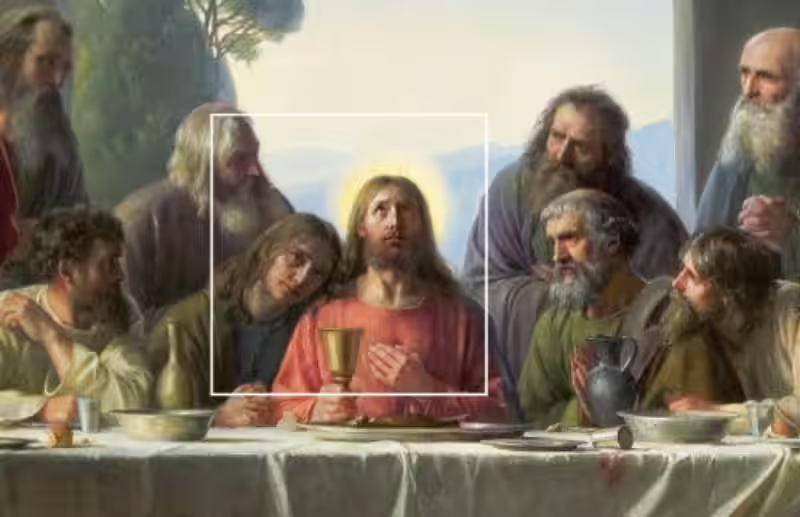
This seemingly simple question, posed by Jesus to his disciples, resonates deeply with us even today. It’s a question about faith, about identity, and about our relationship with the divine. “Who do you say that I am?” challenges us to examine our own beliefs and ponder the true nature of our connection to something larger than ourselves. It prompts introspection and compels us to move beyond superficial answers.
This fundamental question isn’t merely an academic exercise; it’s a call to action. It’s a pivotal moment in the story of Jesus’ ministry, highlighting the importance of personal conviction and a deep understanding of the divine. It forces us to evaluate our own responses to the great mysteries of life, and ultimately, to our own place within the grand tapestry of existence. The answer, after all, shapes our entire life path. It helps us understand what we live for.
The disciples, initially confused and uncertain, grapple with the implications of Jesus’s teachings. They are accustomed to a specific understanding of the world, a frame of reference that is gradually being challenged by the extraordinary claims of Jesus. Jesus’s words – “Who do you say that I am?” – compel them to reconsider their long-held beliefs and to confront the reality of who Jesus truly is. This internal conflict, this yearning for clarity, is a common human experience.
Imagine yourself facing a profound truth that challenges your pre-conceived notions. You may experience moments of doubt, confusion, and even fear. The disciples likely felt this way; their understanding of the Messiah wasn’t in line with Jesus’s actual identity. Yet, amidst uncertainty, Peter, one of Jesus’ most trusted followers, proclaims, “You are the Christ, the Son of the living God.” Peter’s declaration represents a moment of profound insight, a recognition of truth, and a testament to the transformative power of faith. It’s an example of how the answer to “Who do you say that I am?” can define our understanding of the world.
Declaring Jesus as the Christ, the Son of the living God, wasn’t simply a matter of lip service. It was a powerful statement about the nature of Jesus’ relationship with God and humanity. It was a commitment to a new way of life, rooted in faith and devotion. The declaration was a pivotal point in the disciples’ journey, shaping their subsequent actions and informing their understanding of Jesus’s role in the world. The understanding of Jesus’ identity profoundly shifts our understanding of God, humanity, and our place in the universe.
Consider the impact of embracing Jesus as the Son of God. It invites us to re-evaluate our values and priorities. It suggests a radical shift in perspective, urging us to live in harmony with divine love and purpose. It compels us to ask ourselves: “Who do you say that I am?” Does my life reflect the values of the one I believe in? Does my understanding of that value align with the true identity of Jesus? This introspection, this self-reflection, and this acknowledgment of Jesus’s divine nature, shapes our path forward.
The Everlasting Relevance of the Question
Today, “Who do you say that I am?” remains a profoundly relevant question. It challenges us to confront our own beliefs and to understand the depth of our faith. It requires us to delve deeper into the teachings of Jesus and to reflect on the implications of his message for our own lives. It’s a call to examine our own motivations, to evaluate our actions, to understand our connection to the divine. Even in the modern world, we are all still challenged to find our place in a larger narrative.
This question isn’t meant to be answered in a vacuum. It’s meant to spark a conversation—with ourselves, with others, and with God. It encourages critical reflection on our own beliefs and values and our personal relationship with the divine. It asks us to consider how our beliefs shape our actions and guide our decisions. Ultimately, “Who do you say that I am?” is a question that invites us to deepen our understanding of the divine and to live lives informed by a profound relationship with God.
Frequently Asked Questions
Who do you say that I am?
This is a question Jesus asked his disciples, challenging them to articulate their understanding of his identity. Different interpretations exist, but the core message is about faith and recognizing Jesus as the Messiah, Son of God, and the divine, or at least deeply important, figure of a particular religion.
What is religion?
Religion is a collection of beliefs, cultural systems, and worldviews that relate humanity to spirituality and, often, moral values. Different religions have different origins, practices, and doctrines, but they often involve the worship of a deity or deities, ceremonies, and a community of believers.