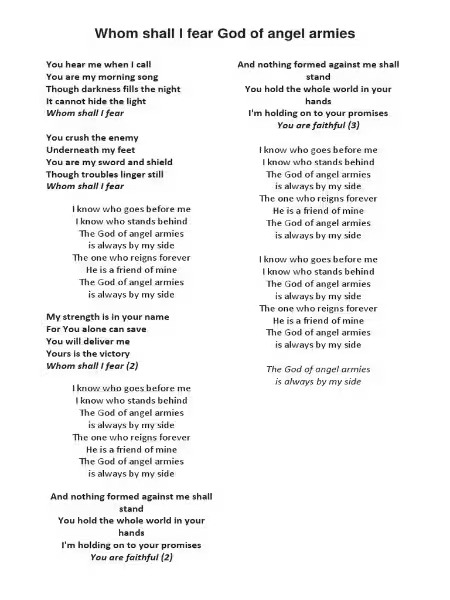
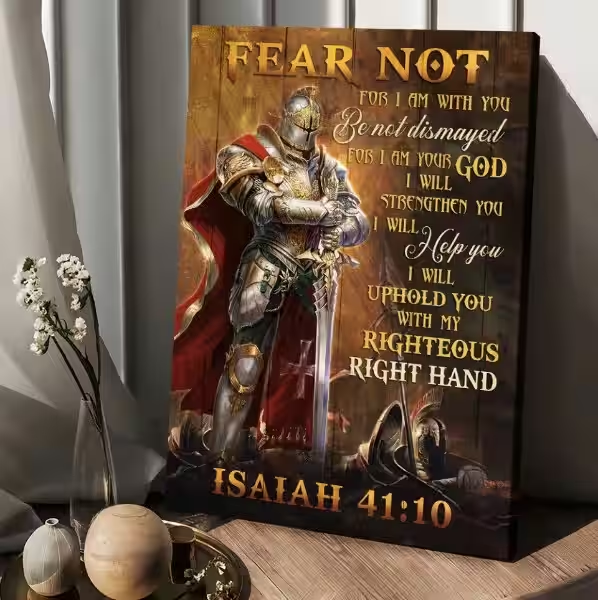
We all face challenges, moments of uncertainty, and daunting obstacles in life. Whether it’s a looming deadline, a difficult conversation, or a significant life change, fear can paralyze us. But in those moments of trepidation, we can find solace and strength in the words of the Bible, specifically the comforting verse, “Whom shall I fear?” This powerful question, repeated in various contexts throughout scripture, isn’t a dismissal of fear, but rather an invitation to examine the source of our anxieties and place our trust in something greater than ourselves.
The question, “Whom shall I fear?,” challenges us to confront our fears head-on. Instead of succumbing to the paralyzing grip of anxiety, it encourages us to shift our focus from transient worries to a more profound and lasting source of strength. This isn’t about ignoring problems, but rather about understanding that true strength often lies in our ability to navigate uncertainty with faith and resilience. We can look at the example of David, who faced Goliath with unwavering faith in God. His actions were a direct response to the question, “Whom shall I fear?”.
The verse serves as a recurring theme throughout the Bible, appearing in various books and situations. It’s not a one-size-fits-all answer, but rather a call to introspection. Considering the different contexts allows us to gain a more nuanced understanding of what it means to ask, “Whom shall I fear?”. For example, in times of persecution, it might be a declaration of faith in God’s protection. Alternatively, in times of uncertainty, it could be a reminder to focus on God’s steadfast love and provision.
Imagine a small business owner facing a downturn in the economy. Their fear is understandable – their livelihood, their family’s future, all hang in the balance. Reflecting on “Whom shall I fear?” could empower them to seek wise counsel, adapt their strategies, and ultimately trust in God’s plan. Similarly, in moments of personal crisis, this verse can remind us that God’s love and grace are sufficient to carry us through. Key elements to remember when reflecting upon this scripture are: faith, trust, and a focus on God’s plan.
Applying “Whom Shall I Fear?” to Modern Life
In today’s world, the pressures are immense. We face anxieties about our jobs, our finances, our relationships, and the future. The question, “Whom shall I fear?” becomes a powerful tool for navigating these challenges. It prompts us to evaluate our fears and identify the source of our anxieties. Are we afraid of failure? Criticism? The unknown? By honestly assessing these fears, we can begin to challenge their validity and replace them with faith. We can also build our strength by practicing resilience in the face of change.
This might involve embracing change, seeking support from trusted individuals, and practicing self-care. For example, a student facing exam stress can reflect on “Whom shall I fear?” to remind themselves of their preparation and God’s grace. A person experiencing relationship difficulties can use this question to reflect on forgiveness, understanding, and seeking guidance. It’s essential to recognize that the answer to this question is not always easy. You might not always feel courageously fearless, but the question itself is a potent tool for self-reflection and faith-building.
The question “Whom shall I fear?” isn’t about overcoming fear in isolation. It’s about finding strength in community and faith. We are not alone in our struggles. Looking to others for support, sharing our burdens, and celebrating each other’s victories can help us navigate difficult times. This strength can be found in groups of mutual support such as church congregations, religious fellowship, or support groups.
By connecting with others who share similar beliefs and values, we can gain comfort, encouragement, and a sense of belonging. This community support, combined with our faith in God, empowers us to answer the question, “Whom shall I fear?” with confidence. Remember that the Bible’s teachings extend beyond the question itself; it’s about creating a holistic lifestyle of faith and resilience. Trusting in a higher power, seeking guidance and strength, and fostering a sense of belonging are key elements in this journey.
Conclusion: Embracing Courage and Trust
Ultimately, asking “Whom shall I fear?” is an invitation to embrace courage and trust. It encourages us to shift our focus from the anxieties that hold us back to the unwavering love and support of God. By examining our fears and finding strength in faith, we can navigate the challenges of life with greater resilience and purpose. Our trust in God can be our ultimate shield in the face of adversity. Remember that “Whom shall I fear?” is not just a question, but a call to action.
The power of this simple question lies in its ability to remind us of our inherent strength, rooted in faith and community. This strength is available to us all, whatever path we travel. It’s a continuous journey of introspection, faith, and trust in a higher power. In acknowledging “Whom shall I fear?”, we find solace and strength in challenging adversity and walking with conviction in the face of life’s uncertainties.
The Bible verse “Whom shall I fear?” (Psalm 118:6) emphasizes trusting in God rather than fearing human power or authority. It encourages reliance on divine protection and guidance. The answer isn’t about eliminating all fear, but replacing the fear of man with the confidence found in God’s unwavering presence and care.
What is Religion?
Religion is a complex concept encompassing various beliefs, practices, and values centered around a relationship with something considered sacred, such as a deity, a higher power, or a universal truth. This includes various rituals, moral codes, and community structures that often provide meaning, purpose, and a framework for life.