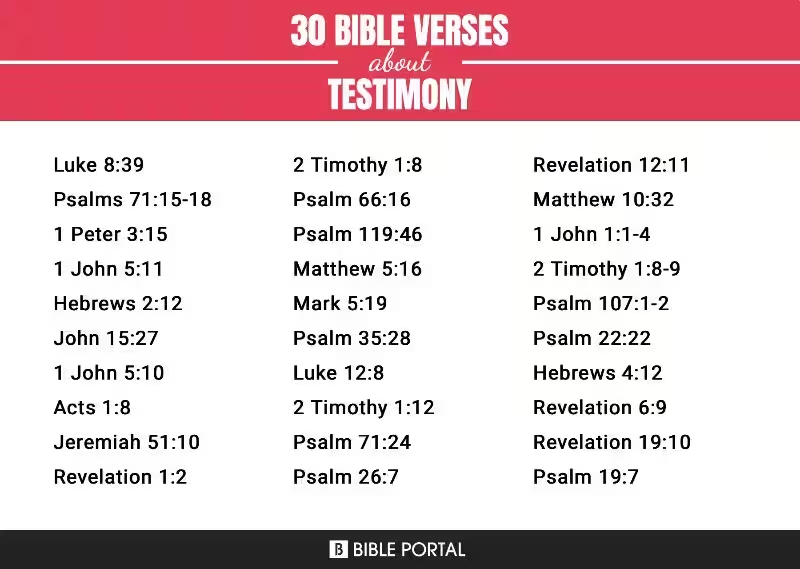
We all crave connection, meaning, and a sense of purpose in life. Many turn to religious scriptures for answers, solace, and a framework for understanding the world around us. These scriptures often contain narratives of faith, experiences of divine guidance, and accounts of testimony, which are experiences that solidify belief. These testimonies can be personal or communal, shaping our understanding of the divine and our place within it. This journey into the scriptures of testimony is about more than just reading words; it’s about engaging with them in a way that fosters personal growth and strengthens our faith.
Imagine trying to navigate a vast ocean with no compass or map. Scriptures of testimony are like those indispensable tools, offering guidance, direction, and a sense of belonging within a larger narrative. They showcase the human struggle and the divine response, offering examples of how faith can be tested and reaffirmed. These stories provide a powerful framework for understanding morality, ethical decision-making, and the complexities of the human spirit. For example, a story about overcoming adversity can inspire us to face our own challenges with courage and resilience. This study is not just about the stories themselves, but about what those stories teach us about faith and how we can apply those lessons in our lives.
Personal testimony is a powerful and often overlooked aspect of scripture. It’s not just about recounting events; it’s about the profound impact those events had on the individual. For example, think of the accounts of individuals encountering divine guidance – how their lives were fundamentally altered. This transformation, this profound change, is what gives testimony its strength. These experiences often involve a deep sense of calling, a change in worldview, and a powerful sense of purpose. This personal connection is crucial in solidifying faith. It’s a bridge from the abstract to the tangible, making the divine feel more real and present.
We often find examples in many religious traditions where individuals were transformed by a profound experience. A simple act of kindness, an experience of profound loss, or even a sudden moment of insight – these moments of profound change can shape our understanding of faith and our place within it. This personal journey of testimony is often described as a testament to the power of belief and a confirmation of faith. Imagine witnessing someone radically changed by their faith – their actions, their words, and their very demeanor transformed. This is the power of personal testimony, and it is often the most compelling component of religious scriptures.
Communal Testimony: Building a Collective Faith
Communal testimonies provide a shared experience of faith and a sense of belonging. Consider the ways in which stories of shared struggles and triumphs can unite a community. This shared experience fosters a sense of common purpose and deepens the understanding of the divine within that group. Think about how a shared experience of a miracle, a powerful sermon, or a moment of collective prayer can strengthen the faith and unity of a community. Examples include the stories of shared hardship and the subsequent acts of resilience in the Bible or the Quran, highlighting the support and strength found in unity. These stories build a narrative of shared experience, reinforcing the notion that faith is not a solitary journey.
Community-based testimonies aren’t just about individual accounts either. They often highlight the importance of collective action, shared responsibility, and the power of prayer. Shared stories of overcoming challenges together, offering support to one another during difficult times, and the collective celebration of joy and triumph — these are testaments to the strength of community. Examples can range from the biblical accounts of the Israelites’ exodus to modern-day accounts of religious communities supporting each other through natural disasters. These collective experiences reinforce the importance of faith not just as an individual pursuit, but as a social and communal act.
Scriptures of testimony often serve as a moral compass, shaping our values and guiding our actions. These narratives provide examples of ethical decision-making, showing how faith influences our interactions with others and our understanding of the world. For example, stories about compassion, justice, and forgiveness can directly impact our own values and choices, shaping how we treat others and how we navigate our relationships. These ethical teachings are deeply embedded within the fabric of these scriptures and serve as a constant reminder of the importance of living a virtuous life.
Scriptures of testimony often highlight virtues like compassion, forgiveness, humility, and sacrifice. These values, woven into the narratives, serve as guides for ethical decision-making. Think about the many examples of compassion and generosity in the Bible – the parable of the Good Samaritan, acts of charity, and the concept of loving your neighbor as yourself. These examples can provide a framework for how we approach our own relationships and interactions with the world, helping us to become more compassionate and ethical people.
Frequently Asked Questions about Scriptures of Testimony and Religion
What are scriptures of testimony?
Scriptures of testimony are religious texts that are considered to be divinely inspired and contain accounts of personal experiences, revelations, or events that are meant to strengthen faith and provide guidance for believers. They often include prophecies, historical narratives, moral teachings, and spiritual practices.
What is the difference between scriptures of testimony and other religious texts?
While both can contain similar elements, scriptures of testimony often emphasize personal experiences and revelations as their primary source of authority, whereas other religious texts might prioritize historical accounts, laws, or philosophical concepts.
Why are scriptures of testimony important to believers?
Scriptures of testimony offer believers a direct connection to the divine, providing personal accounts of the divine’s intervention in human affairs. They can be a source of strength, wisdom, and spiritual guidance.
How do scriptures of testimony relate to the concept of religion?
Scriptures of testimony are central to many religious traditions, serving as foundational texts that shape beliefs, practices, and community life. They are interpreted and applied in various ways within different religious contexts.
How are scriptures of testimony interpreted?
Interpretations of scriptures of testimony vary depending on the specific religious tradition and the individual interpreter. Methods of interpretation may include literal, allegorical, or symbolic understandings, and often involve considering the historical and cultural context of the text.
Can scriptures of testimony be used to prove or disprove religious beliefs?
Scriptures of testimony are often used to support religious beliefs, but their use for proof or disproof is complex. The validity of the texts depends on individual faith and the interpretation within a specific religious framework. They are not universally accepted as objective historical or scientific evidence.