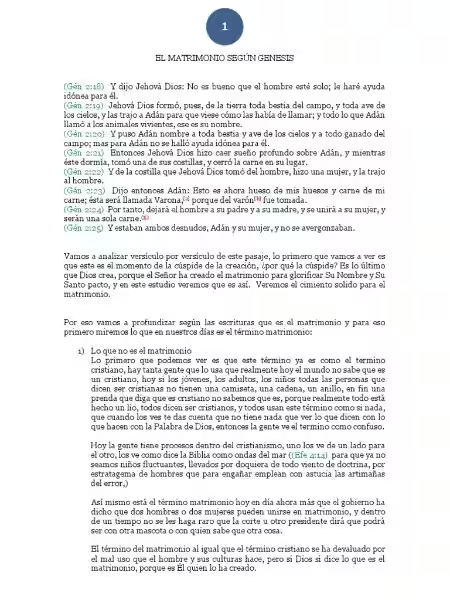
The concept of marriage, deeply interwoven with human history and spirituality, finds its origins in narratives like those found in the Book of Genesis. These stories, central to many religious traditions, offer insights into the nature of relationships, the role of procreation, and the divine purpose for family structures. These narratives often underscore the profound importance of commitment and companionship within the framework of a lifelong union, a concept that resonates deeply with modern understanding of family and societal structures. Exploring these foundational texts can illuminate the enduring values and principles underpinning marriage, even in contemporary society.
Many believe that the Genesis accounts provide a blueprint for understanding marriage as a sacred institution. These accounts are not just about creating a social contract; they are believed to be about creating a sacred covenant between individuals and, in some cases, between individuals and a divine creator. For example, the story of Adam and Eve highlights the concept of complementarity and the importance of companionship in human existence. These narratives also often establish a clear role for both partners within the marriage, though these interpretations can vary significantly across different religious and cultural contexts. This framework helps us explore the multifaceted aspects of marriage and its importance throughout history.
The Genesis Narrative: A Window into the Divine Design
The Genesis narratives, especially those regarding Adam and Eve and the first families, offer a variety of interpretations regarding the divine intention behind marriage. These stories often emphasize the importance of procreation and the continuation of humanity. For example, the commandment to be “fruitful and multiply” directly links marriage to a larger divine purpose. These stories provide invaluable insight into the ancient understanding of family as a fundamental building block of society. Examining these stories with a critical eye can help us consider how the roles of husband and wife have been understood across different eras and cultures.
The Genesis stories also allude to a deeper spiritual dimension to marriage. They often portray the creation of the first humans as a deliberate act of God, emphasizing the inherent value and importance of human relationships. For example, the creation of Eve from Adam’s rib symbolizes the unbreakable bond between husband and wife, highlighting the idea that marriage is not simply a contractual agreement but a deeply personal and spiritual bond. Think about how this idea of a uniquely spiritual connection might have influenced social structures and family dynamics throughout history. This often leads to profound questions about the nature of love and the meaning of life within a religious context.
Exploring Diverse Interpretations of Genesis
The Genesis account is not a singular text; it comprises various stories, each with its own nuances and interpretations. Different religious traditions and individual perspectives may offer contrasting interpretations of these narratives. These diverse perspectives can provide valuable insight into cultural and historical contexts. For instance, some interpretations focus on the literal meaning of the text, while others emphasize a symbolic or metaphorical reading. These differences highlight the richness and complexity of religious traditions and the importance of critical analysis in understanding these texts. Here are some popular interpretations:
Literal Interpretation: Viewing the events as literally occurring as described.
Symbolic Interpretation: Understanding the story as a metaphor for deeper spiritual or moral truths.
Metaphorical Interpretation: Seeing the story as a representation of human relationship dynamics.
Understanding these different approaches is crucial to understanding how interpretations of Genesis have shaped the development of religious views on marriage. Furthermore, the different interpretations of the same text create discussion points and highlight the diverse and evolving nature of faith itself. This is a prime example of how religious texts are often subject to varying perspectives and interpretations over time.
Ultimately, exploring Genesis and its relationship to marriage provides a framework for understanding the deep-rooted values and beliefs about family and relationships within various religious contexts. These narratives are a rich source of insight into human history and our attempts to make sense of our existence and our relationships with one another. They serve as a powerful lens through which we can consider the enduring significance of marriage and the importance of family in shaping our lives.
Frequently Asked Questions
What is the relationship between Genesis and marriage in religion?
Genesis, the first book of the Bible, describes the creation of humanity and the institution of marriage. Many religions, particularly Abrahamic faiths, view this account as foundational to their understanding of marriage, family, and human relationships.
What are some common interpretations of the Genesis creation story and marriage?
Interpretations vary. Some focus on the literal account of God creating Adam and Eve and their union. Others see the story as a symbolic representation of the relationship between God and humanity, or as a narrative about the origins of human society. The concept of marriage as a sacred union between a man and a woman is central to many interpretations, but various cultures and religions have different views on the specifics.
How do different religions view marriage?
Different religions have varying views on marriage. Some emphasize the lifelong commitment and monogamy, while others might include polygamy or other forms of marriage. Practices, rituals, and requirements may differ greatly across faiths.
How does the understanding of Genesis impact religious views on marriage today?
The understanding of Genesis influences many religious practices and teachings regarding marriage by shaping concepts of a sacred union, family responsibility, and moral codes. Contemporary interpretations often navigate the historical context of Genesis alongside modern societal values.
What are the theological implications of Genesis on marriage within different religious traditions?
Theological implications can vary, influencing how a religion defines marriage, its role in society, and the spiritual significance of the marital bond. These implications can impact issues such as divorce, same-sex marriage, and the overall understanding of human relationships.