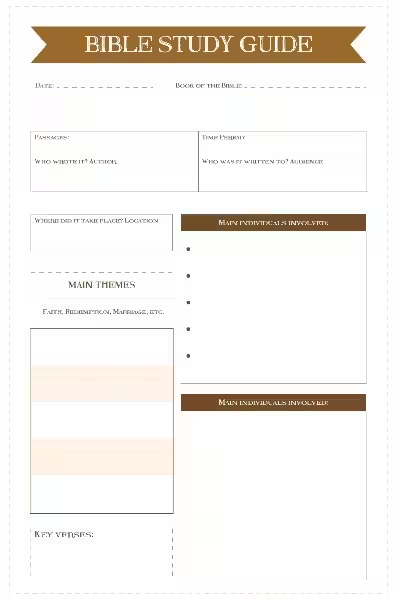
Delving into the Bible can feel daunting, like navigating a vast and ancient library. But thankfully, there are incredible resources available to guide us—Bible study books. These tools aren’t just collections of verses; they’re carefully crafted pathways to understanding God’s message, making it more accessible and personally relevant. They provide context, interpretation, and application, helping us move beyond surface-level reading to a deeper, richer understanding.
Imagine trying to understand a complex historical event without any historical context. That’s similar to reading the Bible without a proper study guide. Bible study books provide that crucial framework. They unpack the historical, cultural, and literary backgrounds of the passages, enriching our comprehension and application of the text. For example, a strong study book on the Book of Revelation will likely help you better understand the apocalyptic imagery by contextualizing it within the historical setting of the first-century church.
With so many Bible study books available, choosing the right one can feel overwhelming. Consider your goals and preferences. Are you seeking a detailed theological exploration, or a more personal devotional experience? Are you interested in a specific book or topic, or a more comprehensive overview of the entire Bible? Knowing your objectives will help you narrow down your choices. For example, a study book focused on the book of Proverbs might be perfect for someone looking to improve their decision-making skills. Alternatively, a book on the life of Jesus could help you understand his teachings and miracles in more detail.
Different study book structures cater to diverse learning styles. Some books offer detailed commentary, while others use questions to guide personal reflection. Some are more focused on application, while others focus on historical and literary analysis. Consider exploring different approaches, like journaling, group discussion or simply meditation to explore the scriptures. By trying different types of study books, you will find one that best suits your needs and preferences.
Understanding Diverse Approaches to Bible Study
Bible study books employ various approaches to interpretation and application. Some focus on the historical-cultural context, delving into the background of the authors, their intended audience, and the surrounding culture. Others concentrate on the literary genres within the Bible, recognizing that different books were written in different styles – poetry, prophecy, historical narrative, or letters. A study book focusing on parables, for example, would likely concentrate on the symbolism and deeper meaning embedded in the stories. Studying different approaches can make a significant impact on your understanding.
Consider comparing a traditional commentary approach with a more theological or devotional one. A commentary might focus on the literal meaning of the text, while a devotional book may highlight personal applications and spiritual insights. Understanding these different approaches can provide a richer, more nuanced perspective on the scriptures. For instance, a devotional book on Psalm 23 could focus on finding comfort and trust in God during challenging periods, while a commentary might focus on the historical and literary context of the psalm.
Beyond the Book: Integrating Bible Study into Your Life
Bible study books are invaluable tools, but they are only the beginning. True understanding requires consistent engagement and application in our daily lives. This means reflecting on what you’ve learned, journaling your thoughts and feelings, and seeking ways to incorporate the teachings into your relationships, decisions, and actions. For example, if you study a book about forgiveness, actively seeking to forgive others in your daily life is an important step in applying the teachings.
Consider joining a study group. Sharing your insights and reflections with others can deepen your understanding and provide fresh perspectives. This also allows you to connect with a supportive community. Find a study group that complements your current needs and interests. Implementing what you learn in your daily life is what truly transforms your perspective on the written word, making it alive and relevant. This is perhaps the most significant benefit of using Bible study books.
Frequently Asked Questions
What are some good study books of the Bible?
Several excellent study Bibles and commentaries are available, catering to different needs and levels of engagement. Some popular choices include the NIV Study Bible, the ESV Study Bible, and commentaries by noted scholars like John MacArthur or John Stott. Your local Christian bookstore can offer personalized recommendations based on your specific interests.
What is religion?
Religion is a collection of beliefs, cultural systems, and worldviews that relate humanity to spirituality and moral values. It often involves rituals, ceremonies, and a community of adherents who share similar beliefs and practices. Different religions have varying interpretations of the divine, the universe, and the human condition.
What are some different types of religions?
There are numerous types of religions, including Abrahamic faiths (Christianity, Islam, Judaism), Eastern religions (Hinduism, Buddhism, Taoism), and many indigenous and folk religions throughout the world. Each has its own unique history, beliefs, and practices.
How can I understand the Bible better?
Studying the Bible can be approached in several ways. Regular reading, journaling, prayer, and seeking guidance from pastors or teachers are all valuable tools. Using study Bibles, commentaries, and online resources can also enhance your understanding and provide different perspectives.
Local churches, synagogues, mosques, or temples are often good starting points for connecting with a community of faith. Online forums and groups can also be helpful in connecting with like-minded individuals. Exploring different communities and attending services can help you find a group that resonates with you.