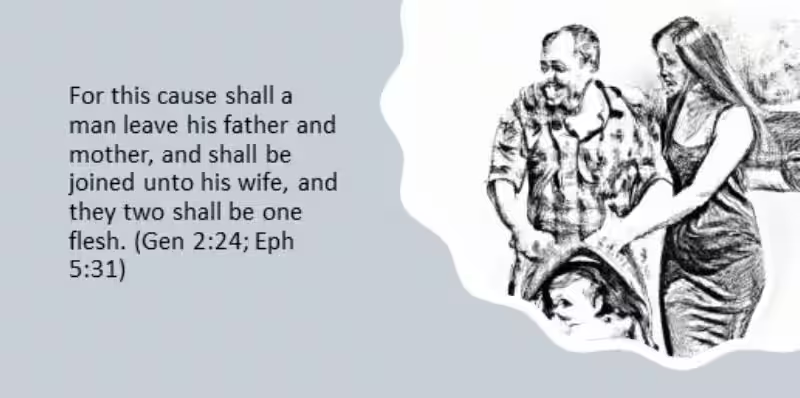
We often hear the phrase “leaving to cleave,” but what does it truly mean? It’s not simply about saying goodbye to something; it’s about a profound shift in allegiance, a commitment to a higher purpose. This concept resonates deeply across many different faiths and, in fact, with many types of relationships. Leaving to cleave is about prioritizing a new commitment that will significantly affect your life. That new commitment may be a significant other, a new vocation, or a newfound faith. The key is the profound shift in one’s allegiance. This process, often painful but ultimately rewarding, involves letting go of what was familiar and embracing what awaits.
Consider this example: a young woman, deeply rooted in her childhood faith, feels a pull towards a different spiritual path. This new path might involve a different set of beliefs and practices, potentially challenging the established comfort of her familiar surroundings. This is a classic example of leaving to cleave – leaving the old path to embrace a new one. This can be incredibly unsettling; however, it’s also a journey of profound personal growth. She may choose to leave the familiar to cleave to a deeper understanding of the universe. For many, this journey includes a period of questioning, exploration, and eventual acceptance, as their beliefs and life purpose evolve.
The idea of “leaving to cleave” finds expression in various religious traditions. In Christianity, the concept of leaving all and following Christ is a powerful example. Those who embrace this call are often expected to forsake their worldly possessions and attachments to cleave to a higher spiritual purpose. This often involves a radical shift in lifestyle, a turning away from the familiar. The decision to leave to cleave might involve giving up a comfortable life to follow a calling or to serve a cause.
In Buddhism, the journey of enlightenment often involves detaching from worldly attachments to achieve liberation. Letting go of ego and desires is a central aspect of this process – a “leaving to cleave” to a higher state of being. Followers embrace the liberation of detachment from the material realm to fully embrace spiritual freedom. Meditation and contemplation are integral parts of this process, allowing the individual to cleave to a newfound understanding of life and the universe. Similarly, in many other faiths, there are tenets that encourage a similar journey from prior attachments to a new faith or life direction. Examples include a monk’s decision to renounce worldly possessions or a missionary’s commitment to a new culture, or even a person’s decision to accept a new relationship.
Navigating the Challenges of Leaving to Cleave
The journey of leaving to cleave is rarely smooth. Grief and uncertainty often accompany the letting go of the familiar. One might experience feelings of loss, anxiety, or even fear. Acknowledging and processing these emotions is crucial in successfully transitioning to a new life path. Developing a supportive network of friends, family, or spiritual mentors can be very beneficial. These supportive networks offer crucial guidance and emotional support during this transition.
Fear of the unknown is a common obstacle. Yet, embracing the unknown is often where the greatest personal growth lies. A structured plan for the transition can help alleviate anxieties, offering a sense of control in a period of significant change. Developing a new routine in accordance with your new commitment can help manage stress and provide a sense of stability in the midst of change. Trusting in your intuition and focusing on your values will also be powerful. It’s also important to remember that the process is unique for each person, and there’s no one-size-fits-all answer.
Leaving to cleave is a testament to resilience and faith. It requires courage, sacrifice, and a willingness to embrace the unknown. Cultivating self-compassion is crucial throughout the process; it’s okay to feel lost or confused. Celebrating small victories along the way keeps the motivation alive. In essence, “leaving to cleave” is a powerful metaphor for any significant transformation. It can be a new career direction, a move to a new city, or even a change in relationship. It’s about the commitment to something larger than oneself.
Acknowledging the support of others is critical for success. This includes close friends, family members, or even mentors who can provide guidance and encouragement. Creating a new support system that aligns with your new beliefs or values is an important activity. Ultimately, embracing the potential for personal growth that comes with leaving to cleave is key to finding true fulfillment and meaning in life. Leaving to cleave can be a journey of self-discovery, where the process of letting go and embracing something new is both painful and fulfilling.
Frequently Asked Questions about Leave to Cleave: Religion
What is Leave to Cleave?
Leave to cleave is a phrase from the Bible, specifically Genesis 2:24, often cited in discussions about marriage. It describes the concept of a man leaving his family and cleaving to his wife.
What does “leave” mean in this context?
The “leave” in “leave to cleave” refers to leaving the family unit of origin to form a new one with a spouse. It doesn’t imply abandoning family entirely, but rather focusing on the new conjugal bond.
“Cleave” signifies a deep, abiding commitment and unity with one’s spouse. It implies a strong bond, shared life, and mutual support.
How is Leave to Cleave used in religious contexts?
Leave to cleave is frequently used in Christian contexts to discuss the marital relationship and the foundational importance of a unified partnership. Interpretations of the verses vary across denominations.
Is Leave to Cleave relevant to modern marriage?
Modern interpretations of Leave to Cleave emphasize the importance of commitment, mutual support, and the formation of a new family unit. Various perspectives exist regarding its practical application in modern society.
How does Leave to Cleave connect to religious teachings on family?
Leave to cleave can be interpreted as a foundational principle for family relationships. Different faiths may have varied interpretations and applications within their broader family teachings.
Are there any criticisms of the Leave to Cleave concept?
Some critics argue that Leave to Cleave may be misinterpreted to prioritize the spousal bond over familial relationships. Others contend that it can inadvertently promote patriarchal structures.