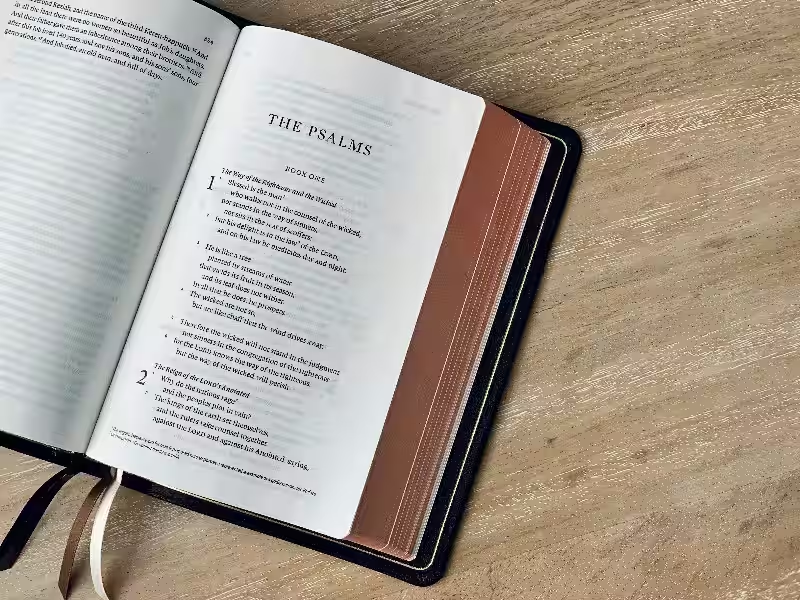
The King James Version (KJV) of the Bible, often referred to as the Authorized Version, stands as a literary landmark. Its rich language and poetic prose, however, can sometimes feel daunting for modern readers. This guide aims to demystify the KJV, providing practical steps to understand and appreciate its beauty. We’ll explore how to navigate its historical context, appreciate its unique language, and ultimately, read it naturally and meaningfully, making its profound message accessible to all.
Embarking on a journey through the KJV is much like exploring a vast, ancient library. You’re not just reading words; you’re engaging with a complex tapestry woven from centuries of faith, culture, and history. This approach encourages a deep understanding beyond just surface-level comprehension. It allows you to truly engage with the spiritual and literary richness that the KJV holds.
The KJV wasn’t plucked from thin air. It arose from a specific time and place, reflecting the cultural norms and linguistic structures of the 17th century. Understanding this context is key to unlocking its meaning. Consider these factors:
Historical background: The social, political, and religious climate significantly influenced the translators’ work.
Literary style: The language of the time was different from modern English, reflecting a different literary landscape.
Cultural references: Some passages might allude to concepts or customs unfamiliar to modern readers.
For instance, understanding the historical context surrounding a passage about the “kingdom of heaven” helps to appreciate the nuances of the concept within its contemporary meaning. The KJV translators were mindful in using the terms and concepts that held the most weight with the common person of their day. This is why many passages are phrased in a way that would be readily understood by the average English person living in that time. Paying attention to the historical settings of the stories can help to contextualize and deepen the impact.
The KJV’s language is often dense and evocative. It uses imagery, metaphors, and figures of speech that might be unfamiliar to modern readers. To appreciate these aspects, consider the following techniques:
Look up unfamiliar words: A good dictionary is your best friend. Many words have evolved in meaning since the 17th century.
Consider the context: The meaning of a word often depends on the surrounding text.
Read slowly and carefully: Allow yourself time to absorb the nuances and imagery.
Imagine trying to understand a poem written in a language you don’t know. You need to understand the structure and meaning of the words and how they relate to each other and the entire piece. The KJV is much the same. By deconstructing the language piece by piece, you will uncover layers of meaning, hidden imagery, and intricate literary structures. This slow and thoughtful approach allows you to experience the beauty and power of the language.
Reading the KJV Naturally
Reading the KJV naturally isn’t about abandoning its historical richness. Instead, it’s about finding a balance between respecting its historical context and understanding its message within a modern framework. Consider these approaches:
Read it aloud: This can help you to hear the rhythm and flow of the language.
Read it in small chunks: Don’t try to digest an entire chapter at once.
Use study Bibles or commentaries: These resources can provide helpful explanations and insights.
Imagine you’re reading a novel from a different time period. You might want to look up some words or phrases or research how language has changed. However you should also focus on what the author originally intended to communicate to the reader. The KJV is not unlike this. Engaging with the KJV actively, rather than passively, can enrich your understanding and appreciation for this powerful text. Finding the proper balance can make the text both historically relevant and modernly insightful.
Ultimately, reading the KJV is a journey of personal discovery. It’s about connecting with a timeless message in a way that resonates with your own life and experiences.
Reflect on the passages: Allow time for reflection and contemplation.
Discuss with others: Sharing your interpretations with others can deepen your understanding.
Apply the teachings to your life: Consider how the wisdom in the KJV can guide your actions and decisions.
The beauty of the KJV lies in its ability to speak to different generations and experiences. By approaching the KJV with an open heart and mind, you can discover the timeless wisdom and spiritual truths that continue to inspire and guide millions. It’s a conversation with the timeless wisdom of the scriptures, providing guidance and understanding in your daily journey.
Frequently Asked Questions
How do I read the KJV?
The KJV, or King James Version of the Bible, is a translation of the Bible into English. Reading it like any other book, focusing on understanding the meaning of the text, is key. Consider using study guides, commentaries, or other resources to help with comprehension if needed.
What is religion?
Religion is a complex concept encompassing beliefs, practices, values, and institutions centered around the spiritual or supernatural. Different religions have diverse perspectives on the nature of existence, the purpose of life, and the relationship between humanity and the divine.