Why the Euphrates dries up: causes, meaning, and risks
Why the Euphrates dries up: causes, meaning, and risks
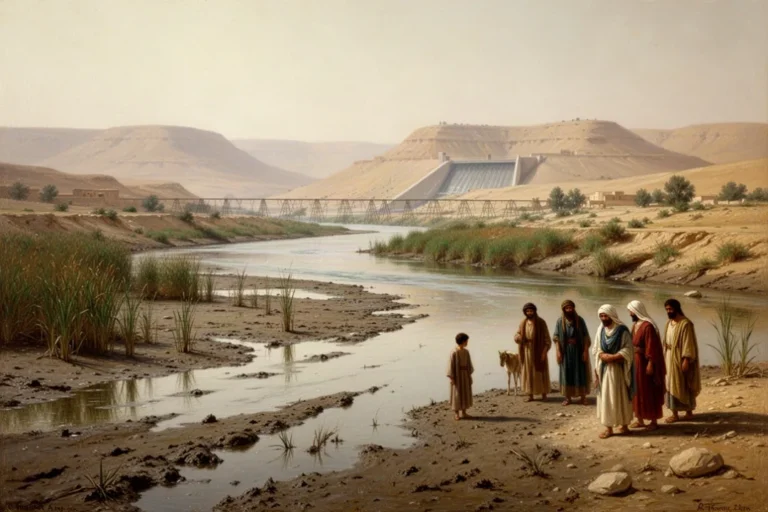
The Euphrates has not completely disappeared, but parts of the river have experienced severe low flows, exposed riverbeds, and shrinking reservoirs. The main causes are prolonged drought, hotter weather, upstream dams, water management decisions, and conflict across the basin.
The river’s decline matters because millions of people in Turkey, Syria, and Iraq depend on it for drinking water, farming, electricity, fishing, and wetlands. The phrase “the Euphrates dries up” also has a religious meaning for many readers because the river appears in biblical prophecy, especially Revelation 16:12. That passage should be distinguished from reports about modern water levels.
The Euphrates is a large international river, and its flow changes from one location and season to another. A dry-looking channel in one stretch does not mean the entire river has vanished. Some sections may retain substantial water while nearby reservoirs, canals, or tributaries show serious shortages.
Recent low-flow conditions have been especially visible in parts of Syria and Iraq, where reduced releases from upstream reservoirs combine with drought and intense heat. Satellite images and local reporting may show broad sandbars, isolated pools, or exposed infrastructure. Those images are real evidence of stress, but they can also create the misleading impression that the whole river is dry.
The river begins in eastern Turkey, where the Murad and Karasu rivers join to form the Euphrates. It then flows through Syria and Iraq before meeting the Tigris and continuing through the Shatt al-Arab toward the Persian Gulf. Conditions upstream strongly influence the water available downstream.
The clearest answer: the Euphrates is under severe pressure, not universally absent. “Drying up” describes a major decline in flow in some places and periods, rather than proof that every section has become completely dry.
Why the Euphrates is losing water
Hotter and drier weather reduces natural flow
The Euphrates depends on winter snow, seasonal rain, and gradual melting in its headwaters. When precipitation falls below normal, less water enters the river system. Warmer temperatures also cause snow to melt earlier, which can move water through the system before farms and communities need it most.
Heat increases evaporation from reservoirs, irrigation canals, wetlands, and open soil. It also raises the water demand of crops. A dry year therefore creates a double pressure: there is less water arriving, while agriculture, households, and ecosystems require more of it.
Climate patterns naturally vary, so one drought does not prove that every low-flow event has the same cause. However, repeated heat extremes and changes in precipitation can make recovery more difficult. A river basin that once recovered after a single dry season may now face several consecutive years of limited inflow.
Upstream dams change when and where water flows
Turkey has constructed major dams and reservoirs on the Euphrates as part of its development and energy infrastructure. These projects provide hydroelectric power, flood control, irrigation storage, and regulated releases. They also change the timing and amount of water reaching Syria and Iraq.
Reservoirs do not simply make water disappear. They store it, release it at selected times, and lose some of it through evaporation and seepage. Downstream countries may nevertheless receive much less water during critical periods if releases are reduced or delayed.
Water-sharing arrangements and negotiations influence those releases. The basin crosses national borders, so decisions made in one country can affect drinking water, crops, power generation, and wetlands far downstream. Political tension can make coordinated planning harder, particularly during drought.
Irrigation consumes much of the available supply
Farming is one of the largest users of Euphrates water. Irrigation canals may lose water before it reaches fields, especially where channels are unlined, poorly maintained, or damaged. Older irrigation systems can also encourage farmers to apply more water than crops require.
When surface water becomes scarce, farmers may pump groundwater. That can keep fields productive for a time, but excessive pumping lowers underground reserves and may draw in salty water. In some locations, soil salinity makes farmland less productive even when irrigation water remains available.
Water shortages can also encourage a shift toward thirsty crops or emergency planting decisions. Without reliable information about future releases, farmers may invest in crops that cannot mature if river levels fall. The result is wasted seed, lost income, and greater pressure on remaining supplies.
War and damaged infrastructure intensify the shortage
Conflict has damaged pumping stations, treatment plants, canals, electrical systems, and monitoring equipment in parts of the Euphrates basin. A community may have water nearby but lack the power or machinery needed to move and clean it.
War also makes maintenance and data collection difficult. Broken gates can waste water, while blocked canals prevent it from reaching farms. Displaced people may settle in areas where local water systems were designed for far fewer residents, increasing demand during already difficult conditions.
Pollution creates another layer of risk. When river levels fall, the same amount of sewage, agricultural runoff, or industrial contamination is diluted by less water. Pollutants can therefore become more concentrated, raising treatment costs and threatening human health.
How low Euphrates levels affect people and ecosystems
Drinking water becomes less reliable
Cities and villages along the river depend on intakes, pumps, treatment plants, and canals positioned for particular water levels. As the river falls, pumps may no longer reach the channel effectively. Water utilities then face higher costs, intermittent service, or the need to bring water from farther away.
Low flows can also reduce water quality. Warm, shallow water supports faster growth of some algae and can concentrate salts and pollutants. Treatment plants may need additional processes to produce safe drinking water. Families without dependable municipal service often have to buy water or rely on unsafe local sources.
Farms face crop losses and soil damage
Farmers along the Euphrates grow cereals, vegetables, cotton, fruit, and other crops, although the mix varies by region. A shortage during planting or flowering can reduce yields sharply. Small farms are particularly vulnerable because they may not have deep wells, efficient irrigation, or savings to absorb a failed harvest.
Repeated shortages can cause soil salinization. Irrigation water leaves salts behind as it evaporates, and inadequate drainage prevents those salts from being washed away. Over time, land may produce less food and require expensive rehabilitation.
Falling agricultural output can raise food prices and reduce rural employment. Some households may leave farming areas for cities or other regions. Migration is not caused by water alone, but prolonged river stress can combine with unemployment, insecurity, and poor public services to accelerate displacement.
Fish, birds, and wetlands lose essential habitat
The Euphrates supports fish, amphibians, waterbirds, reeds, riparian plants, and wetland ecosystems. When channels shrink, fish breeding areas disappear and water temperatures rise. Isolated pools may become too warm or oxygen-poor for aquatic life.
Downstream wetlands are especially sensitive to reduced inflow. Marshes in southern Iraq depend on a balance of fresh water and seasonal flooding. Less river water can cause reeds to die back, reduce habitat for birds, and increase salinity. Wetland loss also removes natural services such as flood storage, fish production, and water filtration.
Riverbanks may become unstable as flows change. Exposed sediments can blow as dust, while invasive plants may spread in disturbed areas. The ecological effects may continue even after water levels temporarily improve because breeding cycles, vegetation, and food webs need time to recover.
Hydroelectric power becomes less dependable
Dams generate electricity by moving water through turbines. When reservoir levels fall, operators may have to reduce generation or release water for higher-priority needs. That can produce power shortages at the same time that communities need more electricity for cooling and water pumping.
Energy and water decisions are closely connected. Releasing more water can support farms and cities but leave less available for electricity. Holding water for power generation can protect the grid temporarily while worsening downstream shortages. Good planning requires transparent data and decisions that consider the whole basin rather than a single facility.
What “the Euphrates dries up” means in biblical prophecy
The Euphrates appears repeatedly in the Bible as a significant geographic and symbolic boundary. In Genesis, it is named among the rivers associated with the garden of Eden. Elsewhere in the Hebrew Bible, it marks part of the territory connected with Israel’s promised land and appears in accounts involving ancient empires.
In Revelation 16:12, an angel pours out a bowl on the Euphrates, and the river’s water is described as drying up to prepare a way for eastern kings. The passage forms part of a larger apocalyptic sequence involving judgment and conflict. It is not written as a modern hydrology report or a step-by-step forecast of reservoir levels.
Readers interpret this prophecy in different ways. Some expect a future physical event involving the actual river. Others understand the image symbolically, as a picture of barriers being removed or political powers being prepared for confrontation. Some interpret Revelation through its first-century historical setting and apocalyptic style.
Those differences matter because a photograph of a low river does not, by itself, establish that a prophecy has been fulfilled. Geographical fact and theological interpretation answer different questions. Hydrology examines rainfall, snowmelt, dams, withdrawals, and pollution; biblical interpretation examines literary context, symbolism, history, and religious tradition.
Keep the categories separate: a declining river can be an environmental emergency without being proof of a particular end-times interpretation. Treating a religious image as scientific evidence can obscure the practical water crisis facing communities today.
How to assess claims that the river has dried up
Online posts often pair dramatic images with claims that the Euphrates is “completely dry.” Before accepting that wording, check where the image was taken, when it was taken, and whether it shows the main channel, a reservoir, an irrigation canal, or a seasonal side channel.
Water levels can change after rainfall, snowmelt, emergency releases, or changes in dam operations. A single image captures one place and one moment. Reliable reporting should identify the location, provide a date, and explain whether the measurement reflects river discharge, reservoir storage, or a visual observation.
Useful evidence may come from local water authorities, river-basin agencies, satellite monitoring, hydrological research, and established news organizations. No single source is perfect, especially in conflict zones, so compare information from several credible sources when a claim has major political or religious implications.
Common mistakes when interpreting Euphrates reports
Assuming one dry section represents the entire river: inspect the geographic location and distinguish the headwaters, reservoirs, main channel, and downstream wetlands.
Confusing a low reservoir with a dry river: reservoir shorelines can retreat dramatically while water continues to flow through other parts of the basin.
Ignoring the date: an image from a severe drought may circulate years later as if it shows current conditions.
Treating correlation as a single cause: drought, dams, irrigation, conflict, and climate change can operate together.
Using prophecy to replace evidence: religious interpretation cannot determine a river’s discharge or prove where a photograph was taken.
Assuming a temporary rise solves the problem: one wet season may not restore groundwater, wetlands, soil quality, or damaged infrastructure.
What governments and communities can do about water shortages
There is no single repair that can restore a stressed international river. Effective action combines better allocation, efficient irrigation, reliable monitoring, infrastructure repair, and cooperation across borders. Measures must also protect basic household water needs rather than treating every drop as an agricultural or energy input.
Water managers can use flow forecasts and shared data to plan releases before reservoirs reach crisis levels. Clear operating rules are especially important during drought, when countries need to know how much water is available and how decisions will be made.
Farms can reduce losses through drip irrigation, laser land leveling, canal maintenance, mulching, improved scheduling, and crops suited to local conditions. Efficiency does not automatically create new water: savings should be measured at the basin level so that reduced withdrawals genuinely benefit the river rather than simply expanding irrigated acreage.
Urban systems also need attention. Fixing leaks, improving wastewater treatment, protecting wells from contamination, and reusing treated water can reduce pressure on the river. Emergency drinking-water programs should prioritize vulnerable households, hospitals, schools, and displaced communities.
Wetlands and river habitats require designated environmental flows. Keeping a small amount of water in the channel can protect fish, plants, and downstream ecosystems even during a drought. Environmental needs should be included in allocation plans instead of being treated as an optional benefit after all other demands are met.
Practical ways to evaluate a new claim
Find the exact place. Look for the river section, reservoir, city, or province shown in the report.
Check the publication date and image date. They may be different, and recycled images are common.
Identify the measurement. Ask whether the source reports river flow, water elevation, reservoir storage, or only a visual impression.
Compare independent sources. Use official data where available alongside reputable local and international reporting.
Separate observation from interpretation. “Water is low here” is an observation; “this proves a prophecy” is an interpretation.
Look for the broader cause. Read whether drought, dam releases, withdrawals, infrastructure damage, or pollution explains the reported condition.
Why the Euphrates may remain vulnerable even after rain returns
A rainy season can improve river levels, but recovery is not immediate or guaranteed. Reservoirs may need months to refill, and dry soils can absorb early rainfall before it reaches streams. Snowpack, groundwater, and wetland vegetation may recover on different schedules.
Water quality can remain poor after a drought because pollutants have accumulated, treatment systems may still be damaged, and saline soils continue affecting farms. Fish populations and bird habitats may also need multiple breeding seasons to rebuild.
Long-term security depends on managing demand as well as increasing supply. New dams or wells may offer short-term relief but can transfer shortages downstream or deplete reserves. Stronger planning uses basin-wide assessments that account for people, agriculture, energy, ecosystems, and future climate conditions.
The Euphrates is therefore best understood as a stressed, heavily managed river rather than a simple symbol of disappearance. Its low-flow episodes reveal how closely water, food, electricity, public health, regional politics, and religious interpretation can become connected. The most useful response is careful evidence, responsible water management, and protection for the communities and ecosystems that depend on the river.
Frequently asked questions
Is the Euphrates completely dry?
No. The Euphrates has experienced very low levels in particular stretches and seasons, but the entire river has not universally disappeared. Conditions differ between Turkey, Syria, and Iraq, as well as between the main channel, reservoirs, irrigation canals, and wetlands. Reports should be checked for a specific location and date before describing the whole river as dry.
Does climate change cause the Euphrates to dry up?
Climate change is one factor that can intensify the problem by increasing heat, evaporation, and drought risk while changing snowmelt and rainfall patterns. It is not the only cause. Dam operations, irrigation withdrawals, damaged infrastructure, pollution, and water-sharing disputes also affect how much water reaches downstream communities.
What countries depend on the Euphrates?
Turkey, Syria, and Iraq are the principal countries in the Euphrates basin. People in all three rely on the river for some combination of drinking water, agriculture, hydropower, fisheries, and wetlands. Because the river crosses borders, decisions about storage and releases in one country can have consequences far downstream.
Does Revelation say the modern Euphrates will literally dry up?
Revelation 16:12 describes the Euphrates’ water being removed to prepare a way for eastern kings, but Christian traditions interpret that image differently. Some expect a future physical event, while others read it symbolically or in its ancient literary context. Modern low water levels do not establish one interpretation as fact.







Leave a Reply