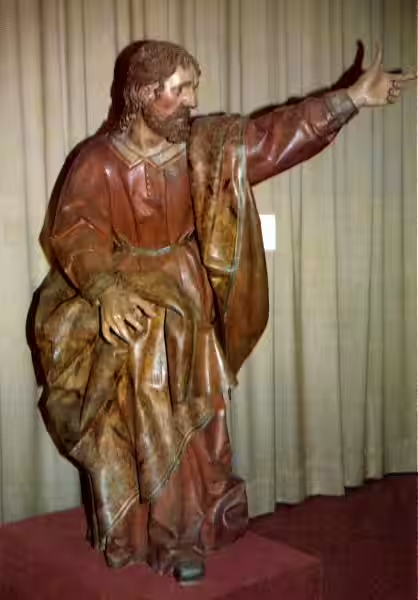
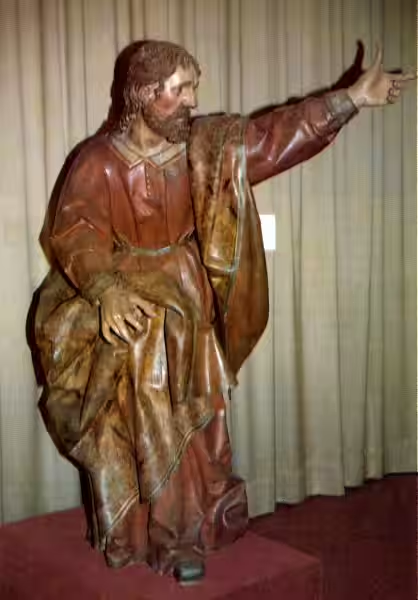
The betrayal of Jesus by Judas Iscariot is a pivotal moment in Christian history, forever etched in religious texts and narratives. This act, while deeply tragic, also sparked a critical question: who would take Judas’s place? The answer, though seemingly simple, carries profound theological and historical weight. Understanding this replacement is crucial to appreciating the dynamics of the early Christian community and the evolving understanding of discipleship. Judas’s actions prompted a profound examination of loyalty, faith, and the very nature of discipleship.
The dramatic events surrounding Judas’s betrayal and the subsequent election of a replacement underscore the importance of community and the shared responsibility of faith. This wasn’t merely a formality; it was a significant act of reaffirmation, demonstrating the collective strength and commitment of the disciples. The process itself, as detailed in the Bible, highlights the importance of community decision-making and the need for divine guidance in moments of crisis. This act of replacement serves as a timeless example of how communities navigate loss and transition. For instance, think of how a team replaces a key member or when a company seeks to fill a leadership void; the process often mirrors the deliberate approach taken by the disciples.
The selection of a replacement for Judas Iscariot is vividly portrayed in the book of Acts. Crucially, this isn’t presented as a simple matter of filling a void; instead, it’s a powerful affirmation of collective responsibility. The disciples believed the replacement required divine intervention, recognizing they couldn’t simply fill the vacancy on their own. This underscores the understanding that they were not simply followers, but participants in a higher calling. They believed God’s will was at play and needed to be sought. They prayed for divine guidance.
The process outlined in Acts involves a strict adherence to a specific set of criteria. The replacement needed to have walked alongside Jesus, been a witness to his ministry, and understood the crucial lessons he imparted. This underscores the significance of personal experience and witness in the early Christian faith. The selection of Matthias highlights the importance of selecting someone deeply connected to the core mission of the movement. This shows that the disciples weren’t just looking for a replacement; they were seeking someone who would continue to embody the spirit and teachings of Jesus. Think of how important it is today to choose the right leaders for any organization or movement.
Theological Implications of the Replacement
The story of Judas’s replacement goes beyond the literal act of choosing a new apostle. It represents a pivotal moment in understanding the nature of community and the meaning of discipleship. The emphasis on choosing a replacement underscores the importance of collective unity and the shared responsibility within the religious community. It also speaks to the profound impact of betrayal and the resilience of faith. It’s a powerful commentary on the human capacity for both darkness and light.
The theological implications are profound: it highlights the concept of divine guidance in human affairs. The disciples believed they needed divine intervention to make the best choice. This isn’t just about selecting an individual; it’s about the belief that God plays an active role in guiding and supporting the faith community. It reminds us that even in the face of immense challenges, faith, community, and prayer can lead to meaningful solutions. Think about how important prayer and faith are in times of crisis for individuals and organizations.
The choice of Matthias as Judas’s replacement, while not explicitly mentioned as having had a profound effect, highlights the lasting impact of such events on the early Christian community. It laid the groundwork for future leadership within the nascent movement and served as a symbolic act representing unity in the face of adversity. The early church needed to maintain continuity and strength, and the replacement process clearly shows this. The impact can be seen in the development of broader religious institutions.
Ultimately, the selection of Matthias resonated significantly in the development of early Christian communities. The process, filled with prayer and reflection, underscores the importance of collective decision-making within a faith-based context. It demonstrates the early Christian community’s ability to adapt and evolve, to learn from the past, and to find strength in unity. The choice was not about filling a position, but about upholding the values and mission that Jesus had instilled in them. This is something we can all learn from.
Frequently Asked Questions
Who was the replacement for Judas Iscariot?
Matthias was chosen by the apostles to replace Judas Iscariot.
What is Religion?
Religion is a belief system and a way of life that often includes a set of moral codes, rituals, and practices centered around a deity or higher power. Different religions have varying doctrines and philosophies.