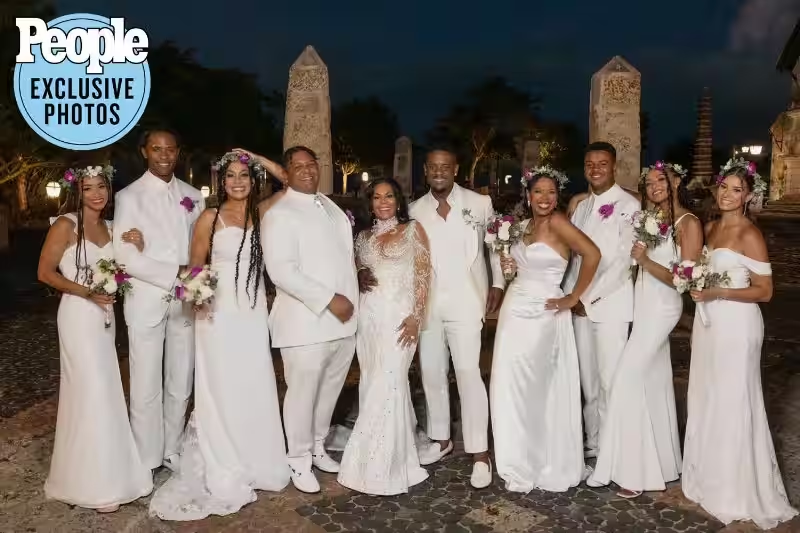
In a world steeped in diverse traditions and beliefs, the question of who we marry often intertwines with our religious affiliations. Religious institutions frequently play a significant role in shaping our understanding of relationships and partnerships. This isn’t just about the ceremony; it encompasses the values, morals, and expectations that underpin the decisions we make about who we choose to share our lives with. For many, religious guidance significantly influences the search for a compatible life partner, often by emphasizing spiritual compatibility and shared values above all else.
Consider the concept of arranged marriages prevalent in some cultures. These marriages, while often structured around religious or familial expectations, also reflect a desire for social stability and continuity. Similarly, in many religious communities, pre-marital counseling is common, providing a framework for understanding potential partners and their compatibility, based on core religious principles. These practices highlight the significant role religion plays in regulating social interactions and shaping the selection process for marriage partners.
Religious teachings on marriage vary considerably across different faiths. Many religions emphasize the significance of marriage as a sacred union, a covenant between two individuals and often with God. Some focus on the importance of procreation and family lineage, while others prioritize the development of spiritual kinship and mutual support. For example, in some Christian denominations, marriage is seen as a sacred commitment that reflects aspects of Christ’s relationship with the Church.
These beliefs often translate into specific rules and guidelines surrounding marriage partners. Examples include restrictions on marrying outside of the faith or adherence to specific customs related to courtship and engagement. These norms influence the pool of potential partners available to individuals within a given religious community and reflect the values and priorities of that community. Furthermore, religious texts and traditions often provide guidance on the roles and responsibilities of spouses within a marriage.
The concept of natural selection in human behavior isn’t necessarily at odds with religious influences on mate selection. While religious practices and beliefs might shape the criteria individuals use to find a partner, human nature still plays a role. Factors like physical attraction and shared interests are often present in the decisions people make, regardless of their faith. Ultimately, individuals integrate their religious values with their natural inclinations when choosing a partner. This integration can lead to a fascinating interplay of cultural norms and personal preferences.
Consider the concept of cultural compatibility. Individuals might be drawn to someone sharing their religious background, not just because of the faith itself, but because shared cultural values surrounding the faith create a deeper level of understanding. This means that while religious beliefs can strongly influence the search for a partner, innate human traits and shared cultural contexts are also important elements in the process. An example is how a couple may find comfort in traditional religious celebrations and customs alongside shared personal interests.
Impact of Religious Institutions
Religious institutions play a critical role in shaping how individuals approach marriage. Many religious organizations offer support and resources for navigating the challenges of finding and maintaining a successful marriage. This includes pre-marital counseling, marriage enrichment programs, and access to a supportive community of believers. These communities offer a network of individuals who share similar values, creating a sense of belonging and a common understanding of marriage. For example, a church or mosque can provide a space for couples to learn about their faith and apply its principles to their relationship.
Furthermore, religious institutions often define the parameters of acceptable marriage practices within their community. This can influence the processes of dating, engagement, or the requirements for marriage. These influences can be seen in ceremonies and rituals, as well as in the social structures surrounding marriage. Religious values can be a key part of the support network for a marriage, from guidance to community support, in a way that mirrors the positive influence of supportive relationships within families.
Religion’s impact on who marries is multifaceted and complex. It ranges from dictating the criteria for choosing a partner to providing a framework for a supportive community. It’s important to remember that individuals integrate their religious beliefs with their natural inclinations when choosing a partner. The interplay between religious values and personal preferences creates unique and complex dynamics in the marriage process. Ultimately, the decision of who marries is profoundly personal, shaped by an array of factors that include religious affiliations, personal characteristics, and cultural context.
Ultimately, the journey toward finding a partner, especially within the context of religious beliefs, is a testament to the profound influence faith can have on individuals’ lives. The question of who marries is a profound and personal one, and the answer, for many, is deeply rooted in their religious traditions. As such, it is a unique and fascinating exploration into the intricate tapestry of human experience.
Frequently Asked Questions
Who Marries?
Marriage is typically performed by a legally authorized officiant, such as a judge, minister, rabbi, or priest. Specific requirements and procedures vary by jurisdiction.
Religion’s Role in Marriage?
Religious beliefs and traditions often play a significant role in marriage ceremonies and practices. However, a marriage doesn’t require religious affiliation or observance.