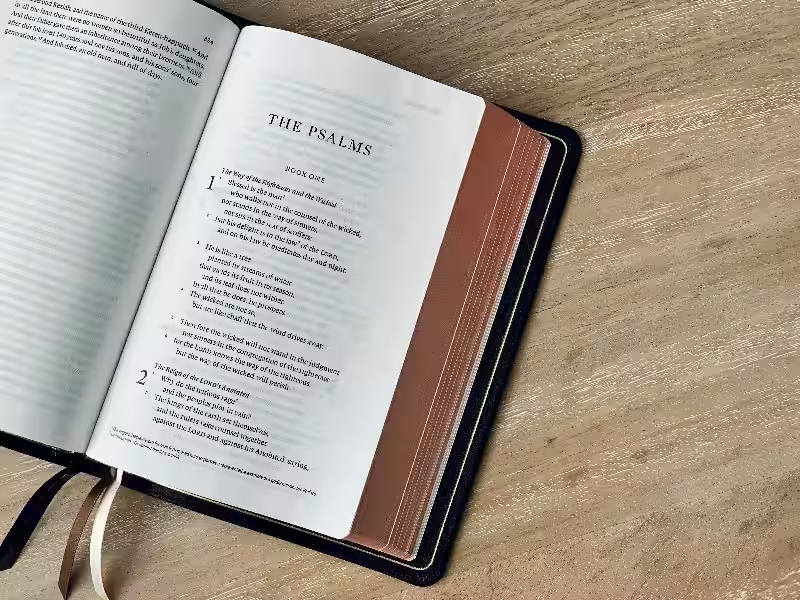
What's the Newest Version of the Bible? A Look at Modern Translations
What's the Newest Version of the Bible? A Look at Modern Translations
The Bible, a cornerstone of many religions, has been translated and interpreted countless times throughout history. This constant evolution reflects the need for a text to remain relevant and understandable across cultures and eras. Understanding the different versions is crucial for grasping the diverse perspectives and debates surrounding the interpretations of this sacred text. Ultimately, the concept of "newest" is subjective and depends on what one is looking for in a translation.
Many people assume that the "newest" version is the most accurate or even the most important. This isn't necessarily true. The latest translations often incorporate new insights from archaeology, linguistic developments, and historical research. For example, the discovery of ancient manuscripts can lead to revisions and clarifications in later translations, making them more nuanced and accurate. Instead of seeking the "newest," focusing on the translation best suited for your individual needs and understanding is often more helpful.
Choosing a Bible translation involves considering several key elements. The target audience is paramount. A translation aimed at academic scholars will differ significantly from one for a general audience. Also, the translator's theological background might influence their choices, leading to different interpretations of specific passages. Consider if the translation is intended for devotional use, for personal study, or for use in a religious service.
Different translations strive to balance accuracy with readability. Some prioritize literal word-for-word translations, aiming for precision at the cost of clarity. Others focus on conveying the meaning and context of the original languages, which can make the text more accessible to modern readers. For instance, the New International Version (NIV) is known for its readability, while the English Standard Version (ESV) offers a more literal approach. Ultimately, the "newest" translation isn't inherently superior if it fails to meet your reading and understanding needs.
The journey from ancient manuscripts to modern translations is a fascinating one. From the original languages of Hebrew, Aramaic, and Greek, the Bible has traveled through numerous stages of copying, translating, and interpreting. Early translations were often influenced by prevailing cultural and linguistic norms. Think about how languages evolve over centuries; words take on new meanings, and societal values shift. This evolution inevitably affects interpretations of the sacred text.
Modern translations often address these issues, drawing on a broader range of sources and incorporating insights from recent archaeological and linguistic discoveries. This leads to a constantly evolving understanding of the Bible's historical and cultural context. While many people consider the King James Version (KJV) a foundational text, modern editions offer fresh perspectives and linguistic accuracy. Using different versions allows for a richer comprehension of diverse interpretations. For example, comparing the KJV with the NIV can offer insight into how the same story can be presented differently.
Choosing the Right Translation for You
The choice of which version to read isn't simply about selecting the "newest." The ideal choice aligns with your individual needs and goals. Consider your background, your religious tradition, and your personal learning style. If you're new to scripture, a more accessible translation might be a great starting point. For those steeped in religious tradition, a more literal translation might be preferred. The New Living Translation (NLT), for example, strives for clarity and everyday language.
Your purpose for reading also matters significantly. Are you seeking devotional inspiration, theological reflection, or historical context? Different versions can be better suited to each of these purposes. Ultimately, the process is about finding a translation that resonates with you and helps you connect with the Bible's message in a way that feels meaningful and true. Exploring multiple versions expands your understanding and fosters a deeper personal relationship with the text.
There isn't a single "newest" version of the Bible. New translations and revisions are frequently published. The most recent versions often reflect improved understanding of the original languages and cultural contexts.
What is religion?
Religion is a collection of beliefs, cultural systems, and worldviews that relate humanity to spirituality and moral values. It typically involves practices, rituals, and moral codes that shape the lives of its adherents. Different religions have diverse perspectives on the nature of reality, the supernatural, and the purpose of human existence.