Navigating the complexities of life often involves grappling with personal choices, particularly when it comes to relationships. For many, the question of singleness and its place in faith is a source of both reflection and inquiry. Exploring the Bible’s perspective on singleness offers a unique lens through which to understand God’s plan for individuals and communities. It’s crucial to remember that the Bible doesn’t offer a monolithic answer, but rather a nuanced perspective that encourages thoughtful consideration and application.
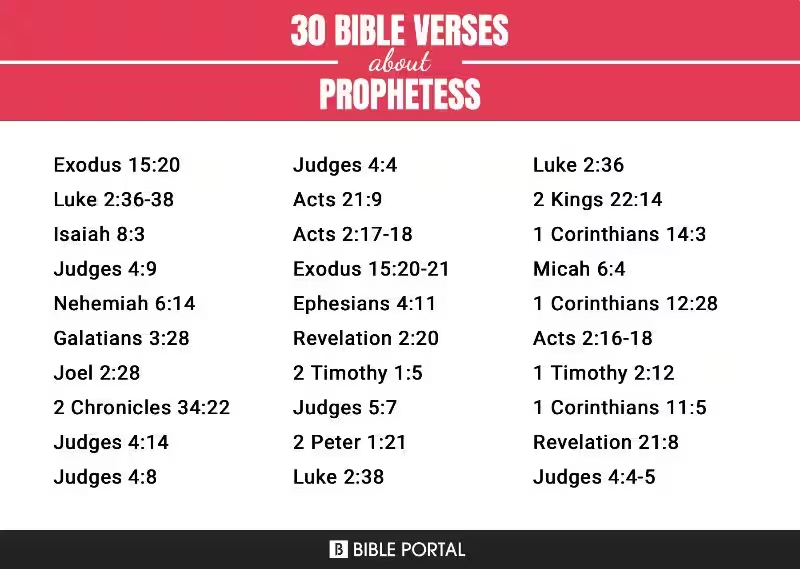
The Biblical narrative frequently portrays characters who embraced their chosen paths, regardless of their marital status. Consider the prophetess Deborah, a powerful leader who likely remained single. Similarly, the Apostle Paul, despite acknowledging the benefits of marriage, emphasized the unique blessings of singleness. Understanding these examples can provide comfort and guidance to those who choose a single life path. This isn’t about condemning marriage but rather about the diverse ways in which individuals can experience God’s love and purpose. A crucial takeaway is that the Bible does not view singleness as inferior to marriage.
The Bible’s Perspective on Marriage and Singleness
The Bible clearly presents marriage as a divine institution. It emphasizes the importance of commitment, mutual respect, and shared responsibilities within a marriage. Verses like Ephesians 5, which speaks of a husband’s love for his wife being analogous to Christ’s love for the Church, highlight the profound connection and spiritual depth of marriage. However, it’s equally important to note that the Bible doesn’t portray singleness as a less desired or fulfilling state.
The emphasis on God’s calling is crucial. Whether single or married, individuals are called to live lives of faith, service, and love. Consider Sarah, Abraham’s wife, who, in her waiting for the miracle of a child, discovered a deep relationship with God. This exemplifies how a single life can be a fertile ground for spiritual growth and profound connection with God. The strength of faith frequently lies in the unique experiences and challenges of each life path.
Singleness as a Gift from God
The Bible presents singleness as a distinct blessing in its own right. Paul, in 1 Corinthians 7, acknowledges the positive aspects of a single life, highlighting the freedom to dedicate time to serving God. For example, single individuals may have more time to focus on prayer, study, and ministry, leading to a deeper personal relationship with God. This is not to diminish the value of marriage; it is simply a different perspective recognizing the unique gifts that singleness can offer. Key benefits include: greater flexibility, enhanced personal growth, opportunities for service, and a deeper engagement with God’s purpose.
There are many examples of single individuals in the Bible who found fulfillment and purpose in their chosen life path. Consider how Mary, the mother of Jesus, lived her life in service to God. Her singleness may have presented unique challenges, but it also allowed her to embrace a distinctive role in divine plan. Understanding these narratives, and how they relate to singleness as a virtue, can be particularly helpful in times of doubt or uncertainty.
Practical Applications for Single Individuals Today
For modern Christians, understanding the biblical perspective on singleness can guide the path to greater fulfillment and purpose. It isn’t about comparing oneself to others but about focusing on personal growth and commitment to a relationship with God. The scripture offers a foundation for understanding that singleness, like marriage, is a path to spiritual maturity. This includes focusing on self-care, cultivating spiritual strength, and engaging in meaningful relationships with others.
This involves a variety of practices, such as: consistent prayer, regular study of scripture, service to others, and building strong personal connections. Focusing on these principles fosters an environment where singleness can be a rewarding and purposeful part of faith journey. Furthermore, finding a supportive Christian community can provide encouragement and understanding. Community support is crucial for both single and married individuals since it fosters an environment of mutual encouragement and spiritual growth.
The Bible’s message regarding singleness is not about condemning or diminishing a life choice. Instead, it presents a multifaceted perspective encompassing freedom, purpose, and a deep connection with God. The journey of faith is personalized; the unique experiences of singleness can lead to a significant part of spiritual growth, offering opportunities for greater devotion to God. Embracing this perspective can bring a sense of peace, purpose, and fulfillment to single individuals. By understanding the Bible’s nuanced perspective, believers can experience faith and purpose on their own unique path.
Ultimately, the Bible encourages individuals to embrace their chosen path, whether it’s marriage or singleness. The key is to understand that both choices are pathways to spiritual growth and deeper connection with God, offering the opportunity to serve and grow in faith. The journey is about discovering and fulfilling God’s unique and personalized plan.
Frequently Asked Questions
What does the Bible say about being single?
The Bible doesn’t explicitly address singleness as a negative or positive state. While marriage is often highlighted as a blessing, the Bible also acknowledges and validates singlehood. Some passages suggest that singleness can allow for greater devotion to God and service to others. Ultimately, the Bible encourages individuals to live in accordance with God’s will, regardless of their marital status.
Different religions have varying perspectives on singleness. Some emphasize marriage as a fundamental part of life, while others offer different interpretations and value singlehood for various reasons. Consult your specific religious texts and leaders for guidance relevant to your faith.