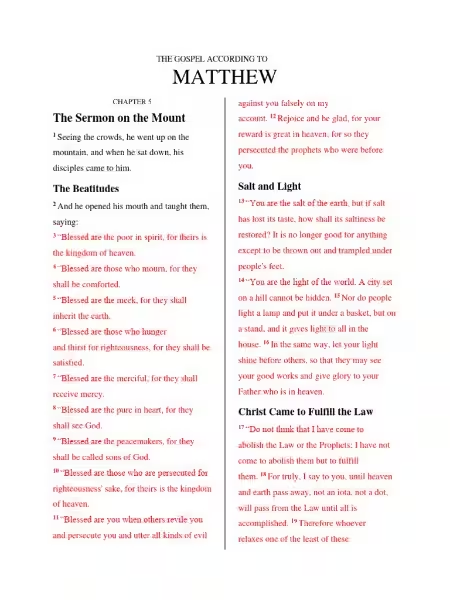
In the heart of the Gospel of Matthew, a profound invitation echoes through the ages: the Beatitudes. These eight pronouncements, spoken by Jesus, paint a powerful portrait of a life lived in alignment with God’s kingdom. They aren’t just lofty ideals; they’re a roadmap, a guide for navigating the complexities of everyday life with hope and grace. By understanding their essence, we can discover a path to true fulfillment and lasting peace. The Beatitudes provide a framework for ethical living, offering a blueprint for a life that reflects the heart of God.
These pronouncements are not simply a list of things to be desired, but rather a prescription for a transformed heart. They call us to a deeper understanding of what truly matters. They challenge us to move beyond superficial pursuits and embrace the richness of a life rooted in humility, compassion, and righteousness. Think of the Beatitudes as a personal compass: they help us navigate life’s storms with wisdom and resilience, guiding our decisions and actions toward a life of purpose.
The Beatitudes are often viewed as a set of blessings, but they are also a call to action. Each pronouncement, starting with “Blessed are…” reveals a particular state of being that brings us closer to God. For example, the first Beatitude, “Blessed are the poor in spirit, for theirs is the kingdom of heaven,” speaks not of material poverty, but of spiritual humility and a recognition of our dependence on God. This is not a condemnation of wealth, but rather an invitation to focus on what truly matters.
Consider the example of someone who, despite their material success, feels a deep emptiness. They may be lacking that sense of purpose and connection that the Beatitudes speak of. The Beatitudes provide a way to find true joy and fulfillment, even in simple moments. They illustrate the spiritual concept of inner peace. They point us toward a life that is rich in love, compassion, and empathy for others. This is a key idea in understanding the true meaning of the Beatitudes.
Understanding the “Blessed” State of Being
The word “blessed” in the Beatitudes, often translated as “happy” or “fortunate,” carries a deeper meaning. It speaks of a state of favor and divine blessing. It isn’t simply a fleeting emotion, but a transformative experience that comes from aligning our lives with God’s will. This can be achieved through cultivating virtues like kindness, forgiveness, and generosity. These virtues lead to a greater sense of fulfillment and connection. Consider this: “Blessed are the meek, for they shall inherit the earth.” This doesn’t mean passively accepting injustice, but rather embracing a gentleness of spirit and a wisdom in dealing with conflict.
Another key concept is the power of perspective. The Beatitudes challenge us to see the world through God’s eyes, to look beyond appearances and recognize the inherent worth in every person. This shift in perspective can lead to a life filled with gratitude and joy. For instance, the Beatitude “Blessed are the pure in heart, for they shall see God,” suggests that inner purity allows us to experience God’s presence more fully. This is not about perfection, but about striving for a heart free from hypocrisy and malice.
The Beatitudes are not just abstract concepts; they provide a practical guide for living a more fulfilling life. For instance, the Beatitude “Blessed are the merciful, for they shall obtain mercy” encourages us to treat others with compassion and understanding. We can practice this through acts of service, forgiveness, and empathy. Imagine a situation where a colleague is struggling with a difficult project. You could offer them support and encouragement—an act of mercy that benefits both of you.
Beyond specific actions, the Beatitudes encourage a mindset of growth and a focus on positive values. The Beatitudes show us that true happiness isn’t found in material possessions or worldly accolades, but in focusing on spiritual growth. They invite us to look at our daily lives, challenges, and opportunities through a new lens of faith and a deeper understanding of ourselves. This new understanding can help us to develop a stronger sense of purpose and to live more meaningful lives. Ultimately, the Beatitudes offer a profound and practical way to live a life consistent with the heart of God.
Frequently Asked Questions about the Beatitudes (KJV)
What are the Beatitudes?
The Beatitudes are a series of pronouncements in the Sermon on the Mount (Matthew 5:3-11) that describe the character and blessings of those who follow Jesus Christ. They outline the qualities that will lead to happiness and fulfillment in God’s kingdom.
Where are the Beatitudes found in the Bible?
The Beatitudes are found in the Gospel of Matthew, chapter 5, verses 3-11 of the King James Version (KJV).
What is the significance of the Beatitudes?
The Beatitudes are central to Christian understanding of the ethical and spiritual life. They highlight the importance of virtues like poverty of spirit, meekness, and mourning for sin, and indicate that true happiness comes from aligning one’s life with God’s will.
What is the meaning of “Blessed” in the Beatitudes?
“Blessed” in this context doesn’t refer to a mere feeling of happiness but to a deep, lasting state of well-being, favor, and the blessings of God, granted through a righteous life.
What does “poor in spirit” mean?
Recognizing one’s spiritual poverty, acknowledging dependence on God, and not relying on oneself for salvation.
How does the concept of the Beatitudes relate to religion?
The Beatitudes are a core teaching in many religions, particularly Christianity, offering a framework for living a life of virtue and spiritual growth.
Are the Beatitudes unique to Christianity?
While the specific wording and context are found primarily in the Christian scripture, the core principles of seeking righteousness, humility, and compassion are found in various religious traditions.