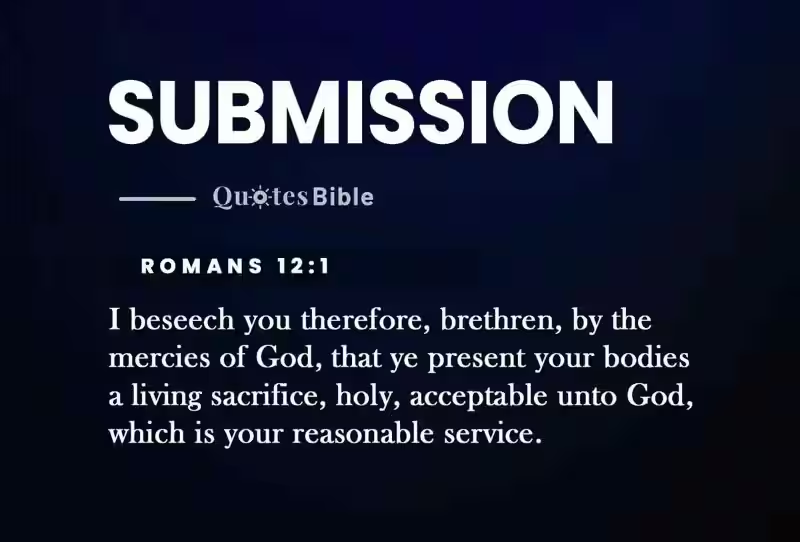
We often hear about submission to God, but what does it truly mean? In many religions, this concept is central to spiritual growth and a fulfilling life. It’s not about blind obedience, but about a deep, conscious surrender to a higher power. This surrender can lead to a profound sense of peace and purpose. Learning to submit to God can be a journey of self-discovery and transformation.
Understanding submission to God requires looking beyond the literal interpretation of religious texts. Instead, it’s about embracing a mindset of trust and dependence on the divine. This trust manifests in various actions and attitudes, from prayer and meditation to acts of charity and compassion. Many find that a consistent practice of submission fosters a stronger connection with their faith and allows for greater spiritual insights. This can be a powerful tool to help us navigate life’s challenges with resilience and grace.
Different Interpretations of Submission Across Faiths
The concept of submission to God is multifaceted and interpreted differently across various faiths. In Christianity, it’s often linked to obedience to God’s will. This can mean accepting hardship, trusting in divine providence, and striving to live a life that reflects God’s teachings. For example, recognizing that a difficult situation might be part of a larger plan, even if it isn’t immediately clear. Consider the biblical example of Job, who, despite suffering immense trials, remained steadfast in his faith.
In Islam, submission to God (Islam) is central to the faith, known as Islam. This includes the five pillars: Shahada (declaration of faith), Salat (prayer), Zakat (charity), Sawm (fasting during Ramadan), and Hajj (pilgrimage to Mecca). Following these principles is seen as a way to demonstrate submission and devotion to Allah. This devotion also emphasizes the importance of submitting to God’s will, even when it requires challenges or personal sacrifices.
Submission to God isn’t a concept confined to religious rituals. It impacts our daily lives. When facing a difficult decision, a sense of submission can guide us toward making choices aligned with our values and beliefs, based on a higher power. Acknowledging God’s presence in our daily decisions shapes our choices and actions. Think of small acts: giving up your seat on public transport for an elderly person, or helping a stranger in need. These acts, rooted in submission to God, reflect a profound connection with something larger than ourselves.
Imagine a scenario where you’re frustrated with a difficult task or relationship. Practicing submission to God might involve acknowledging the limitations of your control and seeking guidance in resolving the situation. This can lead to a greater sense of peace and patience. Through acts of kindness and compassion, we show submission, embodying the teachings of our faith. A key takeaway is that submission to God doesn’t require grand gestures; small, consistent acts of faith can lead to significant growth.
Overcoming Challenges Through Submission
Life throws curveballs. Facing hardship, submission to God provides a framework for navigating these challenges. Recognizing that there’s a divine plan, even amidst suffering, can be incredibly comforting. Consider the power of prayer in these situations – it’s a direct act of submission, seeking divine guidance and strength. Submission to God can help us find solace in adversity, reminding us that even in the face of struggles, we are not alone.
Examples of this concept in action abound. Think of those who face illness or loss; their unwavering faith, often rooted in submission to a higher power, provides strength and resilience. This resilience is not about avoiding the pain, but accepting it as part of the journey, recognizing that there’s a greater purpose. Submission to God doesn’t negate the reality of suffering, but offers a pathway to navigate it with grace and strength. This journey may not always be easy, but finding solace and guidance through faith can be a powerful source of strength and perseverance.
Submission to God is not a passive resignation; it’s an active engagement with faith. It’s about trusting in a greater power, seeking guidance, and striving to live a life in accordance with divine principles. It’s about accepting that sometimes, our plans don’t align with the divine plan, and finding peace in that acceptance. In this journey, submission to God allows us to find a deeper connection with ourselves and the world around us.
Ultimately this journey of submission is a continuous process of growth and development. It’s about embracing the unknown, trusting in the divine, and finding peace in our relationship with God or the divine. It’s a journey of discovering strength, resilience, and a profound sense of purpose. This journey is unique to each individual, shaped by personal experiences and beliefs. Through this process, submission to God can transform lives, fostering peace, compassion, and a profound connection with the universe.
Frequently Asked Questions
What are submission verses in the Bible?
Submission verses in the Bible are passages that discuss the importance of yielding to God’s will, authority, and guidance. They often emphasize obedience and a willingness to follow His commands.
What is the relationship between religion and submission to God?
Religion, in many forms, involves a belief in and relationship with a higher power, which often includes a concept of submission. Submission to God, as understood within a given faith, can manifest in different ways, such as prayer, worship, following ethical guidelines, and accepting divine will.
How do I interpret submission verses in my religion?
Interpreting submission verses requires careful consideration of the specific context within your faith tradition. Different denominations or interpretations may offer varied perspectives. Consulting with religious leaders or scholars can provide further insight.
What are some examples of how submission to God can be practiced?
Submission to God can be practiced through acts of worship, prayer, charity, seeking knowledge about God, and living according to moral principles outlined in your faith tradition. Different faiths may emphasize different practices.
What is the difference between submission to God and blind obedience?
Submission to God is about recognizing His authority and aligning one’s life with His will, while maintaining a thoughtful and conscious understanding of His teachings. Blind obedience, on the other hand, lacks discernment and critical thinking. Submission involves understanding and accepting, while blind obedience often focuses on conformity alone.