Shepherd's Staffs: More Than Just Symbols, A Deep Dive into Their Religious Significance
Shepherd's Staffs: More Than Just Symbols, A Deep Dive into Their Religious Significance
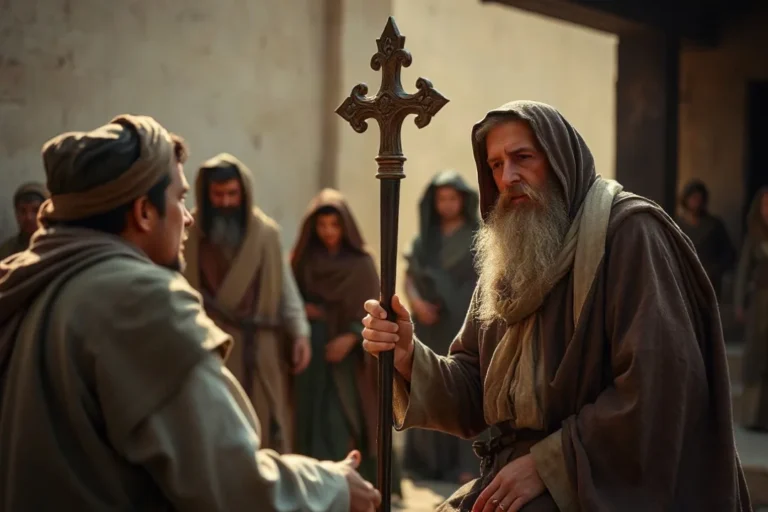
The shepherd's staff, a seemingly simple object, holds profound symbolism across numerous religions. From ancient times, these tools have stood as representations of leadership, guidance, and protection. More than just a practical implement, they've often embodied spiritual authority and the connection between the divine and the earthly. Picture a shepherd tending their flock—this image alone speaks volumes about the trust and care inherent in what these staffs represent.
Crafted from durable materials like wood, bone, or metal, these staffs were both practical and deeply symbolic. They served the immediate function of herding and protecting livestock, yet this very practicality inspired their spiritual significance. The act of guiding a flock with a staff likely became the template for how many cultures understood guidance itself. In numerous traditions, the shepherd's staff represented the ability to navigate through life's challenges and lead others toward a desired path—a metaphor that would outlast the historical need for literal shepherding.
Within the Bible, the shepherd's staff plays a crucial role in multiple narratives. God is often described as a shepherd, guiding and protecting his people—a relationship that emphasizes personal divine care rather than distant authority. Psalm 23, one of the most beloved passages in Scripture, uses the metaphor of a shepherd caring for sheep to depict God's unwavering love and providence. The imagery resonates precisely because it captures something human experience: the comfort of being led by someone who knows the way.
Moses, a pivotal figure in Jewish and Christian traditions, is frequently depicted with a staff that transcends its earthly purpose. According to biblical accounts, this staff performs miracles and acts of divine power—it isn't merely a symbol of leadership but a tool of divine intervention itself. When Moses used it to part the Red Sea or bring forth water from stone, the staff became an instrument through which human agency and divine will merged. Even the plagues of Egypt center on this object, showcasing how the staff could convey both human command and divine authority in a single gesture.
The concept of a shepherd's staff extends far beyond biblical tradition. Across cultures and religions, similar symbols of guidance and protection emerge independently, suggesting a universal human understanding of what these objects represent. In indigenous traditions, staffs might connect communities to ancestral spirits or embody the sacred relationship with the natural world. In ancient Eastern religions, staffs carried comparable spiritual weight, indicating that this symbolism transcends geographical and theological boundaries.
Beyond religious contexts, shepherd's staffs have influenced cultural imagery and art for millennia. Their presence in visual and literary works reflects the deep human hunger for direction and spiritual connection. What makes the staff particularly powerful as a symbol is its flexibility—its meaning isn't fixed but evolves with the culture that uses it. In contemporary religious art, a shepherd's staff can still evoke guidance and divine connection, proving that some symbols age gracefully across centuries.
The Modern Use and Interpretation of Shepherd's Staffs
In contemporary society, the shepherd's staff retains its historical weight while acquiring new meanings. Modern interpretations often emphasize leadership, nurturing, and spiritual development. Spiritual communities and religious orders draw on the staff's symbolism to represent personal journeys of self-discovery and growth. What began as a tool for herding sheep has become a metaphor for how we guide ourselves and others through transformation.
On a personal level, the staff's symbolism speaks to anyone facing life's challenges. When a student struggles through a demanding academic year or someone navigates a difficult career transition, the image of a shepherd's staff can represent the support and inner strength needed to persevere. The staff becomes a reminder that guidance—whether from mentors, community, or inner conviction—makes the difference between stumbling through difficulty and moving through it with purpose. It symbolizes resilience itself.
From historical contexts to modern applications, shepherd's staffs offer a rich vocabulary of meaning. They function simultaneously as practical objects, spiritual symbols, and metaphors for the human condition. Their enduring presence across different cultures and faiths testifies to something universal: the need for guidance, protection, and connection to something greater than ourselves. Whether used literally or symbolically, the staff addresses a fundamental human requirement for stability and meaning amid life's uncertainties.
Ultimately, the shepherd's staff provides a tangible bridge to the intangible. It reminds us that we need guidance, that support matters, and that we're not meant to navigate life alone. Through this simple yet deeply resonant object, countless traditions have expressed something essential about what it means to be human—to seek direction, to find strength in community, and to reach toward something sacred.
Frequently Asked Questions about Shepherd Staffs and Religion
What is a shepherd's staff, and what is its significance in religion?
A shepherd's staff, also known as a crozier, is a staff traditionally used by shepherds to guide and protect their flocks. In various religions, it symbolizes guidance, authority, and spiritual leadership, representing the shepherd's care for their flock.
How are shepherd's staffs used in Christianity?
In Christianity, the shepherd's staff, often called a crozier, is a symbol of the bishop's pastoral care and authority. It's used in ceremonies and signifies the bishop's role as a shepherd of the Church.
What does a shepherd's staff represent in Judaism?
While not a prominent symbol, a shepherd's staff can represent God's care and protection of the Israelites, drawing parallels to their historical relationship with God as a shepherd.
How are shepherd's staffs used in other religions, like Hinduism or Buddhism?
Shepherd's staffs, or similar symbolic objects, show up in various cultures and religions but are not central to their iconography or practices.
Is there a difference between a shepherd's staff and a crozier?
Both are staffs, but a crozier typically has a larger, more ornate shape and a cross. The crozier is specifically associated with Christian bishops.
How does the symbolism of a shepherd's staff differ across different denominations within Christianity?
While the basic meaning of pastoral care remains similar, different denominations might place varying emphasis on the staff's symbolism or use it in unique ways in their rituals.