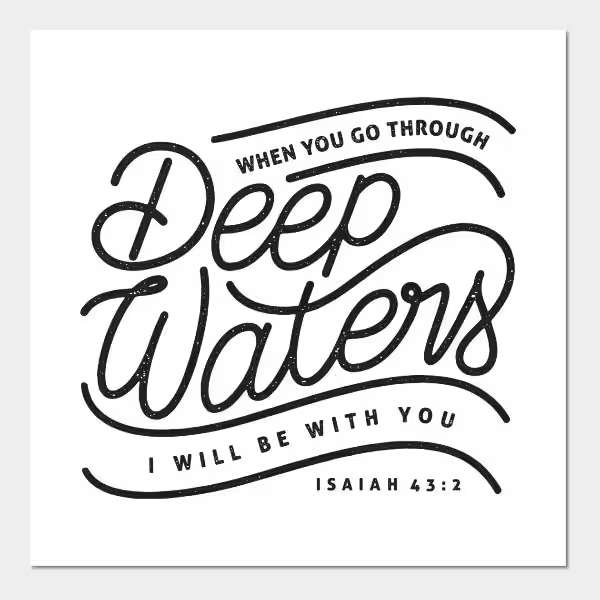
The concept of a “Valley of Death” resonates deeply across numerous faiths. It represents a period of intense suffering, testing, and often, a period of profound spiritual transformation. This metaphorical valley, whether faced in life or anticipated in the afterlife, highlights the complexities of faith and the human struggle with hardship. It’s not just about a literal location or a physical journey, but a psychological and spiritual landscape we all traverse at some point. Consider the trials faced by Job, the protagonist of one of the most famous biblical accounts of suffering. He was stripped of his wealth, health, and family, yet emerged stronger in his faith—and that’s a key lesson within the shadow of the valley of death.
The “Valley of Death” can manifest in different ways. For some, it might be a period of grief and loss. For others, it could be a time of struggle with faith, doubt, or a feeling of being overwhelmed. The important point is that this experience, whatever form it takes, often forces us to confront our own limitations and the limits of our understanding. This process, however painful, can emerge as a crucible of spiritual growth. The struggle with suffering is often a critical component of many spiritual traditions; it’s not merely an obstacle to be avoided but a pathway to deeper understanding of oneself and the divine.
Different religions offer various interpretations of this “Valley of Death.” In Christianity, for instance, the concept of suffering as a pathway to redemption is central to many theological perspectives. Think of the many saints and biblical figures who faced immense trials and tribulations. Their stories illustrate how faith can be strengthened through adversity. The notion of “carrying the cross” and embracing hardship is a recurring theme in Christianity, further emphasizing the role of the “Valley of Death” in spiritual growth.
Islam, similarly, emphasizes the importance of patience and submission to God’s will during times of trial. The concept of ‘Sabr’ (patience) is deeply ingrained in Islamic teachings, suggesting that hardship is a test of faith and a means for spiritual development. The remembrance of God (dhikr) plays a crucial role in navigating this period, offering solace and strength. Suffering in Islam is viewed as a potential opportunity for spiritual purification. Finding comfort in prayer and the company of the community is often seen as vital during such times.
Navigating the Shadow: Practical Strategies
Facing the “shadow of the Valley of Death” can be profoundly challenging. However, there are strategies that can help us navigate these difficult times. Connecting with fellow believers offers comfort and support. Sharing experiences and finding strength in community is often essential. Building a strong support network is important, whether that’s within a religious community or among trusted friends and family. Seeking therapy or counseling can also be beneficial. A qualified therapist can offer tools and techniques to navigate difficult emotions and experiences. Journaling can provide perspective and clarity by recording thoughts and feelings. This allows for reflection and self-discovery. Cultivating a sense of purpose in life can provide meaning during periods of adversity. Finding something that brings you joy and fulfillment can help offer a sense of direction, a guiding light through the darkness.
Developing mindfulness practices can also prove helpful. Incorporating meditation or other mindfulness techniques can help manage stress and anxiety. Acknowledging and accepting one’s feelings is critical. Suppressing emotions can lead to further distress. Self-compassion is vital. Treating yourself with kindness and understanding during these challenging periods is crucial. These are just a few tools, and they’re not a one-size-fits-all approach. The best strategies are those that resonate with your particular needs and beliefs.
Ultimately, the “shadow of the Valley of Death” is not about avoidance but about facing hardship with courage and faith. It is about finding the strength within to persevere. Resilience is built through trials, not through avoiding them. By embracing the challenges, by connecting with our faith, and by drawing strength from our support systems, we can navigate these periods of difficulty. Reflecting on past experiences with similar emotional states can offer valuable perspective. Drawing strength from previous struggles, using lessons learned as tools to navigate the present, is another key component. The “Valley of Death” acts as a mirror, reflecting our inner strength and resilience.
The spiritual rewards of navigating these periods can be profound. Experiencing the shadow of the Valley of Death can lead to a deeper connection with our faith, a greater appreciation for life, and a profound understanding of the human condition. It can transform us from within, strengthening our character, deepening our empathy, and providing a renewed sense of purpose and direction. This journey, though challenging, can be incredibly rewarding, leading to a more meaningful and fulfilling life.
Frequently Asked Questions – Shadow of Valley of Death (Religion)
What is the role of the divine in the Shadow of Valley of Death?
The divine in Shadow of Valley of Death is multifaceted and often ambivalent. Various deities and spirits exert influence, sometimes conflicting. No single, overarching power dictates the fate of all.
Are there specific religious practices or rituals detailed in the game?
While the game doesn’t explicitly detail religious practices, the characters’ beliefs and interactions with spirits and shrines suggest a range of rituals and ceremonies, though these aren’t fully elaborated.
How do the different faiths or beliefs in the game interact?
Interactions vary. Some groups coexist peacefully, while others compete for power or resources. Conflicts based on religious differences are common themes.
What is the significance of the Valley of Death’s central shrine in the religion?
The central shrine is a focal point for both worship and conflict. Different factions may claim it as a sacred site, leading to disputes and power struggles.
Are there any specific religious objects or artifacts in the game?
Yes, certain items, like talismans and holy symbols, have specific importance within the various belief systems.
How does the game’s religion relate to the lore or setting?
The game’s religious elements are deeply interconnected with the setting’s history and the struggles of the inhabitants. It is a key element in understanding the complexities of the world.