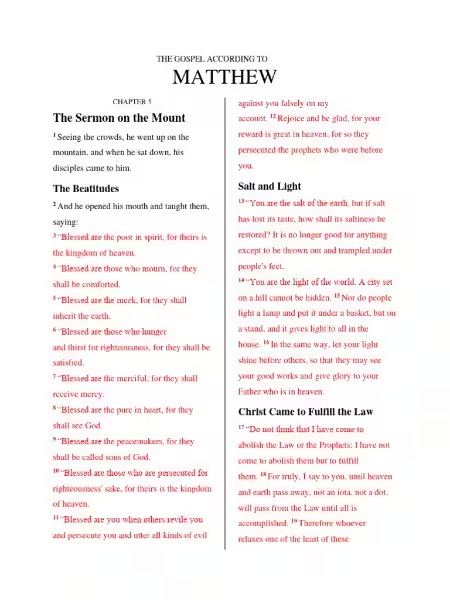
The Sermon on the Mount, a collection of teachings attributed to Jesus in the Gospel of Matthew, is a cornerstone of Christian thought. It’s often perceived as a complex and challenging document, but its core message is surprisingly practical and applicable to our lives today. This article will break down the main themes and provide a summary, showing how these ancient words can resonate with modern concerns.
The Sermon encapsulates Jesus’ vision for a transformed life, focusing on ethics, spirituality, and personal growth. It’s not just about following a set of rules; it’s about understanding the heart behind those rules. Imagine trying to build a strong house on a shaky foundation; the Sermon encourages us to build our lives on the rock of righteous principles. These principles, as outlined by Jesus, are not meant to be oppressive, but rather to guide us towards a more meaningful and fulfilling existence.
One of the central themes is living a life of righteousness. This isn’t about external perfection, but rather an internal transformation. Jesus emphasized inner attitudes and motivations as crucial. For example, he emphasizes that simply being outwardly good is not enough. True righteousness comes from pure intentions and a genuine desire to live in accordance with God’s will. Genuine righteousness also includes compassion and mercy which often go overlooked. Examples of this compassion are shown in Jesus’ parables and actions, which encourage us to show grace and understanding towards others.
Another significant theme is the importance of prayer and seeking God’s will. Jesus emphasizes that prayer is not about making demands but about seeking understanding and connection with God. This means listening to God’s voice and seeking guidance, not just expecting to get our way. The Sermon underscores the need for humility and dependence on God. This is often overlooked, as we tend to place too much importance on our own abilities and accomplishments. Imagine a child who needs guidance from their parent. Prayer is similar; it is a seeking for wisdom and guidance from a higher power.
Practical Applications for Modern Life
The principles in the Sermon on the Mount, while rooted in ancient Jewish culture, offer universal truths that can inform our choices and attitudes today. For instance, the call to “judge not” is powerful and profound. It’s a reminder to be mindful of our own biases and not to pass judgment on others. Self-reflection is essential in recognizing our shortcomings and imperfections. This self-awareness leads to humility and empathy towards others. In fact, the principle of judging others is a common downfall in relationships and can lead to misunderstandings. Examples of this would be the tendency to stereotype or criticize others based on limited information.
The Sermon encourages patience, forgiveness, and charity. These are vital components of healthy relationships and a harmonious society. The concept of “turning the other cheek” and “loving your enemies” seems radical, but it highlights the power of forgiveness and understanding in resolving conflicts. Instead of holding onto resentment, choose compassion and empathy. Practical examples include reconciling with someone who wronged you, forgiving a friend, or simply extending kindness to a stranger. This concept is more than just a moral code; it’s a path toward inner peace and a more meaningful life.
The Sermon on the Mount’s wisdom transcends its historical context. It offers a blueprint for a transformed life – a life guided by love, compassion, and righteousness. Jesus’ teachings encourage us to look beyond appearances and focus on the inner transformation. This involves recognizing our own imperfections and striving to improve. This is often overlooked, as we focus on surface-level accomplishments and ignore our inner motivations. The Sermon emphasizes the importance of character over external displays of piety.
The Sermon’s enduring impact comes from its relatable and practical nature. It’s not a set of rigid rules, but a call to action, empowering us to live more meaningful and fulfilling lives. The Sermon on the Mount is not just a religious text; it’s a guide for living a good and productive life. It continues to inspire and challenge us to become better versions of ourselves, in all aspects of life: personal, professional, and social.
Frequently Asked Questions about the Sermon on the Mount
What is the Sermon on the Mount?
The Sermon on the Mount is a collection of teachings by Jesus Christ, found in the Gospels of Matthew (chapters 5-7). It’s a foundational document in Christianity, outlining Jesus’ ethical and spiritual principles.
What are the key themes of the Sermon on the Mount?
Key themes include righteousness, love, prayer, and the importance of inner transformation. It emphasizes a higher standard of ethical living beyond merely outward conformity to the law.
Who is the Sermon on the Mount for?
The Sermon on the Mount is for all people, regardless of their background or beliefs. Its teachings are meant to guide individuals towards a closer relationship with God and a more fulfilling life.
What is the significance of the Sermon on the Mount in Christianity?
It is a central text in Christianity, providing the foundation for Christian ethics and spiritual practices. It’s seen as a blueprint for how followers of Jesus should live their lives.
What are some practical applications of the Sermon on the Mount in everyday life?
Practical applications include practicing forgiveness, developing compassion, and cultivating a spirit of prayer. It encourages inner change and a focus on God’s will.
How does the Sermon on the Mount relate to other religious teachings?
While rooted in Jewish tradition, the Sermon on the Mount extends and refines concepts of righteousness and love, offering a unique perspective on living a fulfilled life.
What are some common misconceptions about the Sermon on the Mount?
Some common misconceptions are that it’s a rigid set of rules to be followed perfectly, rather than a guide to spiritual growth and transformation.