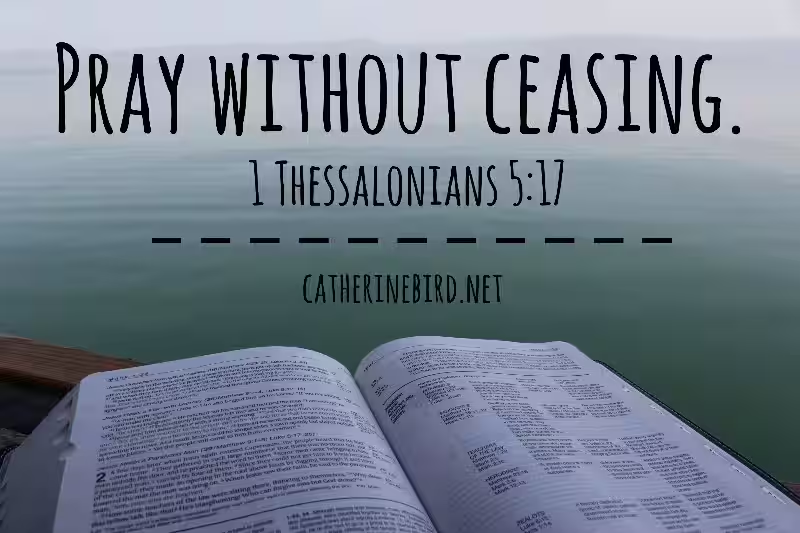
We all experience moments of intense connection with something greater than ourselves – a moment of profound peace, a surge of inspiration, or a feeling of being deeply heard. These moments often leave us wanting more of that feeling. Praying without ceasing isn’t about endless, frantic prayer, but about cultivating a consistent, internal awareness of that connection. It’s about an ongoing dialogue, not a task to be completed.
Imagine it as a gentle, persistent whisper, not a shout. This internal dialogue is woven throughout the day, as you navigate moments of joy and sorrow, success and struggle. Cultivating this practice involves incorporating prayer into the fabric of your life, not just reserving it for specific times. It’s about recognizing the divine presence within your daily routines and recognizing the opportunities for spiritual connection.
Understanding the Concept of “Praying Without Ceasing”
The phrase “pray without ceasing” (1 Thessalonians 5:17) has been interpreted in various ways throughout history. It’s not literal incessant repetition of words, but rather a consistent attitude of prayer. This encompasses a range of activities – from meditation and journaling to moments of quiet reflection in the midst of activity. Think about how you might check in with a loved one throughout the day – a quick text, call, or a thoughtful gesture. Similarly, prayer without ceasing is a consistent awareness of God in all aspects of life.
A key element is understanding the presence of God. We can imagine God as a loving parent, a supportive friend, or a guiding light, always present and available. This awareness allows prayer to become integrated into the fabric of our lives, not just a ritual performed at specific times. Continuously seeking guidance and wisdom from a higher power is the essence of it, weaving it into the threads of our everyday choices and experiences.
For many, this can involve integrating prayer into routines: taking a few moments to reflect on the day’s events before bed, offering gratitude for blessings during the day, or asking for guidance before making decisions. Small, conscious acts of prayer interspersed throughout the day are more impactful and meaningful than prolonged, infrequent periods of prayer. For instance, if you are in a stressful situation, taking a moment to acknowledge God and ask for strength is a form of prayer.
Examples could include: acknowledging God’s presence while driving, giving thanks during a meal, seeking wisdom before a presentation, or offering comfort in a moment of sadness. These are all examples of incorporating prayer into everyday life, making it a natural part of your experience. It’s not about rigid rules but about cultivating a heart that is constantly connected. It’s about the posture of the heart, not just the repetition of words. (Philippians 4:6-7)
Overcoming Challenges and Obstacles
Maintaining a consistent prayer life can be challenging. Distractions, stress, and a busy schedule can make it difficult to find time for quiet reflection. It’s like trying to keep a garden tended in a hurricane. Embrace patience and understanding. It’s a journey, not a destination. If you miss a day, don’t beat yourself up, just get back on track the next day. This continuous awareness is not a performance; it’s about nurturing a connection, even when it feels difficult. (Luke 18:1)
It’s vital to remember that praying without ceasing is not about perfection but about consistency. It’s about acknowledging God in the highs and lows of life, the triumphs and the struggles. Don’t be discouraged. Just acknowledge the presence of God in your daily life, and know that every moment is an opportunity to connect. (Matthew 6:5-6)
Conclusion: Cultivating a Deep Relationship with God
Ultimately, “praying without ceasing” is about fostering a profound, enduring relationship with God. It’s a journey of continuous connection, not a destination. By weaving prayer into the fabric of our daily lives, we cultivate an awareness of God’s presence and guidance in every moment. It’s about realizing that God is within us, not simply an entity outside of us that we need to reach out to from time to time. (1 Chronicles 16:11)
Embrace the opportunities for prayer that arise throughout your day. Nurturing this consistent connection will enrich your life in profound ways, providing comfort, wisdom, and strength during every season. Remember, it’s not about the words but about the posture of the heart. (James 5:16)
Frequently Asked Questions
What scriptures talk about praying without ceasing?
The most common references are 1 Thessalonians 5:17 and Luke 18:1. While the specific phrasing and context differ, both are often cited as supporting the idea of continuous prayer.
What does “praying without ceasing” mean?
There are various interpretations. Some believe it refers to a constant awareness of God and a continuous communion with Him, encompassing prayer, meditation, and reflection. Others interpret it as an active and persistent prayer life, involving frequent but not necessarily constant verbal prayer.
How can I practically apply praying without ceasing in my daily life?
Applying this concept involves cultivating a heart of gratitude and seeking God’s will in all things. This could manifest in daily devotions, moments of silent reflection, or prayer during activities. It’s about making prayer a consistent part of your life, not just a ritual.
Is praying without ceasing a requirement for salvation?
No, praying without ceasing is not a requirement for salvation. Salvation is typically understood as a gift received through faith in Jesus Christ. While consistent prayer is encouraged, it isn’t the basis for receiving God’s grace.
How does praying without ceasing relate to different religious beliefs?
The concept of continuous communion with the divine is found in various faiths, although the specific practices and interpretations vary significantly. Different religions may have different scriptures or traditions that address similar concepts.