The Profound Power of Planting Seeds: A Spiritual and Practical Guide
The Profound Power of Planting Seeds: A Spiritual and Practical Guide
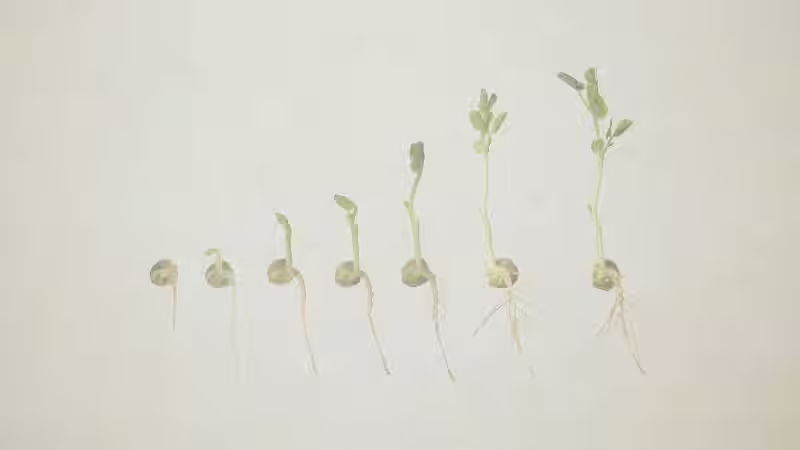
Planting seeds, whether literal or metaphorical, holds a profound significance across many faiths. It's a timeless metaphor for growth, nurturing, and the potential for abundant harvest. This journey will explore not just the physical act of planting, but also the deeper spiritual implications. We'll delve into the many ways seeds, in their varied forms, are used as a potent symbol of faith, hope, and the cycle of life.
Consider the image of a farmer meticulously preparing the soil, carefully selecting the seeds, and nurturing them through rain and sun. This act mirrors the work of faith, which requires dedication, patience, and a belief in the unseen power that fosters growth. We are all, in a way, planting seeds daily. Every action, every word, every thought, leaves an impression, shaping our future and the future of those around us.
The concept of sowing and reaping is deeply ingrained in many faiths, particularly Christianity. The Bible contains numerous references to planting seeds, both literally and figuratively, highlighting the importance of sowing good deeds and cultivating virtuous habits. One of the clearest examples is the parable of the sower, found in Matthew 13. This parable emphasizes the crucial role of the soil - our hearts – in receiving the seed of God's word, and how the different responses to this seed lead to various outcomes. Think of different soils representing different hearts – some hearts are receptive, some are hard, some are choked by weeds.
Consider this: what kind of seeds are you planting? Are you cultivating love, kindness, and compassion, or are you nurturing jealousy, resentment, and hatred? As the scriptures say, "Whatsoever a man soweth, that shall he also reap." This principle is not just a religious concept; it's a fundamental truth of life. If we choose to plant seeds of positivity, we can expect a harvest of happiness and fulfillment. Conversely, planting seeds of negativity will likely yield a similar harvest.
Metaphorical Seeds and the Growth of Faith
Beyond the literal realm of farming, the concept of "planting seeds" extends to the spiritual realm. In many religions, faith, hope, and compassion are viewed as seeds that, when nurtured and cultivated, bear fruit in the form of spiritual growth and enlightenment. This spiritual growth isn't a static event; it's a continuous process. Just like a gardener tending their crops, we must nurture these seeds by studying scripture, participating in religious ceremonies, and engaging in acts of service.
Think about the importance of positive affirmations and mindfulness practices. These can be seen as seeds planted in the fertile ground of our minds. They nourish our inner being with hope and positive energy, allowing us to grow spiritually. The scriptures often use the image of sowing seeds to represent the act of sharing faith with others. When we share our belief with others, we are planting seeds that will take root in their hearts, potentially leading to their own spiritual journeys and growth. A simple act of kindness, an encouraging word, or a gesture of compassion can be potent seeds of change.
Nurturing the Soil: Creating a Conducive Environment
Just as the soil is essential for a seed to take root and flourish, so too are the conditions of our hearts and minds. If the soil is barren, rocky, or choked with weeds of negativity, the seeds of faith, hope, and love may struggle to grow. The parable of the sower, in Matthew 13, highlights this point. We must cultivate a positive, open, and receptive environment within ourselves to allow these seeds to thrive. Our actions, thoughts and behaviors play a vital role in creating this environment.
Consider the importance of forgiveness. Forgiveness can be seen as clearing the weeds and rocks from the soil of our hearts, making space for new growth. Forgiveness allows us to cultivate a more nurturing and conducive environment, allowing the seeds of compassion and empathy to truly blossom. It's about creating a space for growth and healing. This is essential to allow the seeds of faith, hope, and compassion to truly take root and grow.
Harvesting the Fruits of Our Labor
The journey of planting seeds, whether physical or spiritual, is a marathon, not a sprint. The rewards of this labor are not immediate, but they are undoubtedly abundant. As we nurture the seeds within ourselves and others, we will eventually reap the rewards in the form of spiritual growth, inner peace, and positive change in the world around us. The scriptures beautifully illustrate the interconnectedness of sowing and reaping. This interconnectedness is fundamental to understand the long-term impact of our actions.
Ultimately, the act of planting seeds, whether through acts of service, nurturing relationships, or sharing faith, is a profound testament to our capacity for growth and transformation. It is a reminder that our actions, however small, can have far-reaching effects on ourselves and those around us. The harvest is the culmination of the entire process; the beautiful results of our efforts and dedication.
While the Bible doesn't have a dedicated section on planting seeds, the concept of sowing and reaping is present in various passages, often symbolizing faith, work, and the harvest of spiritual rewards.
What is the significance of planting seeds in different religions?
Different religions often relate planting seeds to various concepts. In some, it represents the creation of life and the cycle of growth, while in others it may symbolize the sowing of good deeds and the reaping of rewards, or the potential for spiritual growth.