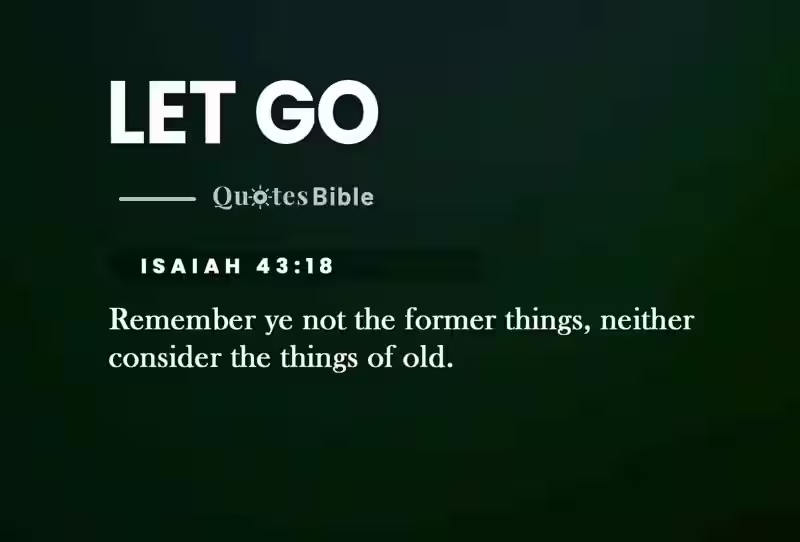
We often find ourselves clinging to the past, whether it’s a relationship, a job, or even a mindset. Regret, nostalgia, and fear can hold us captive, preventing us from moving forward and embracing the present. But what if the scriptures offer a different perspective? What if they illuminate a path toward growth and renewal, one of letting go of what is no longer serving us?
Many religious texts, including the Bible, contain passages that emphasize the importance of letting go of old ways of thinking and behaving. These messages aren’t about forgetting, but rather about recognizing that some things, while potentially valuable in the past, are now hindering our journey. This is the concept central to the often-quoted principle of “old things are passed away.” It’s a call to a fresh perspective, a call to embrace the present and confidently step into the future.
Scripture frequently uses metaphors to describe this transformation. Think of seeds sprouting and blooming into new life. This metaphor captures the essence of letting go of the past, nurturing the potential within, and allowing new growth. This concept is central to understanding the idea of “old things are passed away” as a positive and necessary part of spiritual and personal development. Consider the idea of shedding the old skin of an animal to reveal a regenerated and stronger version. This transformation is not about abandoning responsibility or forgetting lessons learned, but rather about renewing our understanding and perspective.
For example, imagine a person who has carried the weight of past failures for years. This person might be stuck in negativity and fear. Through scripture, we can understand this heavy baggage as the old things that have passed away. Embracing the idea that “old things are passed away” frees the individual from that self-imposed burden, allowing them to move forward with a renewed mindset and a lighter heart. This process isn’t about forgetting the past but recognizing it as a stepping stone to a brighter future.
Reframing the Past: A Pathway to Peace
Understanding the concept of “old things are passed away” isn’t just a religious concept; it’s a practical one. Applying this wisdom to our lives can lead to profound peace and serenity. We can learn to identify those patterns, relationships, or beliefs that no longer serve us and release them with intention and grace. A good first step involves acknowledging those old things. Journaling, meditation, or talking to a trusted confidant can help in this process. Identifying these patterns and negative habits – and recognizing them as “old things” – is the first step in transforming them.
Consider the example of a person struggling with guilt over a past action. By recognizing this guilt as an “old thing that is passed away,” they can move beyond it. This doesn’t mean ignoring the mistake or its consequences. Instead, it means accepting that the act is in the past and that the person, through learning and growth, can now move forward with a renewed sense of purpose. This concept of letting go can also apply to negative beliefs about oneself, such as self-doubt or fear. Recognizing and releasing these negative thoughts allows us to cultivate a healthier, more positive self-image.
The message of “old things are passed away” encourages us to live fully in the present moment. It’s a call to focus on the now, to embrace the opportunities and challenges that lie ahead. By letting go of the past, we make space for the new. This includes embracing new relationships, new career paths, and a new perspective on life. This process doesn’t negate the value of past experiences; instead, it recognizes that the past is not the destination, but rather a valuable point of departure.
This concept is not meant to be an escape but a re-evaluation of our priorities and values. Finding strength in our faith and our inner selves allows us to move forward with confidence. Imagine a farmer who has harvested a crop; they don’t keep the empty stalks; they prepare the land for the next planting. In the same way, we can learn to relinquish the old to make room for the new. This is about accepting what is, cultivating hope, and finding peace in the present moment.
Frequently Asked Questions
What scripture speaks of old things passing away?
Various scriptures across different religions touch on the idea of old things passing away, often symbolizing the cyclical nature of existence, the need for change, or the arrival of new knowledge/revelation. Specific examples and interpretations vary depending on the specific text and tradition.
What is the significance of the concept of “old things passing away” in religion?
This concept, present in many religious traditions, often signifies a shift in understanding, a period of transformation, or a call for renewal. It can represent the end of an era, the fading of outdated practices, or the beginning of a new spiritual journey. The interpretation depends on the particular religious context.
How do different religions interpret the idea of old things passing away?
Interpretations vary widely. Some religions see it as a literal end of the world or a specific period in history. Others view it metaphorically, representing the change in human understanding, the obsolescence of old laws, or the need for spiritual growth. For example, some Jewish, Christian, and Islamic scriptures have interpretations related to the end times or a new covenant.
Is there a specific scripture passage that universally supports this concept?
No, there’s no single passage that is universally recognized as definitively supporting “old things passing away” across all religions. The concept is expressed in diverse ways and interpretations depend on the specific religious tradition.