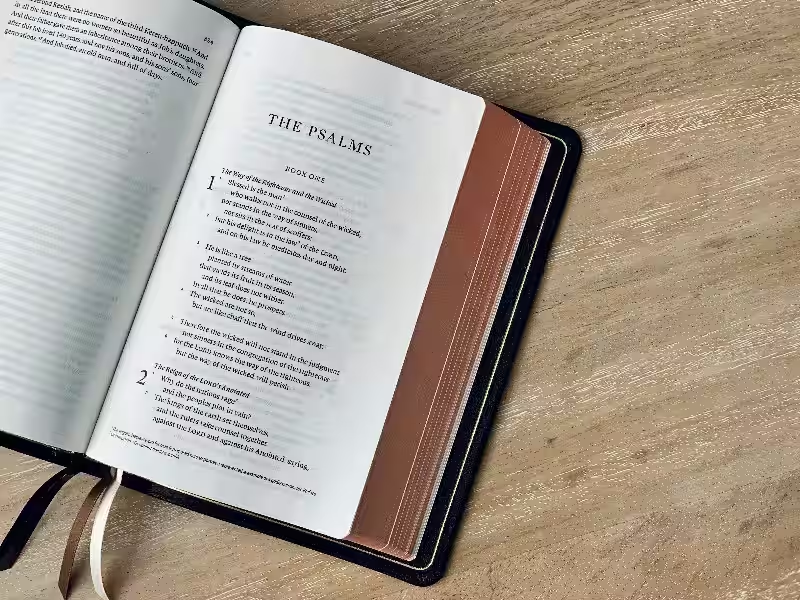
We often think of religion as a collection of doctrines and rituals, but beneath the surface lies a deeper, more profound language. This is the pure language of faith, a tapestry woven from shared experiences, profound emotions, and a yearning for something greater. It’s a language that transcends words, often communicated through symbols, rituals, and art. Understanding this pure language can illuminate the essence of religious belief.
This pure language manifests in unique ways across different faiths. For example, the intricate patterns of a mosque’s architecture or the melodic chanting in a Buddhist temple can convey a profound sense of sacredness. The act of prayer, regardless of the specific words used, is a profound expression of this pure language. It’s a direct channel to a higher power, a heartfelt communication that resonates beyond the spoken words.
Unveiling the Symbols: How Pure Language Translates Across Faiths
Religions often employ powerful symbols to convey complex ideas. A cross for Christians, a star of David for Jewish people, or a lotus flower for Buddhists—these are not simply decorative elements; they are visual representations of core beliefs and values. These symbols, often deeply ingrained in cultural traditions, act as a common ground for believers. They are a common language that transcends the limitations of spoken words.
Consider the concept of sacrifice in different faiths. In Christianity, the sacrifice of Jesus Christ is a central tenet. In Hinduism, sacrifices are performed during rituals, each one having a symbolic purpose. In many cultures, sacrifice represents a commitment, a devotion to a higher power, a willingness to give up something valuable for something greater. Different faiths express this concept within their own distinct sets of symbols, rituals, and beliefs.
Rituals, often highly stylized and repetitive, are another significant form of pure language in religion. These sacred actions can be as simple as lighting a candle or as complex as a multi-day pilgrimage. They serve as a connecting bridge between the earthly and the divine, creating a sense of community and reverence. Consider these examples: Muslims praying five times a day, Hindus performing elaborate puja rituals, or Christians partaking in communion. Each ritual is unique, yet all are part of the same overarching language of faith.
These rituals are often deeply embedded in cultural heritage. They’re not just about performing actions; they are about experiencing a deeper connection with the divine. These experiences often involve profound introspection and emotional processing. These actions, performed in a communal setting, can have a powerful effect on the spirit. Rituals foster a sense of belonging and shared identity among believers, serving as a potent form of pure language.
The Art of Faith: Visual Expression of Pure Language
Religious art, whether intricate tapestries, magnificent cathedrals, or simple prayer cards, is another powerful expression of pure language. It acts as a visual vocabulary, conveying theological concepts and stories in a readily understandable fashion. For example, religious paintings in many traditions depict scenes from religious texts, allowing believers to visually engage with the stories and teachings. The beauty and artistry can evoke emotions and a sense of awe that words alone can’t achieve.
The artistic expression in religious traditions demonstrates the importance of visual communication. These visual representations often use specific colors, shapes, and symbols that carry deep meaning and resonate with believers. Paintings, sculptures, and architectural designs act as windows into the heart of a faith, allowing believers to connect with the spiritual world through visual storytelling, and also providing a powerful visual representation of their faith to others.
Connecting with the Pure Language: A Personal Journey
Ultimately, experiencing the pure language of religion is a personal journey. It’s about connecting with the emotional and spiritual dimensions of belief. This involves more than just memorizing doctrines or attending rituals. It’s about seeking meaning, understanding the symbolism, and feeling the profound emotions that drive religious practice. This process of engagement with the pure language of faith can transform our understanding of the world and ourselves.
There is no single path to understanding this language. It is a journey of discovery. By engaging with the rich tapestry of symbols, rituals, and artistic expressions, individuals can begin to uncover the essence of faith and its profound impact on the human experience. This journey is as unique as the individual and their relationship with their faith.
Frequently Asked Questions
What is Pure Language?
Pure Language refers to a proposed concept where language is stripped of all cultural, historical, or emotional baggage, aiming for a purely logical and descriptive form of communication. It’s a hypothetical construct, not a real language.
What is Religion?
Religion is a cultural system of beliefs, practices, values, and worldviews related to spirituality, morality, and the existence of a higher power or divine being. It often includes rituals, ceremonies, and a community of believers.