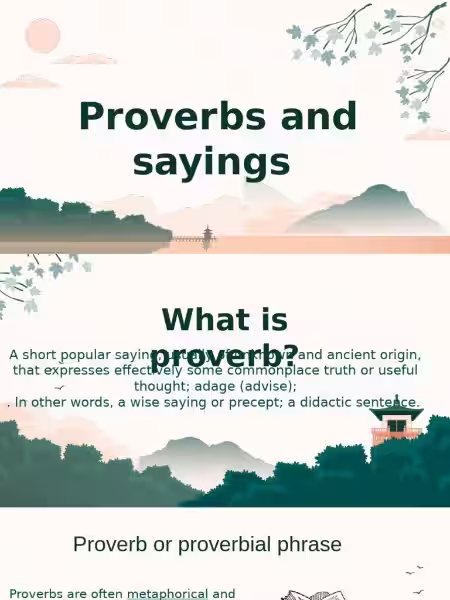
We navigate life’s complexities through a myriad of tools, from the practical to the profound. Amongst these tools, proverbs act as timeless guides, offering nuggets of wisdom distilled through generations. These concise sayings, often rooted in religious traditions, offer profound insights into living a meaningful life, highlighting the importance of knowledge and understanding. They are more than just words; they are potent reminders of fundamental truths, echoing across cultures and time.
Religious perspectives often emphasize the pursuit of knowledge as a spiritual endeavor. It’s not just about accumulating facts, but about cultivating understanding and insight. This understanding, in turn, fosters wisdom and morality. “A wise man learns more from his mistakes than a fool from his successes.” This proverb underscores the value of introspection and the ability to learn from both victories and defeats. Understanding the connection between knowledge and faith is crucial; it’s not an either/or proposition, but rather a complementary relationship. Proverbs often highlight this interplay. “Seek knowledge, even from the mouths of fools,” for example, encourages an open mind and a willingness to learn from all sources.
The Intertwined Nature of Wisdom and Religious Beliefs
Many religions emphasize the importance of seeking wisdom and knowledge. These principles are often intertwined with spiritual growth. For example, in many Eastern traditions, enlightenment is viewed as a journey of self-discovery, leading to profound understanding. This is often reflected in proverbs like, “Knowledge is a treasure, but wisdom is the key.” This emphasizes the transformative power of wisdom – the ability to apply knowledge effectively and ethically.
Religious teachings often provide a framework for understanding the world and our place within it. Proverbs like, “Better to light a candle than curse the darkness,” embody this concept. The knowledge and understanding derived from faith can illuminate our path, helping us navigate life’s challenges. It’s important to remember that wisdom is not static; it’s a continuous process of learning, growth, and reflection. Consider this: a child learning about the world is acquiring knowledge through experience. That knowledge, combined with the guidance and values they receive from their religious tradition, may shape their wisdom and understanding as they mature.
The Power of Proverbs in Guiding Moral Decision-Making
Proverbs offer valuable insights into ethical decision-making. They highlight the importance of moral values and the consequences of our actions. Consider this proverb: “Honesty is the best policy.” This simple statement embodies a profound truth about the long-term benefits of integrity. Many religious traditions emphasize similar principles, such as compassion, fairness, and respect. These values, enshrined in proverbs, act as internal compasses guiding us toward ethical conduct.
A crucial aspect of moral decision-making is understanding consequences. Proverbs like, “What goes around comes around,” underscore the cyclical nature of actions and their repercussions. A person who acts with kindness and respect is more likely to experience positive outcomes in their life, while acts of malice are often met with their own consequences. This cyclical understanding is crucial in shaping our behaviors. For example, if a person believes in the concept of karma, their understanding of consequences may lead them to act with more compassion. This understanding is often deeply embedded within religious teachings.
Knowledge and Wisdom in Diverse Religious Traditions
Different religions offer unique perspectives on wisdom and knowledge. For instance, Buddhist philosophy emphasizes the importance of mindfulness and understanding the nature of reality to achieve enlightenment. Proverbs reflecting this might include “Find the root of the problem, not the branches.” This encourages introspection and the search for fundamental understanding, vital in achieving enlightenment.
Similarly, Abrahamic traditions often highlight the importance of divine revelation and scripture as sources of knowledge and wisdom. Proverbs like, “The fear of the Lord is the beginning of wisdom,” exemplify this focus on divine guidance. They emphasize the importance of seeking knowledge grounded in faith to gain wisdom. These proverbs often emphasize the importance of humility in learning and embracing the wisdom shared through religious texts. For example, a devout Christian seeking to understand the Bible might derive wisdom from its teachings and apply that to their daily life.
Conclusion: Embracing the Wisdom of Proverbs
Proverbs about wisdom and knowledge, especially within religious contexts, offer a rich tapestry of guidance for navigating life’s complexities. They aren’t just catchy phrases; they’re potent tools for developing understanding, cultivating wisdom, and making ethical choices. By exploring these timeless sayings, we can gain invaluable insights into the human condition, fostering personal growth and deeper meaning in our lives.
Ultimately, by reflecting on proverbs and their connection to religious beliefs, we can gain a more profound understanding of ourselves and the world around us. This process of reflection and application can be a source of strength and guidance. So, embrace the wisdom of proverbs, discover the richness of religious traditions, and embark on a journey of self-discovery. “A journey of a thousand miles begins with a single step,” and the wisdom found in proverbs is a perfect starting place for that journey.
What are some proverbs about wisdom and knowledge?
Proverbs about wisdom and knowledge emphasize the importance of learning from experience, seeking understanding, and applying knowledge to life’s challenges. Examples include: “A bird in the hand is worth two in the bush,” “Look before you leap,” “Knowledge is power,” and “A penny saved is a penny earned.”
What is the role of religion in proverbs about wisdom and knowledge?
Religion often provides frameworks for understanding wisdom and knowledge, emphasizing values like humility, compassion, and obedience to divine will. Proverbs reflecting religious perspectives often highlight the importance of faith, prayer, and seeking guidance from religious texts. Examples vary across different religious traditions.