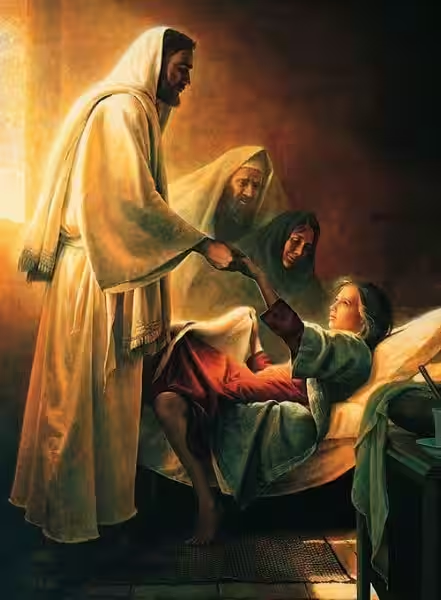
Man's Prayer: A Journey Through Faith and Reflection
Man's Prayer: A Journey Through Faith and Reflection
Throughout history, man's prayer has been a powerful force, shaping cultures and enriching lives. From ancient rituals to modern-day devotions, the act of prayer provides a unique connection to the divine, offering solace, guidance, and a sense of purpose. Whether expressed through words or silent contemplation, man's prayer is a fundamental aspect of spiritual practice for countless individuals.
Prayer isn't simply about asking for things. It's a way to connect with something larger than ourselves, a way to acknowledge our place in the universe, and a way to express gratitude and humility. It's a powerful tool for self-reflection, allowing us to confront our inner struggles and seek clarity. Man's prayer is a deeply personal experience, adapting to the individual's beliefs and circumstances. The act can take many forms, from structured liturgies in organized religions to spontaneous expressions of gratitude or anguish. This very personal and profound act of man's prayer is a unique way of interacting with the world.
The forms of man's prayer are as varied as the cultures and beliefs that practice them. Formal prayers often incorporate specific rituals and language, such as the Lord's Prayer in Christianity or the Koranic verses in Islam. These structured prayers provide a framework for reflection and connection. In contrast, spontaneous prayers often arise from personal needs and emotions, expressing a heartfelt plea or a simple expression of thanks. For example, a farmer might offer a silent prayer of gratitude for a bountiful harvest, or a grieving person might express their sorrow and seek comfort.
Beyond verbal expressions, man's prayer can manifest in actions, such as acts of charity or service. For example, volunteering at a soup kitchen or donating to a cause are tangible ways to express devotion. Meditation and contemplation are also crucial facets of prayer for many, representing a quiet communion with the divine. Through these diverse expressions, man's prayer becomes a powerful and profound connection to the spiritual realm.
Prayer can be a catalyst for personal growth and transformation. Through the act of prayer, individuals can confront their fears, anxieties, and temptations, fostering self-awareness and a clearer understanding of their own motivations and shortcomings. It fosters a sense of inner peace and spiritual strength. By connecting with something greater than themselves, individuals can strengthen their resolve and find the courage to overcome obstacles. A key example of this is how prayer can offer perspective and support during difficult times, leading to a more profound sense of personal agency.
Prayer can also cultivate compassion and empathy. When individuals connect with the divine, they often develop a deeper sense of interconnectedness with others. This can lead to a greater willingness to support those in need, and to practice kindness and understanding in daily life. Prayer can foster a strong sense of community, connecting individuals through shared beliefs and experiences, as demonstrated by the communal prayers in many faiths. These experiences can increase the ability to appreciate the world around them and to become more accepting of others. This personal growth is a core benefit of consistent man's prayer.
The Impact of Man's Prayer on Society
Man's prayer has profoundly shaped countless societies throughout history. Religious texts and traditions have inspired art, architecture, ethical codes, and social structures. Prayer communities have provided support, solace, and a sense of belonging to their members, creating a strong social fabric. For example, religious institutions often serve as centers for community gatherings and charitable activities, demonstrating a practical application of faith. These institutions are often crucial to maintaining social cohesion and providing a sense of shared purpose.
The act of prayer can also inspire acts of compassion and social justice. Many religious traditions emphasize the importance of helping others in need, and this belief is often reflected in social action. Religious leaders and institutions often advocate for social change and promote a sense of collective responsibility. Man's prayer can motivate individuals and communities to work together to address social issues. This is not only a spiritual pursuit, but a powerful force for positive social change. For example, religious organizations have played a critical role in advocating for social justice issues such as poverty, inequality, and environmental protection.
Man's prayer is a multifaceted and profound practice. It's a journey of personal reflection, a connection to the divine, and a pathway toward personal growth and societal betterment. Whether formal or informal, man's prayer provides solace, guidance, and a profound sense of purpose. Its role in shaping individuals and communities is undeniable, and its enduring impact on human history is evident.
In conclusion, the practice of man's prayer, in its various forms, continues to be a vital aspect of human experience. The act allows us to connect with our inner selves, with something larger than ourselves, and with our fellow human beings. Ultimately, man's prayer serves as a testament to the enduring human quest for meaning and connection. This powerful act should be approached with respect and understanding.
Frequently Asked Questions about Man Prayer and Religion
What is prayer?
Prayer is a communication with a deity or higher power, often involving supplication, praise, thanksgiving, or confession. Different religions have varying approaches and interpretations of prayer.
What are the different types of prayer?
Prayer can take many forms, including supplication (asking for something), adoration (praising God), thanksgiving (expressing gratitude), and confession (admitting wrongdoing). Specific types of prayer may also exist within particular faiths.
Why is prayer important?
Prayer provides a spiritual connection, fosters inner peace, strengthens faith, and offers a means of seeking guidance. It can be a powerful tool for personal growth and spiritual development.
How often should I pray?
The frequency of prayer is a matter of personal conviction and religious practice. Different faiths and individuals may have varying schedules and approaches.
What are the benefits of prayer?
Benefits of prayer can be varied and include emotional and mental well-being, feelings of connectedness, and a sense of hope.
Finding a comfortable and quiet space, focusing on your intention, and expressing your thoughts and feelings are common approaches to starting prayer. It's also important to be sincere and honest in your approach.
Is there a specific form or method of prayer?
Different religions and traditions prescribe specific forms and methods of prayer, such as reciting specific prayers or following set rituals. However, sincerity and personal connection are generally considered more important than adherence to a specific form.
What if I don't feel like praying?
It's perfectly acceptable to not feel like praying at times. Prayer is a personal journey, and feelings are valid. Continuing to engage in prayer, even when it feels difficult, is still valuable.
Can prayer solve all my problems?
Prayer is a powerful tool for seeking guidance and support, but it's not a guarantee that all problems will be solved. Prayer can help individuals cope with challenges and find strength, but it's important to also address practical solutions in conjunction with prayer.
What if I don't believe in a God?
Prayer can still be a valuable practice for self-reflection, mindfulness, and seeking guidance, without the need to involve a deity.