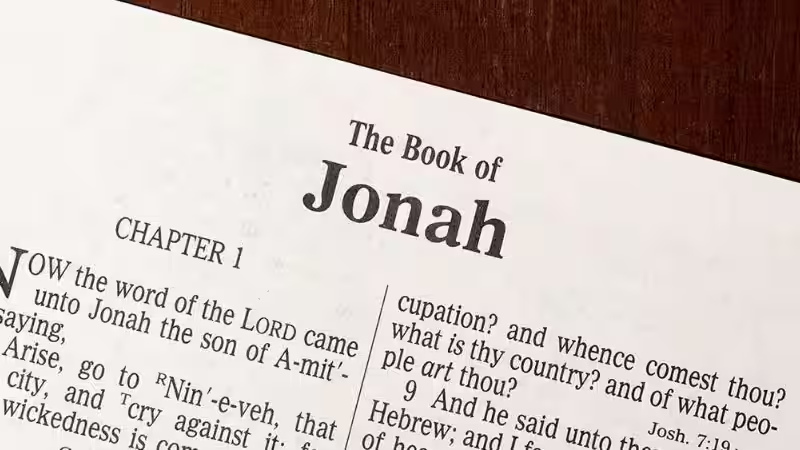
The story of Jonah, a reluctant prophet, holds a profound message about God’s mercy and human response to divine command. This narrative, found in the Book of Jonah in the Hebrew Bible, is rich with symbolism. One of the most significant elements is the “Jonah sign,” a powerful demonstration of God’s ability to act dramatically and to show His care for His people. This sign, though specifically tied to the story of Jonah, speaks volumes about the broader themes of faith, repentance, and divine intervention in the lives of individuals and communities.
Central to understanding the Jonah sign is the context. Jonah, tasked by God to preach repentance to the city of Nineveh, initially disobeys and flees. This act of disobedience highlights the human tendency to resist God’s will, a theme echoed across many religious texts. Yet, even in Jonah’s rebellion, God’s grace is evident. Ultimately, Jonah’s experience, including the great fish incident, serves as a powerful illustration of God’s mercy and willingness to redeem even those who reject Him. This sets the stage for the Jonah sign, a sign that would demonstrate God’s power and His message of hope. Ultimately, the Jonah sign is not a magical trick, but a message of God’s action and the importance of responding to His call.
The precise meaning of the “Jonah sign” is open to interpretation. Some religious scholars see it as a concrete demonstration of God’s ability to perform miracles and intervene in human affairs. Others view it more as a symbol of God’s willingness to give people a chance to repent and change their ways. For example, consider the story of the Israelites’ wandering in the desert. The provision of manna and water, the parting of the Red Sea – these could be seen as similar “signs,” all illustrating God’s power and care for His people. All these signs point to a larger truth about the relationship between God and humanity. The Jonah sign, therefore, serves a dual role.
Furthermore, the Jonah sign can be seen as a call to action. It’s not just about witnessing God’s power, but about responding to His call to justice and mercy. The stories of the prophets are often filled with signs and wonders, but the true purpose is not simply entertainment but rather a call to faith and action. The Jonah sign underscores the need to consider the spiritual consequences of our actions. For example, a community facing severe hardship might interpret the lack of a “sign” as a lack of divine favor, a sign of God’s disapproval, which necessitates repentance and change to restore the relationship with God.
The Jonah Sign and Modern Relevance
Despite being part of a historical narrative, the Jonah sign’s relevance extends to us today. The story of Jonah provides a powerful model for responding to divine commands and a framework for reflecting on our own relationship with God. Consider the many social and environmental problems our world faces. The importance of faith and action in addressing these issues resonates powerfully with the message of the Jonah sign. This is a powerful reminder that God’s call to action is not limited to ancient prophets but applies to all of humanity.
The Jonah sign can be seen as a call to empathy and understanding for humanity’s struggles. His story underscores the importance of divine mercy and the need for human repentance. The sign is not simply an isolated event, but rather a pattern that repeats itself throughout the scriptures. For example, prophetic figures warn of impending judgment, but also offer a path to redemption. This pattern is reflected in many religions and philosophies, highlighting the universal human need for guidance and connection with something larger than ourselves.
Reflecting on the Jonah sign can foster personal growth. It encourages us to examine our own responses to challenging situations, mirroring Jonah’s reluctance. Are we open to God’s call, even when it seems uncomfortable or difficult? The Jonah sign invites us to consider how we can be more compassionate and responsive to the needs of others. Similar to the Jonah sign, many personal experiences illustrate moments of divine intervention and grace.
The Jonah sign encourages us to look inward. Are we resisting God’s calling? Are we open to His guidance? This introspection, spurred by the Jonah’s story, can lead to deeper spiritual understanding and a more meaningful connection with the divine. For example, a person grappling with personal conflict might see the Jonah sign as a reminder to seek reconciliation, a reminder to ask for guidance, and a sign to change their approach to find solutions.
Frequently Asked Questions about the Jonah Sign
What is the Jonah Sign?
The Jonah sign is a term used to describe a miraculous event where a person is swallowed by a large creature and then miraculously rescued.
What is the religious significance of the Jonah Sign?
In religious contexts, the Jonah sign often symbolizes God’s power to save and the possibility of redemption even from seemingly impossible situations.
Where does the Jonah Sign appear in religious texts?
The story of Jonah is found in the Book of Jonah in the Hebrew Bible/Old Testament.
What are some interpretations of the Jonah Sign?
Interpretations vary, but common themes include God’s ability to deliver, the importance of repentance, and the possibility of spiritual rebirth.
Is the Jonah Sign a literal or metaphorical account?
The story is often interpreted metaphorically, representing the broader themes of salvation and divine intervention, rather than a strictly literal account of a physical event.
How is the Jonah Sign relevant to modern interpretations of religious faith?
The Jonah sign can be a source of inspiration and encourage a spirit of trust in divine power in the face of significant challenges.