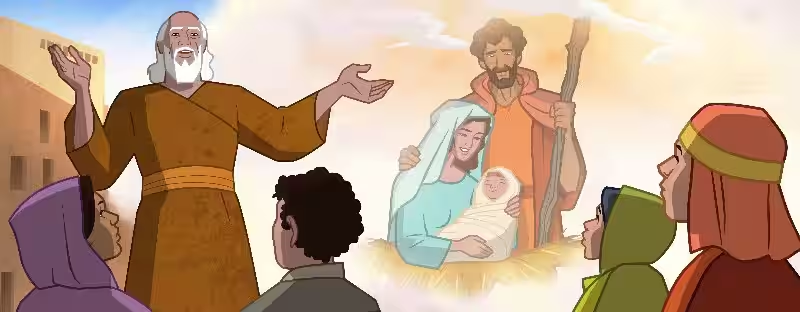
Isaiah 9:6, a powerful verse nestled within the tapestry of prophecy, speaks to a profound truth about God’s kingdom. It paints a picture of a coming ruler, a Prince of Peace, who will bring liberation and reign with wisdom and justice. This passage, found within the Old Testament, speaks not just to a historical event, but to an ongoing, timeless truth about God’s relationship with humanity. We see this promise of a Prince of Peace reflected in various religious traditions, each offering unique interpretations and applications to their own context.
Understanding this verse involves more than simply memorizing the words. It’s about recognizing the deeper meaning behind the imagery. Isaiah 9:6 invites us to reflect on the qualities of God’s kingdom and how these qualities can transform our lives. For example, we can ponder how a “Prince of Peace” might manifest in a specific community or even on a personal level. This verse encourages us to look for the signs of God’s presence in the world around us, from compassionate acts to the enduring power of forgiveness.
Isaiah 9:6 speaks to a time of great hardship and oppression. It’s a cry for deliverance, a call for a leader who will restore justice. Imagine a world weighed down by conflict and injustice. The prophecy of a Prince of Peace offers a glimpse of hope and restoration. This expectation of a messianic savior was central to the Jewish understanding of the coming of God’s kingdom, making Isaiah 9:6 a significant passage for Jewish religious thought.
It’s important to remember that the context of prophecy often involves multiple layers of meaning. The phrase “a child is born to us” can be interpreted literally, but also metaphorically, as a new beginning or a new era. This verse suggests that God’s presence and intervention are not limited to specific moments in time but are always available to those seeking Him. Just as a child brings new life and hope, so too does the arrival of a Prince of Peace bring new hope to humanity.
Dissecting the Themes of Isaiah 9:6: A Multifaceted Examination
Isaiah 9:6 unveils several key themes relevant to understanding God’s plan for humanity. Divine sovereignty is paramount. God, through the foretold Prince of Peace, will establish his righteous kingdom, a kingdom not of this world but one governed by love and compassion. A deeper reflection on this verse reveals the profound hope it offers, reminding us that God cares for His people and is actively involved in the course of human events. A simple example is the hope people feel during times of immense suffering.
The verse also speaks to the concept of justice and peace. The Prince’s reign, the prophecy highlights, will be characterized by these qualities. Imagine a society ruled not by fear and oppression, but by compassion and understanding. This is the ideal that Isaiah 9:6 holds out to us. The promises of restoration are central to the message, offering a pathway from despair to hope, from conflict to harmony, and a promise of a world free from suffering. Examples include peace treaties and reconciliation efforts.
Applying Isaiah 9:6 to Modern Life
Isaiah 9:6 transcends the boundaries of time and culture. Its message of hope and peace is deeply relevant to our lives today. Empathy and compassion are crucial in our relationships with others. How can we embody the qualities of the Prince of Peace in our interactions and actions? The verse calls on us to strive to be instruments of goodwill and peace, a call to action for all. Looking for opportunities to promote peace and justice is integral to embodying the message of Isaiah 9:6, whether it’s through volunteer work, advocacy, or simply acts of kindness.
Reflecting on Isaiah 9:6 encourages a personal journey of spiritual growth. How can we cultivate more understanding, patience, and empathy in our daily lives? Finding ways to see the world through another’s eyes is a practical application of the Prince of Peace’s message. Acts of service and a commitment to peace are not passive expressions, but active demonstrations of our faith. For example, mediating conflicts between friends or family members can be a powerful application of this verse.
Conclusion: The Enduring Relevance of Isaiah 9:6
Isaiah 9:6, a beacon of hope in the ancient world, offers profound insights into God’s plan for humanity. Its message of a Prince of Peace remains profoundly relevant today. The verse encourages a journey of spiritual growth and a commitment to living a life filled with empathy and compassion. It invites us to actively seek ways to promote peace and justice in our communities and the world. Understanding this verse, and its profound meaning, allows us to more deeply appreciate the universal nature of God’s love for all humankind.
Ultimately, Isaiah 9:6 serves as a reminder that hope and peace are not abstract concepts, but realities that can be cultivated in our lives and in the world around us. It empowers us to actively participate in God’s plan for a world transformed by love and compassion. It is a powerful call to action, inspiring us to work towards a brighter, more peaceful future—a future founded on the principles of the Prince of Peace.
Frequently Asked Questions about Isaiah 9:6
What does Isaiah 9:6 say?
For to us a child is born, to us a son is given; and the government shall be upon his shoulder, and his name shall be called Wonderful Counselor, Mighty God, Everlasting Father, Prince of Peace.
What is the significance of the title “Wonderful Counselor”?
This title highlights Jesus’ wisdom and guidance. He is the ultimate source of counsel and understanding.
What does “Mighty God” signify?
This title emphasizes Jesus’ divine power and authority.
What does “Everlasting Father” mean?
This title speaks to Jesus’ eternal nature and his role as the ultimate source of spiritual life and hope.
What does “Prince of Peace” signify?
This title refers to Jesus’ role as the bringer of peace. He offers inner peace and reconciliation with God and others.
Is Isaiah 9:6 unique to Christianity?
No, the verse is part of the Hebrew Bible and is considered significant in both Jewish and Christian traditions. However, the Christian interpretation focuses on its fulfillment in Jesus Christ.
How is Isaiah 9:6 relevant to religion in general?
The concept of a savior figure, a bringer of hope, a source of wisdom, and a promise of peace resonates with many religious traditions. The verse provides a common theme of hope, redemption, and guidance found across many faiths.