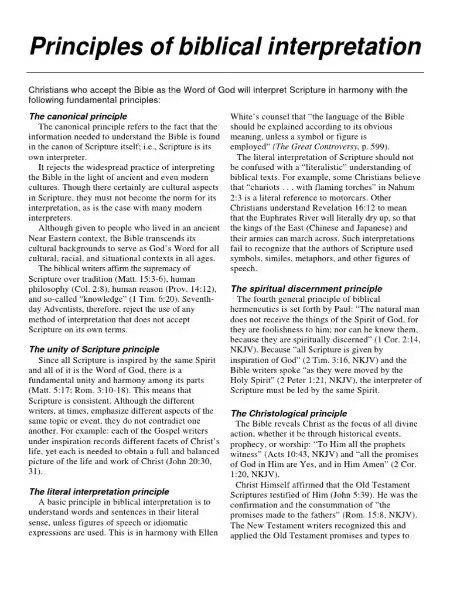
The Bible, a collection of books spanning millennia, offers profound insights into faith, history, and human experience. But its diverse genres, including poetry, law, prophecy, and narrative, can seem daunting. Navigating this rich tapestry requires a thoughtful approach, one that embraces the text’s complexity while acknowledging its inherent human element. It’s not about finding a single perfect interpretation, but about exploring the various layers of meaning and developing a personal understanding that resonates with your life.
Many readers approach the Bible with a preconceived notion that there’s one definitive answer. This isn’t the case. The beauty of the Bible lies in its multifaceted nature, allowing for different interpretations and enriching understanding through varied perspectives. It’s a journey of discovery, a continuous conversation with the text, rather than a simple check-list of answers. Historical context, literary analysis, and personal reflection all play vital roles in this exploration.
Understanding the Bible Naturally: A Gradual Approach
Instead of trying to grasp the entire Bible at once, a gradual approach is often more effective. Start with the books you find most appealing – perhaps a compelling narrative like the stories of Joseph or David. Focus on understanding the historical context in which the text was written, considering the cultures and beliefs of the time. This allows for a more nuanced interpretation, avoiding misunderstandings based on modern perspectives. For example, the laws of the Old Testament were specific to a particular society and time; applying them literally to modern life wouldn’t be accurate or helpful.
Don’t be afraid to ask questions. Curiosity and critical thinking are valuable tools in understanding the Bible’s profound message. Reading commentaries or engaging in discussions with others can provide additional insights. Consider different translation versions to get a wider range of perspectives, but always remember that the original languages (Hebrew, Aramaic, and Greek) hold the most literal meaning. Just as an artwork can be interpreted in multiple ways, the Bible offers room for individual introspection and interpretation.
How to Approach Different Genres
The Bible comprises various literary genres, each with its own unique characteristics and modes of communication. Understanding these genres – from historical narratives to poetic pronouncements – is crucial for proper interpretation. For example, poetry often uses figurative language like metaphors and symbolism. A literal reading of a psalm might miss the emotional depth and profound truths embedded within its imagery. Similarly, the epistles are letters designed to address specific issues and offer guidance to particular communities. Reading these letters within the context of their recipients’ situations will make their teachings more impactful and relevant.
Understanding the historical context in which these genres were developed is essential. Think of the historical setting for the book of Genesis, which provides valuable insight into ancient Near Eastern cosmologies and creation myths. By understanding the intended audience and the historical background, you can more effectively interpret the underlying message. Key questions to consider include: Who wrote this? Who was it written for? What was the situation at the time? What was the author trying to convey? Using these guidelines, you can begin to uncover the richness of the Bible’s many voices.
Ultimately, understanding the Bible isn’t just about intellectual comprehension; it’s about personal connection. Reflect on the message. How does it relate to your life and current challenges? Personal reflection and prayer can deepen your understanding and help you discern how the principles and stories might apply to your experiences. Consider the values and lessons that resonate with you. These are often the passages that will most deeply impact you. What is God saying to you personally in this moment?
Journaling is a powerful tool. Write down your thoughts and reflections after reading a passage. Look for themes, and write about how they impact you. Share your interpretations with others. Engaging in dialogue can lead to new perspectives and deepen your understanding. Discussion helps us acknowledge our blind spots and discover new facets of the text. Be patient with yourself. Understanding the Bible is a journey, not a destination. Embrace the process of discovery and allow the wisdom of the text to shape your life.
Frequently Asked Questions
How do I understand the Bible?
Understanding the Bible requires a multifaceted approach. Consider the historical context, literary genres (poetry, prophecy, narrative, etc.), and the theological perspectives of different authors and eras. Study different translations and commentaries to gain varied interpretations. Engage in prayer and reflection to allow the text to speak to you personally. Seek guidance from religious leaders and scholars, but ultimately, the journey of understanding is a personal one.
What is religion?
Religion is a complex phenomenon encompassing beliefs, practices, values, and social structures centered around the worship of a deity or deities, or a broader concept of the sacred. It often involves rituals, ceremonies, ethical codes, and a community of believers. Religions provide frameworks for understanding the world, human existence, and the purpose of life, offering comfort, guidance, and a sense of belonging. Different religions may share common elements of spirituality while having distinct perspectives and practices.