We all seek guidance, direction, and meaning in our lives. For many, turning to religious or spiritual traditions provides a framework for understanding our place in the universe and navigating life’s complexities. Within these traditions, the concept of “greater lights” often plays a significant role, representing divine wisdom, inspiration, and ultimate truth. These greater lights can appear in many forms, from celestial bodies to metaphorical figures embodying profound knowledge.
The idea of greater lights isn’t confined to any single religion. Across cultures and belief systems, people have recognized patterns and symbols in the natural world that suggest a higher power. For example, the sun and moon, as greater lights in the sky, have been revered for their life-giving and cyclical nature, prompting contemplation about creation and the divine. This connection to something beyond the human realm often underscores the importance of spiritual growth and connection with the greater lights. Ultimately, these greater lights offer a lens through which to understand the universe and our role within it.
Exploring the Significance of Celestial Bodies as Greater Lights
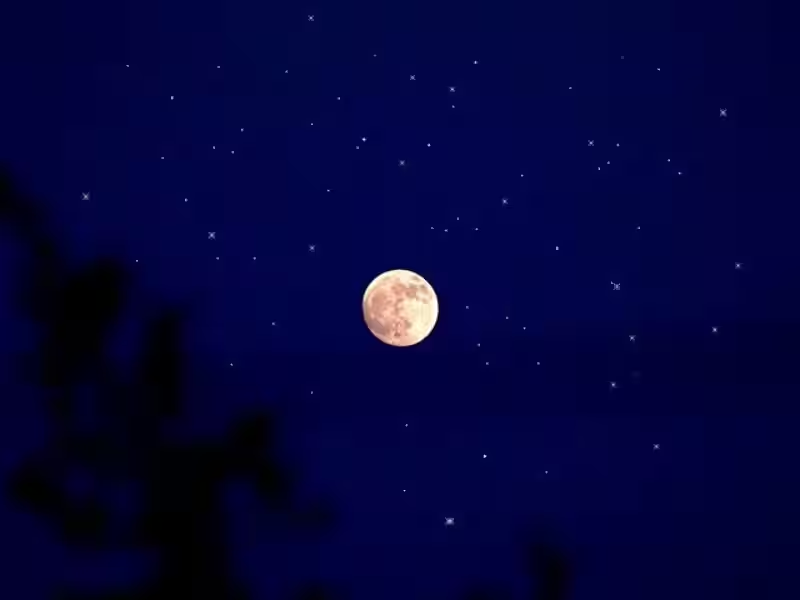
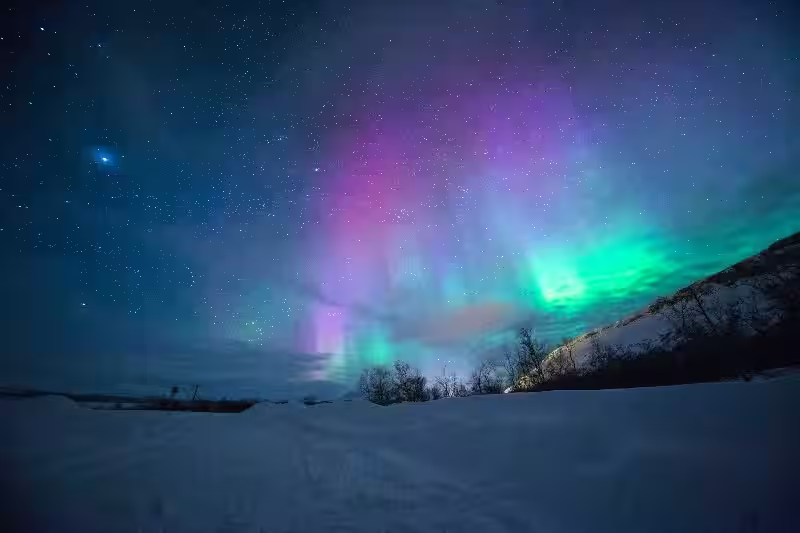
Many traditions see celestial bodies as greater lights, embodying divine power and purpose. The sun, moon, and stars have been objects of worship and study for millennia. They represent cyclical patterns of life, death, and rebirth. For instance, the sun’s daily journey across the sky mirrors the human experience of growth, while the moon’s phases evoke the continuous transformation in nature. These greater lights are not merely physical entities but symbols of cosmic order and divine providence.
Consider the ancient Egyptians, who revered the sun god Ra. Or the astrological traditions that connect planetary movements with human destinies. These connections highlight a fundamental aspect of human nature: the desire to find meaning and purpose in the vastness of the universe. Ancient civilizations often saw greater lights in the night sky as divine messengers or manifestations of the supreme being. The celestial realm holds a position of power and influence in many traditions, and these greater lights are key components of these understandings.
Interpreting Greater Lights Metaphorically
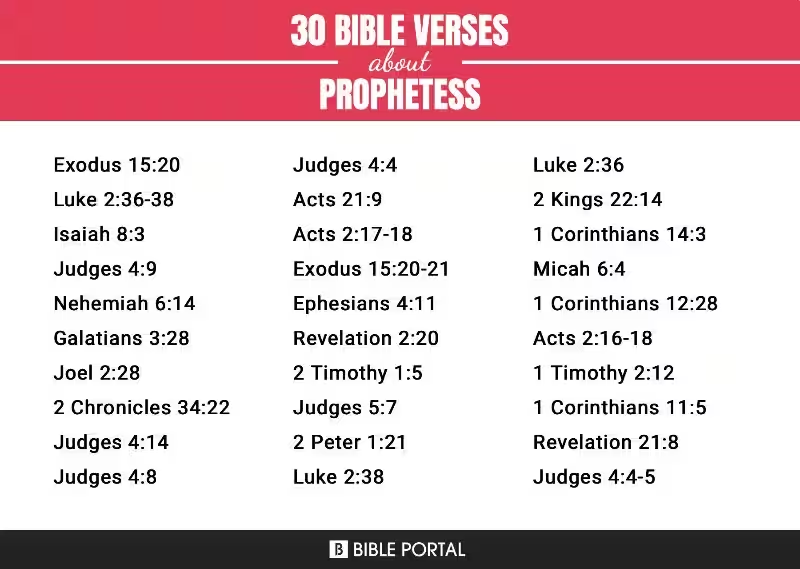
Beyond physical objects, greater lights can represent spiritual ideals, moral principles, and influential figures. In many religions, prophets, sages, and enlightened individuals are seen as greater lights, illuminating the path for others. These figures exemplify virtues and inspire followers toward a higher purpose. For example, Jesus in Christianity, the Buddha in Buddhism, or the Prophet Muhammad in Islam. Each is a beacon of wisdom and guidance. Their teachings and lives provide a framework for understanding life’s complexities, offering hope and inspiration.
Consider the concept of inner light or intuition. Many traditions encourage seeking such a greater light within oneself. This inner wisdom, seen as a manifestation of a greater light, can guide decisions and lead to a deeper understanding of one’s place in the world. Spiritual mentors and teachers also function as greater lights for those seeking guidance. They provide guidance, support, and a perspective that may otherwise be elusive.
Connecting with Greater Lights in Daily Life
Whether we conceive of greater lights as celestial bodies or enlightened figures, the core idea is about seeking inspiration and guidance. We can connect with greater lights in our daily lives by practicing mindfulness, engaging in acts of service, and nurturing our spiritual growth. Meditation, prayer, and reflection are common paths to connect with greater lights, creating a space for introspection and contemplation. This connection can lead to a sense of purpose and provide strength in times of adversity.
Finding a path of purpose is often at the heart of the search for greater lights. Through deliberate practice and introspection, we can cultivate our own inner greater light, allowing us to illuminate the path for others. We can also find greater lights in the community and the natural world. Recognizing these sources of inspiration can bring about deeper understanding, empathy, and compassion.
Greater Lights Religion is a belief system centered around the concept of a universal, benevolent light that permeates all existence. Adherents believe this light is the source of wisdom, compassion, and understanding, and strive to align their lives with its principles.
What are the core beliefs of Greater Lights Religion?
Core beliefs include the inherent goodness of all beings, the importance of self-improvement, and the pursuit of knowledge and enlightenment. Practices often involve meditation, contemplation, and acts of service to others.
What are the rituals or practices associated with Greater Lights Religion?
Practices vary among individuals and communities but often include meditation, prayer, community gatherings, and acts of kindness and service to others. Specific rituals may be developed within local groups.
How does Greater Lights Religion relate to other religions or philosophies?
Greater Lights Religion can be seen as a unifying philosophy, drawing inspiration from various belief systems while emphasizing universal principles. It’s intended to be inclusive and respectful of diverse perspectives.
What is the role of the Greater Light in the religion?
The Greater Light is the central and unifying force, representing a universal consciousness or divine energy that pervades all existence. It is viewed as a source of guidance and inspiration.
How does Greater Lights Religion approach ethical dilemmas?
Ethical dilemmas are addressed through principles of compassion, understanding, and responsibility. Individuals are encouraged to consider the impact of their actions on others and seek solutions that promote harmony and well-being.
How can I learn more about Greater Lights Religion?
Further information can be found through online resources, community gatherings, and interactions with other members of the faith.