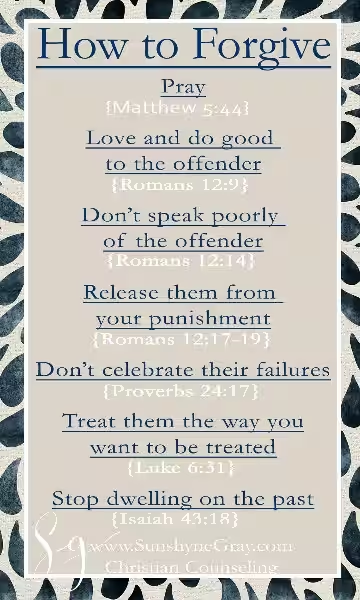
This passage in the Gospel of Matthew delves into the profound importance of forgiveness in our lives, offering a powerful analogy for how we should respond to those who sin against us. It’s not just about saying “I forgive you”; it’s about a heart transformation that leads to reconciliation and restoration. This passage resonates deeply with us because it speaks to the human experience of hurt, anger, and the need to find grace with each other. This message, though centuries old, remains incredibly relevant to our modern lives.
The story of the unforgiving servant, in Matthew 18:21-35, is a potent reminder of the importance of compassion and humility. It’s easy to feel justified in holding onto resentment, but the parable highlights how our own failures to forgive can have long-lasting, negative consequences, not only for those who have wronged us, but also for ourselves. Consider this: how many times have you felt wronged? How often have you carried those feelings, or perhaps even the feeling of being wronged, with you? These feelings can weigh heavily on your mind and spirit, especially if you don’t process them properly. This passage serves as a guide for handling these situations more effectively.
The parable tells us about a king who forgave a debt of tens of thousands of talents. This is a staggering sum—imagine the immense financial burden that would have been! In modern terms, it’s equivalent to a truly astronomical debt. Yet, this servant, having been forgiven so much, refuses to forgive a debt owed to him by one of his fellow servants, much smaller in comparison. This extreme reaction illustrates the principle of unforgiveness. It also highlights what happens when we fail to live out the principles of forgiveness.
This story isn’t just about money; it’s about the heart. It’s about the difference between receiving forgiveness and choosing to extend it to others. The servant’s response was not only unjust; it was also profoundly self-destructive. Think about how much energy and emotional toll resentments and unforgiveness take on you. The parable showcases that unforgiveness becomes a burden, one that is detrimental to one’s own well-being. The king’s response serves as a powerful example of divine mercy, underscoring the importance of extending the same grace that we have received.
Applying the Principles of Matthew 18:21-35
The principles laid out in Matthew 18:21-35 are not exclusive to religious contexts; they apply to every relationship in our lives. It’s about recognizing that we are all flawed and that forgiveness is essential for moving forward. This includes our relationships with family, friends, coworkers, and even ourselves. It’s a call to create a more peaceful and harmonious world. Consider the following:
Acknowledging our own imperfections: We all make mistakes.
Seeking forgiveness from others: It’s a sign of humility.
Extending forgiveness to others: A vital step towards healing.
We’ve all been on the receiving end of hurts and slights, and at times, we’ve delivered them to others. The key takeaway here is how to navigate these challenges constructively. Forgiveness is not condoning harmful behaviour, but rather choosing to release the burden of anger and resentment. This takes time and effort, but the long-term benefits are immeasurable. By following these principles, we can cultivate a deeper sense of peace and well-being in ourselves and our relationships.
The Importance of a Balanced Perspective
It is crucial to maintain a balanced perspective when approaching issues of forgiveness. We are not advocating for the subjugation of our rights or the minimization of wrongdoings. Instead, we are urging a focus on personal growth and the restorative power of forgiveness. This allows us to move forward, free from the shackles of resentment. This takes the pressure off of us to be perfect and allows us to be gracious in how we treat others. How many times have you wanted to hold onto resentment to ensure the other party is made to feel the consequences of their actions? The parable challenges us to consider the value of letting go.
The passage emphasizes the importance of consistent practice in extending forgiveness. It isn’t a one-time event; it’s an ongoing process. This is a lifelong commitment to growth. We need to ensure that we’re not just forgiving, but also implementing strategies to prevent similar issues from arising again. Consider a relationship where you and your friend or family member have recurring disagreements. Forgiveness can act as a reset button, not to gloss over the issue, but to allow you to move forward and focus on building a more constructive relationship.
Matthew 18:21-35 is a potent reminder of the importance of forgiveness in our lives. It’s a powerful call to action, urging us to embrace compassion and grace. It challenges us to consider the impact of our choices, the weight of our unforgiveness, and the power of a renewed perspective. It is a call for us to walk the path of divine mercy and to extend the same grace we have received. This passage is more than just a religious teaching; it’s a practical guide for navigating the complexities of human relationships.
By understanding and applying the principles of this passage, we can cultivate more fulfilling, harmonious relationships and ultimately, live more peacefully in God’s love and grace. The journey of forgiveness is often challenging, but the rewards of peace and understanding are well worth the effort.
Frequently Asked Questions about Matthew 18:21-35
What does Matthew 18:21-35 say?
This passage describes the importance of forgiveness in Christian discipleship. It uses the parable of a king who forgives a servant’s enormous debt, but the servant refuses to forgive another servant a much smaller debt. The king is angered by the unforgiving servant and throws him into prison. Jesus’s point is that if we refuse to forgive others, our own sins are not forgiven either.
What is the significance of the parable in Matthew 18:21-35?
The parable highlights the interconnectedness between God’s forgiveness and our own forgiveness of others. Jesus emphasizes that our actions toward others reflect our relationship with God. Unforgiveness is compared to a lack of grace and mercy from God.
How does this passage relate to Christian teachings on forgiveness?
This passage is a powerful call to forgive others as God forgives us. It underscores the importance of extending compassion and grace, just as Jesus has demonstrated through his sacrifice. The passage stresses the necessity of continually seeking forgiveness.
What are some practical applications of this teaching in everyday life?
This passage encourages us to regularly examine our hearts for unforgiveness and ask for God’s help in releasing those feelings. It prompts us to actively seek reconciliation with those who have hurt us and to extend forgiveness as we would want God to extend it to us.
Is this passage about the concept of “restitution”?
While the passage implies a need to demonstrate repentance, it’s not specifically about restitution in the legal sense. The focus is on the principle of forgiveness and the devastating consequences of refusing to extend the same grace we seek ourselves.