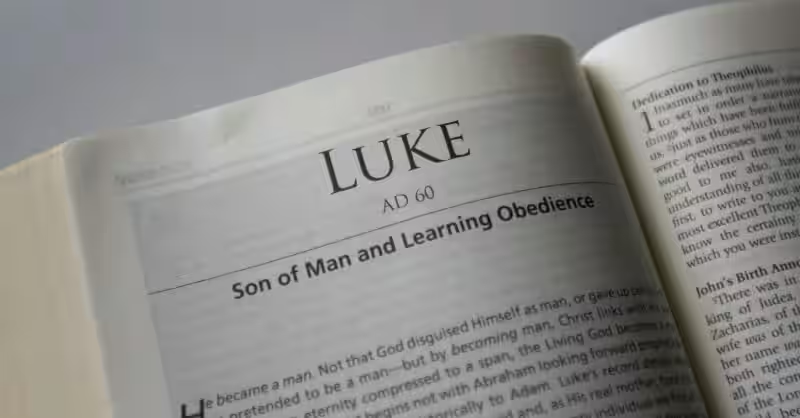
Luke, the author of the Gospel bearing his name, wasn’t just recording historical events; he was crafting a powerful narrative that shaped our understanding of faith, humanity, and God’s relationship with us. His meticulous attention to detail and the specific choices he made in weaving the stories together offer a unique window into the religious landscape of his time and its resonance today. Understanding his commentary is not just about studying history; it’s about understanding the heart of faith in a way that resonates with our own lives.
Luke’s Gospel, often referred to as the “Gospel of Action,” isn’t simply a collection of miracles or teachings. It’s a carefully curated story about God’s compassion and inclusivity. He emphasizes the importance of loving our neighbors, the marginalized, and the outcasts, giving us clear illustrations of how to live a life centered on God’s love. Think about Luke’s focus on the poor, the sick, and those on the fringes of society. These aren’t just historical details; they underscore a key message about God’s love extending to everyone, regardless of social standing or circumstance.
Unlike other Gospel writers, Luke explicitly addresses the social realities of his time. He paints a vivid picture of a world grappling with social injustice and inequality, and he highlights how Jesus’ teachings challenged these norms. For example, Luke’s emphasis on the Parables of the Prodigal Son and the Good Samaritan is not just about forgiveness; it’s about reconciliation and acceptance. It’s about extending compassion to those we might otherwise exclude.
In his writing, Luke provides rich detail about social dynamics of the time. He paints a picture of the power structures and the social tensions that existed. This isn’t just about creating vivid historical portraits; it’s about showing how Jesus’ actions and teachings were relevant to the daily lives of people. This lens allows us to see the impact of religion on a broader scale, beyond individual beliefs, and emphasizes how Jesus’ teachings challenged the established social order. Consider the impact of Jesus’ call to mercy on someone who oppressed others; it forces us to think about the implications of our actions within a broader social context.
The Role of Women in Luke’s Narrative
Luke’s Gospel gives a surprising amount of attention to women in a way that might not have been typical in the first century. He highlights their crucial roles in spreading the message and in experiencing the healing power of Jesus. Consider Mary Magdalene, Joanna, and Susanna – these women are not just mentioned in passing; they are portrayed as active participants in the unfolding story. This empowerment of women within the religious context is a vital element of Luke’s commentary.
The inclusion of women, though important, requires a look at the broader social context. We can’t simply applaud Luke for his progressive views without understanding the constraints and challenges women faced in that era. His inclusion of these figures is significant and gives us a more complete picture of the religious experience in that period. Their presence shows the impact of Jesus’ message on all members of society. Think about how this understanding of women’s roles challenges traditional patriarchal perspectives from the past – and how it can continue to impact our understanding today.
Luke highlights the importance of prayer and worship as critical aspects of the Christian faith. He emphasizes the importance of communicating with God and the need for community in faith. His accounts often show Jesus praying and instructing his followers on how to pray. These moments aren’t simply private; they are shared and transformative; prayer can be a powerful force for change. For example, consider Jesus’ prayer in the Garden of Gethsemane; it shows a deep connection with the divine and the reality of human struggle.
Luke’s portrayal of prayer isn’t merely about reciting words; it’s about a deep relationship with God. This is reflected in how Luke depicts Jesus’ encounters with other people. These exchanges aren’t just about teaching; they’re about relationship. The way Jesus interacts with individuals reveals the deep connection between prayer and action. This perspective encourages us to think of prayer not just as a solitary practice, but as a dynamic force that shapes our relationship with both God and our fellow humans. By emphasizing the human element in prayer, Luke suggests that our words should be accompanied by actions that reflect the love and compassion Jesus exemplified.
Luke’s Gospel is more than just a historical document. It’s a profoundly relatable exploration of faith, compassion, and the social impact of a radical message. By examining his unique approach to presenting the life of Jesus, we can gain a deeper understanding of religious principles and how they apply in our own lives. His commentary invites us to confront the complexities of faith and the importance of living in a way that reflects the values of God-centered love.
Through Luke’s lens, we see a vivid portrait of a world grappling with faith and social justice. His message resonates not only with those who share his religious beliefs, but with anyone who seeks a deeper understanding of humanity and its relationship with the divine. His commentary is a powerful invitation to engage with faith, not just as a set of rules, but as a journey of growth and compassion.
Frequently Asked Questions
What is the commentary of Luke?
Luke’s Gospel, along with the Acts of the Apostles, are attributed to Luke, a companion of Paul, and are a significant part of the New Testament. The commentary focuses on various aspects of the text, including historical context, theological interpretations, and literary analysis.
What is the relationship between Luke and religion?
Luke, as an author of the Gospel and Acts, provides a perspective that deeply connects with religious understanding and practice. His writing often emphasizes themes of compassion, social justice, and the universality of God’s love. His focus on the marginalized and the inclusion of diverse characters within the narratives reflect his belief in God’s inclusive nature.