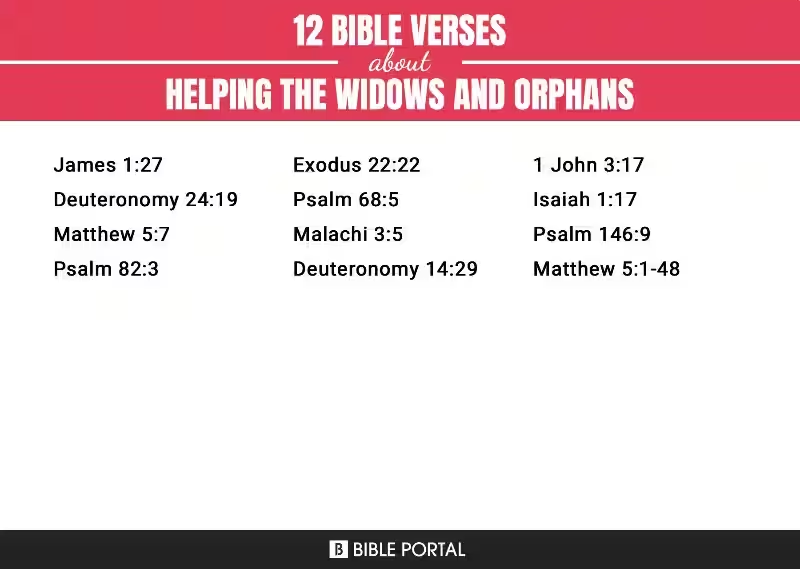
The concept of “brothers keeper” resonates deeply, not just within the confines of religious texts, but also in the fabric of human relationships. It speaks to a fundamental responsibility we have towards one another. This responsibility, eloquently captured in various biblical accounts, reminds us that we are interconnected, and our actions have profound consequences for those around us. Empathy, compassion, and vigilance are key components of this powerful concept, exemplified in numerous passages across the Old and New Testaments.
The phrase itself, often interpreted as “a watcher over your brother,” isn’t merely a call to passive observation. It demands proactive involvement in the lives of those around us. It encourages us to intervene when necessary, to offer support, and to stand up for the vulnerable. This doesn’t imply a judgmental approach but rather a caring and supportive one. Think of it like a network of interconnected support, where each individual is actively involved in the well-being of their community.
The phrase “brothers keeper” isn’t confined to a single verse. Its essence is woven throughout the Bible, from Genesis to Revelation. For instance, the story of Cain and Abel highlights the grave consequences of indifference and violence. It’s a stark reminder that failing to protect the vulnerable has far-reaching implications. A key takeaway here is the importance of proactive kindness and righteousness. This isn’t just a religious concept; it’s a human imperative.
Different interpretations exist, yet they all point towards a shared responsibility. Some interpretations focus on family relationships, while others extend the concept to encompass broader communities, even strangers. This flexibility allows for the application of the principle in various contexts. Imagine a society where everyone actively looked out for the well-being of others. This collective support system fortifies the community as a whole and creates a more just and compassionate society. The concept of “brothers keeper” becomes a framework for building stronger communities.
How can we embody this principle in our everyday lives? The concept of a “brother’s keeper” challenges us to see beyond our individual needs and embrace a sense of collective responsibility. This translates into many everyday actions. Reporting abuse, helping someone in need, and supporting a marginalized group are just a few examples of ways we can practically demonstrate this ideal. By actively seeking opportunities to assist others and encourage positive change, we are fulfilling our role as “brothers keepers.”
Consider these examples: volunteering for a local charity, reaching out to someone who seems isolated, or challenging injustice wherever you see it. These small actions, when multiplied across individuals, can have a tremendous effect on the overall well-being of our communities. What better way to demonstrate our communal responsibility than through acts of kindness, empathy, and understanding? By fostering these values, we actively contribute to a more just and compassionate society.
The Importance of Community and Support
The concept of “brothers keeper” emphasizes the importance of building strong communities. A community that supports its members is a powerful force for good. It’s a reflection of the idea that we are all interconnected, and our actions impact others. A supportive environment fosters not only individual growth but also collective progress and well-being. Think of a tight-knit neighborhood where families help each other during difficult times or support local initiatives.
This sense of shared responsibility extends beyond immediate family and friends. It encourages us to consider the needs of others, both within our immediate circle and across the larger community. Collective action and mutual support provide a safety net for individuals and foster a sense of belonging. A community where individuals are actively looking out for one another is a more vibrant and resilient one. These communities thrive on the principle of “brothers keeper.”
The concept of “brothers keeper,” deeply rooted in the biblical tradition, remains incredibly relevant today. It’s a call to action, urging us to view our fellow human beings not as isolated individuals but as integral parts of a larger family. Actively intervening to support and protect those in need is paramount in embodying this ideal. Let us embrace our responsibility as “brothers keepers” and strive to create a world where everyone feels safe and supported.
By taking small steps in our daily lives, we can foster a culture of compassion and empathy. Think of the ripple effect of one act of kindness. It is in the small acts of service and support that we truly embody the profound principle of being a “brother’s keeper,” and create a world where everyone thrives. Let’s build a community where everyone feels seen, heard, and supported. This is the essence of “brothers keeper” in action, in our modern world.
Frequently Asked Questions about the “Brothers Keeper” Bible Verse
What is the “Brothers Keeper” Bible verse?
The verse often referred to as “Brothers Keeper” is Genesis 4:9, which states, “And the Lord said unto Cain, Where is Abel thy brother? And he said, I know not: Am I my brother’s keeper?”
What does the verse mean?
The verse is often interpreted in different ways. Some view it as a direct command from God to Cain, emphasizing the responsibility of caring for and protecting one’s brother. Others suggest it highlights Cain’s callous indifference and denial of responsibility. It can also be seen as a question about the extent and nature of our responsibility towards others.
The verse comes after Cain murdered his brother Abel. God confronts Cain about Abel’s disappearance, and Cain’s response highlights his lack of remorse and refusal to acknowledge his role in Abel’s death.
How is the “Brothers Keeper” verse relevant to religion today?
The verse continues to be relevant in various religious contexts. It encourages reflection on our responsibilities towards others, highlighting themes of compassion, empathy, and caring for those in need. Different interpretations lead to varying applications of the principle in daily life.
Does the verse apply to all religions?
While rooted in a specific religious tradition (Judaism and Christianity), the concept of caring for others can be found in many religions and ethical frameworks. The “Brothers Keeper” verse, therefore, might resonate with principles of compassion and social responsibility found in other belief systems.