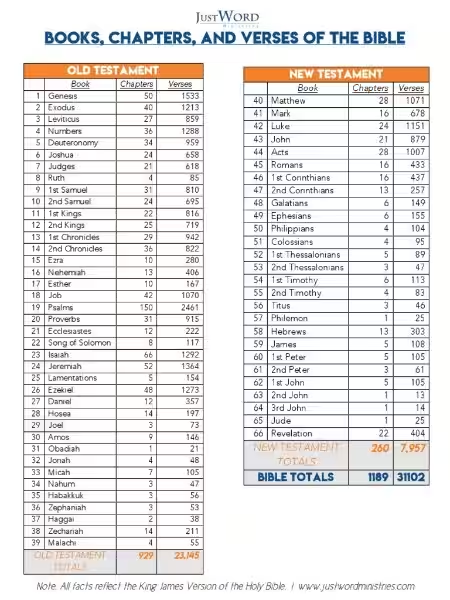
The Bible, a collection of books spanning millennia, offers a tapestry of stories, wisdom, and guidance. Navigating its vast expanse can feel daunting, but understanding key themes through chapter summaries can make the journey much more rewarding. This exploration isn’t about rote memorization, but about uncovering the timeless truths that continue to resonate with people today. By connecting these ancient narratives to contemporary issues, we can gain invaluable insights and strengthen our understanding of ourselves and the world around us.
Different interpretations of the Bible often lead to different conclusions. For instance, while some focus on the literal meaning of the text, others explore its allegorical or metaphorical dimensions. Recognizing this diversity of perspectives is crucial for engaging with the Bible meaningfully. A key aspect of this engagement is critically examining the historical and cultural context within which these narratives were created. This approach helps us understand the nuances of the language and the motivations of the characters involved, ultimately enriching our comprehension of the text.
Exploring the Old Testament: From Creation to Covenant
The Old Testament recounts the creation of the world and the early history of humanity, culminating in the establishment of a covenant between God and His chosen people. Genesis, for instance, details the creation story, Adam and Eve’s fall from grace, and the subsequent flood. These narratives explore profound themes of humanity’s relationship with God, sin, and redemption. Chapters like Exodus detail the Israelites’ liberation from slavery in Egypt and their journey towards the Promised Land. The significance of these stories extends beyond the historical context and provides examples of resilience in the face of adversity and the importance of faith in challenging times.
Delving into the prophets and wisdom literature, like Proverbs and Psalms, offers a wealth of practical advice and spiritual reflections. Proverbs, for example, provides insightful sayings on navigating life’s challenges. The Psalms, filled with poetic prayers and expressions of faith, offer relatable models for expressing our emotions and seeking divine guidance. These texts offer a glimpse into the complexities of human experience and provide a foundation for ethical considerations and personal growth. Understanding these facets through chapter summaries helps us gain a deeper understanding of the wisdom and experiences shared in the Old Testament.
Understanding the New Testament: Jesus’ Teachings and the Early Church
The New Testament focuses on the life, teachings, death, and resurrection of Jesus Christ and the early development of the Christian faith. The Gospels (Matthew, Mark, Luke, and John) provide detailed accounts of Jesus’ ministry. Jesus’ parables, like the parable of the Good Samaritan, offer profound insights into love, compassion, and human connection. The Acts of the Apostles narrates the expansion of the Christian faith beyond Jerusalem, demonstrating the power of faith and the spread of the early church. These stories are more than historical accounts; they provide a model for ethical behaviour and offer hope in the face of adversity. Chapters in the epistles, like Romans, delve into theological concepts and provide guidance for Christian living.
The epistles, particularly those written by Paul, address issues facing early Christian communities, offering guidance on faith, love, and living a life pleasing to God. These letters often address complex theological concepts, such as grace, faith, and salvation. For example, Paul’s letters emphasize the importance of forgiveness and the transformative power of faith. These explorations, viewed through the lens of chapter summaries, provide a framework for understanding the core principles of Christianity and their practical application in everyday life. Examples of specific chapters illustrate the breadth of topics covered, spanning personal relationships, community life, and the nature of God.
The Bible, despite its ancient origins, remains a powerful resource for understanding the human condition and navigating life’s challenges. Through chapter summaries, we can connect these timeless stories to contemporary issues. For example, the stories of overcoming adversity and standing up for what’s right, found in both the Old and New Testaments, hold lessons for us today. Reflecting on the parables of Jesus can provide guidance in ethical dilemmas. Understanding the principles of love and forgiveness, as presented in the New Testament, can help us cultivate stronger relationships. Using these summaries as a point of reflection allows us to discover personal relevance.
Ultimately, the Bible is more than just a collection of stories; it’s a journey of self-discovery. By exploring its chapters with an open mind, a willingness to delve deeper, and a desire to relate these principles to our own lives, we can unlock a profound wellspring of wisdom and guidance. The chapters provide a rich tapestry of experiences, both individual and collective, that have shaped countless lives and continue to inspire and challenge us today. Each chapter holds a message that can be applied in a multitude of ways to benefit our present time.
Frequently Asked Questions
What is a Bible chapter summary?
A Bible chapter summary is a concise overview of the main points and events discussed in a specific chapter of the Bible. It aims to provide a quick understanding of the chapter’s content without explicitly retelling the entire story.
Why are Bible chapter summaries important?
Bible chapter summaries can help readers quickly grasp the context of a passage, understand the flow of the narrative, and identify key themes and characters. They can also facilitate deeper study by providing a foundation for further investigation.
What are some resources for finding Bible chapter summaries?
Many online resources, Bible study apps, and commentaries provide chapter summaries. Specific Bible versions or translations might also offer summaries.
How can I use Bible chapter summaries to better understand the Bible?
Use them as a starting point for your study. Read the chapter summary, then read the chapter itself. Consider how the summary connects to other parts of the Bible, and write down any questions you have. This will help you focus your reading and lead to a deeper understanding.
What is religion?
Religion is a set of beliefs and practices related to the supernatural, often involving a concept of a deity or deities, spiritual beings, or a higher power. It encompasses rituals, ceremonies, ethics, and social structures that are often meant to connect people with something beyond the material world. Religions vary widely in their specific beliefs and practices, but they generally address fundamental questions about life, death, and the universe.
What are some examples of religions?
Examples of religions include Christianity, Islam, Judaism, Hinduism, Buddhism, and many others. Each has its unique history, traditions, and scriptures.
How do religions affect society?
Religions can significantly influence various aspects of society, including morality, ethics, art, law, social structures, and cultural norms. They often provide a framework for understanding the world and guide people’s actions.