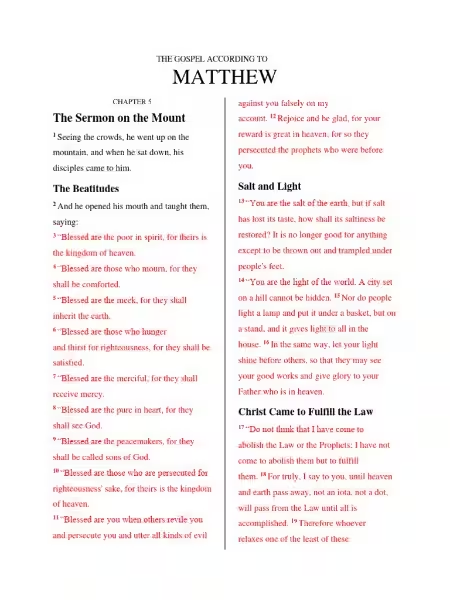
The Sermon on the Mount, found in Matthew chapters 5-7 of the King James Version (KJV), is a cornerstone of Christian teachings. It’s more than just a collection of moral pronouncements; it’s a roadmap for living a life aligned with God’s will. This profound discourse, delivered by Jesus Christ, offers a practical framework for navigating the complexities of human relationships and our personal spiritual journey. Understanding this foundational text, particularly in the context of the KJV, can bring incredible clarity and direction to our daily lives.
This sermon, often perceived as arduous and demanding, isn’t intended to overwhelm us. Instead, it’s a call to transformation. It invites us to look beyond superficial actions and delve into the heart of our motivations and intentions. This profound insight, rooted in the Sermon on the Mount KJV, encourages a deep and personal reflection on our values and behaviors. It’s a call to live in a way that reflects God’s love and grace.
The Sermon on the Mount wasn’t delivered in a vacuum. It was part of Jesus’s ministry, aimed at his disciples and the crowds who followed him. It was a time of significant religious and social upheaval. The existing religious practices and societal norms often clashed with Jesus’s teachings. This led to both acceptance and opposition, a theme that continues to resonate with us today. The wisdom within the Sermon on the Mount KJV, however, transcends time and culture. It speaks to universal human experiences.
Jesus’s teachings in the Sermon on the Mount KJV offer a profound vision of a righteous life. It outlines a path toward spiritual growth and inner transformation. This transformation isn’t about simply adhering to rules, but rather about cultivating a heart that reflects God’s love and compassion. For example, instead of just refraining from anger, the Sermon on the Mount KJV encourages a deep understanding of its roots within our hearts; instead of just giving, it emphasizes giving from a place of generosity. A key concept to remember is that true righteousness stems from the heart.
The Sermon on the Mount KJV is teeming with profound ideas. One key theme is the emphasis on righteousness beyond the superficial. The Beatitudes, for example, describe the blessedness of those who mourn, are meek, and hunger for righteousness. This isn’t about outward displays of piety, but about an inner transformation. Another important theme is love and forgiveness. Jesus instructs us to love our enemies, bless those who curse us, and pray for those who persecute us. These are not easy concepts to grasp, but they are crucial to living in accordance with God’s love.
Furthermore, the Sermon on the Mount KJV speaks to the importance of prayer, humility, and stewardship. Jesus’s teachings encourage us to pray regularly, to be humble in our hearts, and to be mindful of our responsibility to care for others and the world around us. These are crucial components of a truly fulfilling spiritual journey. These themes, deeply embedded within the Sermon on the Mount KJV, provide a rich tapestry for understanding what it truly means to live a life of faith and service.
Practical Application of the Sermon on the Mount (KJV)
The Sermon on the Mount KJV isn’t just a theoretical treatise; it’s a practical guide for living a better life. How can we apply these principles to our daily lives? Consider the principle of judging others. The Sermon on the Mount KJV encourages us to avoid judgment, as we are all susceptible to our own imperfections. By focusing on our own actions and motivations, we can reduce our propensity for judging others. This is an important lesson for personal growth.
Another practical application is understanding what it means to live in the present moment. Focusing on today, rather than dwelling on the past or worrying about the future, can greatly alleviate stress and anxiety. This emphasis, found in the Sermon on the Mount KJV, offers a clear path to tranquility and peace. And of course, the Sermon on the Mount KJV continually reinforces the importance of humility in our interactions with others: treat others and yourself with the respect that you wish to receive in return. These aren’t just abstract concepts; they are actionable steps towards a more fulfilling life.
The Sermon on the Mount KJV remains a powerful and relevant text for Christians and non-Christians alike. It offers profound insights into how to live a meaningful life, centered on love, compassion, and righteousness. By understanding and applying its teachings, we can experience a deeper connection with God and a more fulfilling life, grounded in spiritual principles.
By engaging with the Sermon on the Mount KJV, we gain invaluable tools for navigating the complexities of life. It’s not about perfection, but about striving to live a life that reflects God’s love and grace. The Sermon on the Mount KJV offers a roadmap for a life of purpose, meaning, and transformation. It’s a testament to the enduring power of faith.
Frequently Asked Questions about the Sermon on the Mount (KJV) and Religion
What is the Sermon on the Mount?
The Sermon on the Mount, found in Matthew chapters 5-7 of the King James Version (KJV) Bible, is a collection of teachings attributed to Jesus Christ. It outlines ethical principles and spiritual values that form the foundation of Christian belief.
What are the key themes of the Sermon on the Mount?
Key themes include righteousness, humility, compassion, prayer, forgiveness, and the importance of living a life pleasing to God.
What is the significance of the Sermon on the Mount in Christianity?
It is considered a foundational document for Christian morality and values, offering guidance for living a life in accordance with God’s will.
Why is the King James Version (KJV) used for the Sermon on the Mount?
The King James Version is a widely recognized and historically significant translation of the Bible. Its formal language style is appreciated by many.
What are some examples of teachings in the Sermon on the Mount?
Examples include the Beatitudes, the Lord’s Prayer, and teachings on judging others, anger, and lust.
What does the Sermon on the Mount say about prayer?
The Sermon on the Mount emphasizes the importance of prayer, including the Lord’s Prayer, and stresses sincere and persistent communication with God.
How does the Sermon on the Mount relate to everyday life?
The Sermon on the Mount’s teachings offer practical guidance for navigating daily challenges, promoting virtuous conduct, and fostering healthy relationships.
What is religion?
Religion is a system of beliefs and practices related to spirituality and the divine.
What are some different types of religions?
Various religions exist, each with its unique beliefs, traditions, and practices.
What is the role of faith in religion?
Faith plays a central role in most religions, encompassing belief in a divine being, doctrines, and sacred texts.