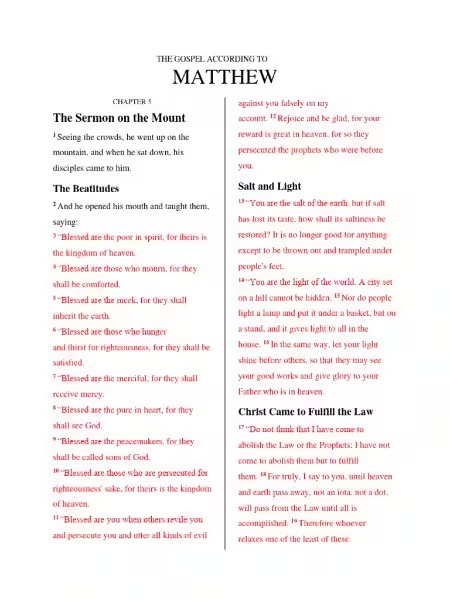
The Sermon on the Mount, found in the Gospel of Matthew, chapters 5-7 of the King James Bible, is more than just a collection of teachings. It’s a profound blueprint for living a life of righteousness and compassion. It’s a guide to navigating the complexities of human experience, offering practical wisdom for dealing with conflict, practicing humility, and finding joy in the midst of hardship. This timeless message, penned centuries ago, continues to resonate with people today, offering a profound pathway to spiritual growth and personal transformation.
The Sermon’s central theme revolves around following Jesus’ example of love and service. The teachings within serve as a reminder that true righteousness isn’t about outward appearances but about inward transformation. This isn’t a rigid set of rules to be followed meticulously, but rather a compassionate guide to embodying the principles of love, humility, and forgiveness. This journey of discovering and applying these principles will lead to a more fulfilling life. Examples of this are found in verses like Matthew 6:33, which encourages us to seek first the Kingdom of God.
The Sermon begins with the Beatitudes, a beautiful collection of pronouncements that outline the characteristics of those who are blessed by God. These aren’t just passive states of being; they represent active choices and attitudes that lead to profound contentment. For example, the Beatitude, “Blessed are the poor in spirit, for theirs is the kingdom of heaven,” speaks to a deep humility and reliance on God. This isn’t about being poor materially, but about recognizing our limitations and trusting in a higher power.
These blessings aren’t promised rewards for good behavior, but invitations to embrace certain virtues. Think of the Beatitudes as a map to a more fulfilling life. They highlight the importance of compassion, meekness, and purity of heart as essential components of a life aligned with God’s will. The King James Bible’s Sermon on the Mount provides a roadmap for understanding these virtues and applying them to our daily lives. Key examples include Matthew 5:3-12, describing the blessed who mourn, are meek, and hunger for righteousness.
Living a Life of Integrity: Actions Speak Louder than Words
The Sermon on the Mount extends beyond simply feeling good; it delves into the practical application of faith in daily life. It emphasizes integrity and authenticity in our interactions with others. For instance, the teachings on forgiveness and turning the other cheek (Matthew 5:38-48) challenge us to rise above hurt and resentment, choosing instead to offer compassion to those who have harmed us. This is about actively choosing love and forgiveness, even when it’s challenging.
A key focus of this section is prayer and fasting. The Sermon emphasizes the importance of genuine, heartfelt prayer (Matthew 6:5-15), detached from ostentation, as an essential part of spiritual communication with God. It also delves into the importance of charity and giving: giving to those in need, but doing so with humility and genuine concern for their well-being (Matthew 6:1-4). These principles aren’t just religious concepts, but also valuable aspects of building strong relationships and fostering a positive impact on the world around us. Examples of these include Matthew 6:16-18 about fasting and Matthew 6:21, where our treasure is mentioned.
The essence of the Sermon on the Mount can be boiled down to the Golden Rule: “Therefore all things whatsoever ye would that men should do to you, do ye even so to them: for this is the law and the prophets” (Matthew 7:12). This timeless principle is a guide for interacting with others, emphasizing empathy and reciprocity. It’s a call to treat others with the same kindness and respect we desire for ourselves. For example, if we want to be treated with compassion, we must extend compassion to others.
Finally, the Sermon culminates with the powerful message of judging others not on outward appearances, but on inner character. This challenges us to avoid hypocrisy (Matthew 7:1-5) and to focus instead on improving ourselves. The Sermon on the Mount is not about perfection, but about a journey of continuous growth and transformation. This is a reminder that we are all imperfect beings, and we must all work towards a better, more righteous life. This principle is explained in Matthew 7:21-23.
Frequently Asked Questions about the King James Bible Sermon on the Mount
What is the Sermon on the Mount?
The Sermon on the Mount is a collection of teachings by Jesus Christ, found in Matthew chapters 5-7 of the King James Bible. It’s considered one of the most important teachings in Christianity.
What are the key themes of the Sermon on the Mount?
Key themes include righteousness, humility, prayer, forgiveness, and love. It lays out a framework for how believers should live their lives in accordance with God’s will.
The Sermon on the Mount is for all people, regardless of their background or beliefs. It offers guidance on how to live a life pleasing to God and a more virtuous life.
What are some examples of specific teachings in the Sermon on the Mount?
The Sermon on the Mount includes teachings on the Beatitudes, the Lord’s Prayer, and the importance of forgiveness and judgment.
How can I apply the teachings of the Sermon on the Mount to my daily life?
Applying the teachings to daily life requires reflection and conscious effort to live by the principles of love, compassion, and humility. It’s a process of continuous growth and learning.
What is the significance of the Sermon on the Mount in Christianity?
The Sermon on the Mount is foundational to Christian theology and practice. It’s considered a blueprint for how Christians are to live and interact with the world around them.
Why is the King James Version used to study this sermon?
The King James Version is a widely studied translation of the Bible due to its historical significance and readability. Different translations may have slight nuances in wording but the core message remains the same.