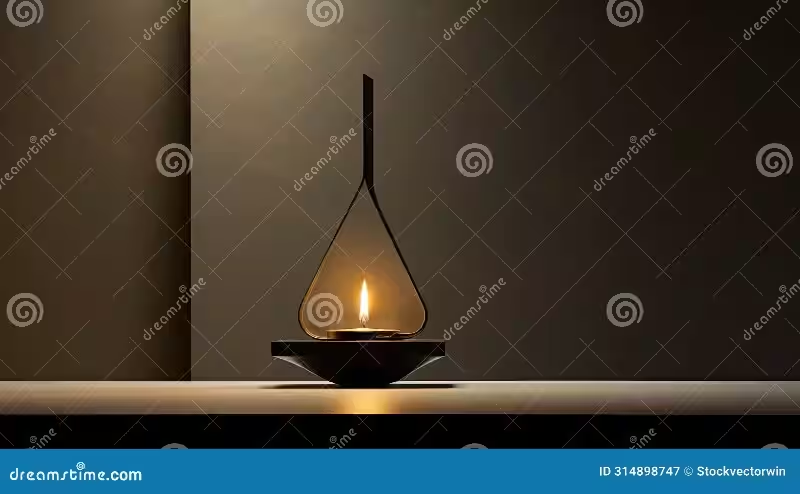
The Candelabra Church, a seemingly simple structure, often holds a profound significance within its community. More than just a place of worship, it serves as a powerful symbol of faith, community, and spiritual connection. This exploration delves into the multifaceted nature of the Candelabra Church, examining its history, rituals, and the profound impact it has on its congregation. Understanding this structure is key to grasping the richness and diversity of religious expression.
The architectural design of the Candelabra Church often incorporates intricate details, from the stained glass windows to the meticulously carved pews. These elements contribute to the overall feeling of sacredness and reverence. For example, the elaborate lighting fixtures, resembling a candelabra, might represent the illuminating power of faith, guiding worshippers towards enlightenment. These subtle, yet impactful, design choices communicate a message of spiritual devotion and encourage contemplation.
The Candelabra Church’s history often intertwines with the broader cultural and religious narrative of the region. Early examples might reflect the influence of specific religious figures or historical events. The architecture might even demonstrate the evolving religious beliefs and artistic styles of different eras. For instance, a church built during a period of intense religious fervor might feature more ornate decorations than one constructed in a time of social upheaval.
The evolution of the Candelabra Church reflects the changing needs and beliefs of the community it serves. The construction of the building could have been spurred by population growth, a rise in religious devotion, or the establishment of a new theological thought. Over time, the Candelabra Church may adapt its services and practices to accommodate the evolving needs of its members, demonstrating the church’s dynamic and adaptive nature.
Understanding the Rituals and Practices of the Candelabra Church
The Candelabra Church, like any other place of worship, has a rich tapestry of rituals and practices. These rituals often serve as a powerful way for members to connect with their faith and with one another. For example, a specific prayer might be recited every Sunday, marking the start of a weekly service. Certain traditions, like specific hymns or prayers, might have deep historical roots, passed down through generations.
Specific rituals might include:
Regular prayer services
Communion ceremonies
Sunday school classes
Seasonal festivals
These practices provide a structured framework for spiritual growth and community building. The Candelabra Church’s rituals serve as a unifying force, binding members together in their shared faith.
The Community Impact of the Candelabra Church
The Candelabra Church is more than just a place of worship; it’s a vital hub for the community. It often plays a significant role in social gatherings, charitable activities, and educational initiatives. For example, the church might host community dinners to support local families in need. It might also offer educational programs or workshops, contributing to the overall well-being of the community.
The Candelabra Church fosters a sense of belonging and shared identity. Its members feel welcomed and supported within a close, supportive community. This creates a positive influence, expanding beyond the church walls. The impact of the Candelabra Church extends far beyond the sanctuary, affecting the lives and well-being of its members and the broader community it serves.
Exploring the Symbolism of the Candelabra
The symbolism of the candelabra within the Candelabra Church is rich and varied. It can represent the guiding light of faith, illuminating the path towards spiritual enlightenment. The multiple branches of the candelabra could represent the diverse paths to achieving spiritual fulfillment, the many ways in which individuals can connect to their faith.
The Candelabra’s design often mirrors the structure of the church itself. The central focus of the building, the candle-like lights, and the overall form create an atmosphere of reverence and reflection. The Candelabra Church carefully uses this imagery to create a feeling of spiritual unity and connection.
Frequently Asked Questions about Candelabra Church and Religion
What is the Candelabra Church?
The Candelabra Church is a religious organization focused on [insert description of organization here, e.g., a specific interpretation of Christianity, a new religious movement, etc.].
What are the core beliefs of the Candelabra Church?
[Insert core beliefs of the organization here, e.g., emphasis on community, specific theological interpretations, etc.]
What is the Candelabra Church’s stance on [Specific issue, e.g., marriage, social justice]?
[Insert stance on the issue mentioned].
What are the Candelabra Church’s practices?
[Describe the church’s practices, e.g., worship services, rituals, community involvement].
How can I learn more about the Candelabra Church?
[Provide contact information, website, or other resources for learning more, e.g., visit our website at [website address]].
What is religion, in general?
[Insert a general definition of religion, e.g., a system of beliefs and practices related to the supernatural, spirituality, morality, etc.].
What are the different types of religions?
[Provide a brief overview of different types of religions, e.g., Abrahamic religions, Eastern religions, indigenous religions].
What are the functions of religion?
[Explain the functions religion serves, e.g., providing meaning and purpose, fostering community, promoting ethical behavior].