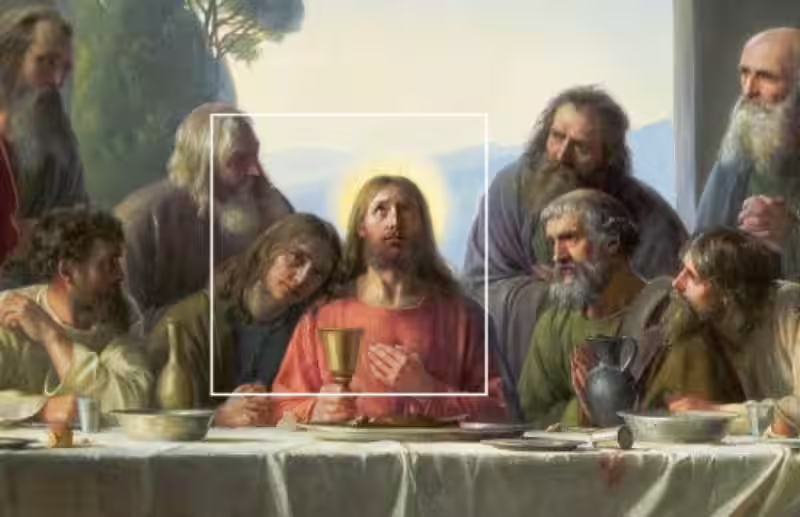
A Devotional Commentary on Gospel of John: Signs, Salvation, and Sincere Faith
Quick Answer: This commentary on gospel of john walks through John’s purpose: to reveal Jesus as the Son of God, bringing life through belief. You’ll see how the “signs” point beyond miracles to spiritual truth—who Jesus is, why He came, and how faith grows through encounter, confession, and obedience to His Word.
Historical Context: Why John Wrote the Way He Did
The Gospel of John was likely written in the late first century, when churches faced both internal and external pressures—false teaching, persecution, and the need for clear testimony about Jesus Christ. John writes with a distinct style: instead of repeating all the details found in the Synoptic Gospels, he emphasizes who Jesus is, what He accomplishes, and how people respond to Him.
John’s “signs” (turning water into wine, healing the lame, feeding the multitude, giving sight, raising Lazarus, and more) are carefully chosen to reveal spiritual realities: Jesus brings new life, confronts unbelief, and fulfills God’s promises. The language is deeply theological—light and darkness, truth and witness, life and death—yet it remains personal and relational. John’s emphasis fits a community learning to confess Jesus faithfully in a world that was often hostile to the gospel.
When you read this devotional explanation of the Gospel of John, it helps to remember John’s goal: belief. The narrative repeatedly asks the reader to decide: Will you receive the witness of Jesus, follow His word, and trust that His works reveal His identity?
Original-Language Note: Key Ideas Behind John’s Words
John’s Greek often uses vivid theological terms that carry more than surface meanings. One important concept is “witness,” closely tied to the idea of testimony that can be believed or rejected. In John, Jesus is not merely a teacher; He is the One who testifies to the truth of God. Another central term is “believe,” which in John frequently implies trust that results in commitment—not only mental agreement.
John also uses words for “light” and “darkness” to describe spiritual reality. Light does not simply mean illumination; it means God’s revealing presence and moral clarity. Darkness is more than absence of light—it represents resistance to truth.
Even where we cannot precisely assign every nuance without technical study, the overall pattern is clear: John’s vocabulary repeatedly points from visible actions (miracles, encounters, conversations) to invisible realities (identity, salvation, and faith).
1) The Word Made Flesh: John’s Opening That Sets the Theme
John begins “In the beginning” (a deliberate echo of Genesis) and introduces Jesus as the eternal “Word.” This is not just poetic flourish—it is the foundation for everything that follows. The Word is with God, and the Word is God; then the Word becomes flesh and dwells among us. In other words, the God who is beyond human reach chooses to enter human history.
This opening reframes every miracle and every conversation: they are not random wonders, but signs of divine identity. John tells us that life is found in the Word, and that this life is a light that shines in darkness. Many people will hear, see, and yet resist. John’s tone is both compassionate and realistic. He doesn’t pretend that belief is automatic.
A devotional way to read this: ask what kind of darkness you might be holding onto—fear, doubt, pride, or stubbornness. Then notice how John’s story continually confronts the heart. Jesus comes near. He speaks. He reveals. The response required is faith.
If you are seeking a faith that lasts, this section teaches that Christianity is not merely information about religion; it is encounter with a Person. John’s gospel invites you to move from curiosity to conviction—trusting the Word who has come to give life.
2) Signs and “So What”: Why Jesus’ Miracles Lead to Belief
John carefully curates “signs” so that readers learn how to interpret events spiritually. When Jesus turns water into wine, it points to renewal. When He heals the lame man, it points to restoration that reaches beyond physical limitations. When He feeds thousands, it points to the spiritual hunger only God can satisfy.
John’s narrative repeatedly shows that miracles do not force belief. People witness and still misinterpret. Some want only the benefit, not the Blesser. Others argue instead of listening. This tension is one of the most pastoral truths in the gospel: you can be near Jesus and still miss Him.
That is why John keeps returning to testimony—what has been seen, heard, and confirmed. Jesus trains His followers to read reality through God’s truth rather than through human expectations.
Here is the “so what” for daily life. Faith is not proved by the absence of problems; faith is proved by how we respond to Jesus when problems arrive. When spiritual dryness comes, John’s approach is to look again at Jesus’ identity and claims. When you face uncertainty, John invites you to ask: What is Jesus revealing about God—and what is He asking me to trust?
As you continue reading, notice that belief is not merely a private feeling. John’s gospel tends to produce transformation: repentance, confession, and obedience.
3) Jesus’ Words in Context: Abide, Speak Truth, and Follow the Shepherd
Midway through John, the tone deepens. Jesus teaches more directly about faith and relationship. Instead of only describing what He does, John records what Jesus says about why He came and what His followers should expect. Jesus speaks about abiding—remaining in Him—because spiritual life is sustained, not self-generated. Abiding suggests ongoing dependence.
Jesus also emphasizes truth and witness. In John, truth is not just a concept; it is a reality that sets people free. Therefore, speaking the truth is not merely “being honest,” but aligning your life with God’s revealed will.
The gospel’s pastoral edge appears again and again: Jesus addresses hearts. He prepares His disciples for real opposition. He explains that following Him may not be comfortable, but it will be faithful.
If you’re reading as a devotional guide, let the teaching become personal. Where are you trying to live spiritually “on your own power” rather than abiding? Where do you need freedom from fear-based compromise? John’s gospel repeatedly offers the same invitation: come to Jesus, receive His truth, and let His presence shape your choices.
Finally, John’s writing keeps pointing to the Shepherd theme: Jesus guides His people, and His sheep recognize His voice. That recognition grows through attention to His Word and through prayerful obedience.
4) The Cross, Resurrection, and the Gospel’s Invitation to Believe
John climaxes with the passion, death, and resurrection of Jesus—events that reveal both judgment and mercy. The cross exposes sin and fulfills God’s saving purpose. Yet John also shows that the cross is not merely tragedy; it is victory in God’s plan. Jesus gives Himself, and His words from the cross echo love that refuses to quit.
At the resurrection, John continues to show that belief involves more than seeing. Some believe quickly; others must be confronted and renewed. Mary’s encounter and the disciples’ renewed hope show how the risen Christ restores purpose and renews faith.
John’s concluding purpose statement (often highlighted as the “why” of the entire gospel) makes the gospel invitation unmistakable: these things are written so that readers may believe that Jesus is the Christ, the Son of God, and that believing leads to life.
For today’s reader, the cross and resurrection demand response. You cannot read John and stay neutral forever. John calls you to trust Jesus not only as a teacher but as the Savior.
In practical devotional terms, ask: What would it look like to trust Jesus in the same way you trust a faithful friend—speaking honestly, obeying gently, and continuing even when emotions fluctuate? John doesn’t promise a life without storms; He promises life through Christ.
Practical Application: How to Read John This Week
To benefit from a John gospel commentary style reading, use a simple rhythm. First, choose a passage (for example, a sign, a conversation, or a teaching section). Second, ask one interpretive question: “What does this reveal about Jesus?” John consistently points from actions and words to identity.
Third, ask a heart question: “What response is expected?” John often shows that people respond with belief, resistance, fear, confusion, or worship. Don’t only observe them—notice your own tendencies.
Fourth, ask an obedience question: “What is one step I can take this week?” It might be praying honestly, repenting of a habit of unbelief, speaking truth to someone, forgiving as Christ’s love requires, or choosing to abide in God’s Word rather than chasing substitutes.
Finally, keep returning to the gospel’s central invitation. When you feel spiritually dry, don’t stop at analysis. Come again to Jesus. This is how faith matures: by repeated encounters with the truth that Jesus is the Christ, and that believing brings life.
Related Bible Passages
John 20:31
John states his purpose—these words are written so you may believe that Jesus is the Christ and have life through His name.
John 1:14
The Word became flesh and dwelt among us, revealing God’s glory through Jesus’ person.
John 8:12
Jesus declares Himself the Light of the world, calling for trust that leads to life.
John 14:6
Jesus presents Himself as the Way, the Truth, and the Life—no one comes to the Father except through Him.
1 John 5:13
Believing in Jesus gives assurance; the gospel message is meant to produce confident trust.
Frequently Asked Questions
Is there a single verse that summarizes the whole message of the Gospel of John?
While the entire gospel is woven together thematically, John 20:31 is a clear purpose statement. It explains why the book was written: so readers would believe Jesus is the Christ, the Son of God, and have life through faith. That makes it a helpful anchor when reading any commentary on gospel of john.
How should I read John if I’m new to the Bible?
Start by noticing who Jesus is. In John, miracles are “signs” that point to identity and salvation, not just spectacle. Read a passage, ask what it reveals about Christ, then ask what response it calls for—belief, obedience, worship, or trust. This devotional explanation of the Gospel of John helps you avoid treating it like a disconnected story.
What is the main difference between John and the Synoptic Gospels?
John emphasizes theological meaning and selected events rather than covering all the same material in the same way. It contains unique conversations and “I am” statements, and it frequently highlights witness, belief, and spiritual light. This is why a John gospel commentary approach focuses on interpretation and response, not just event chronology.
How can this study strengthen my faith practically?
John repeatedly shows that belief is relational and transformative. As you read, practice “abide” habits: pray through what you learn, obey a small conviction, and replace doubt with trust in Jesus’ truth. When you apply the message, even difficult passages become tools for spiritual growth.
A Short Prayer
Lord Jesus, the Word made flesh, open my eyes to see You clearly. Strengthen my faith where it wavers and soften my heart where I resist Your truth. Teach me to abide in You, to trust Your witness, and to respond in obedience, not fear. Thank You for the cross and resurrection that give life. Lead me to believe with sincerity and live with hope. Amen.
Key Takeaway: The Gospel of John is written to lead you to believe in Jesus as the Son of God so you may receive life in His name.