Unlocking the Heart of God: A Christ-Centered Journey Through the Psalms
Unlocking the Heart of God: A Christ-Centered Journey Through the Psalms
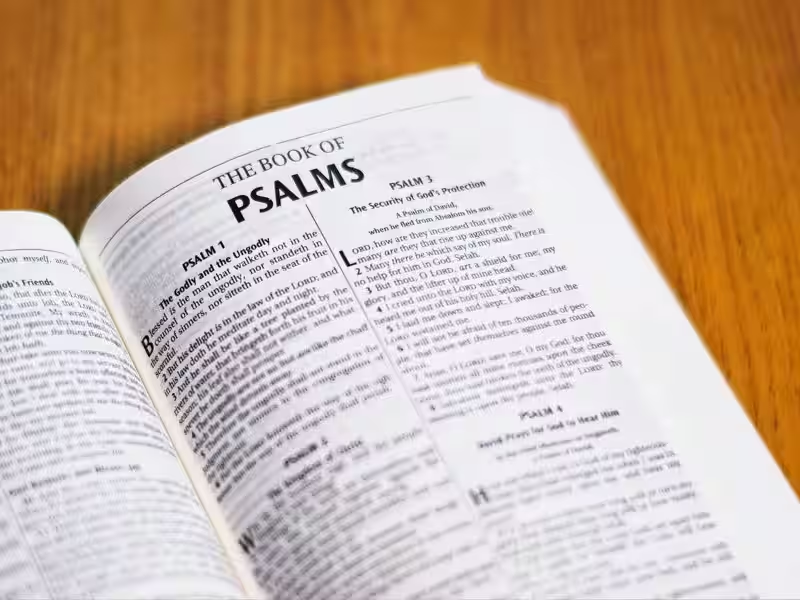
The Psalms, a collection of 150 poetic hymns, prayers, and songs, offer a profound window into the human experience. These ancient texts, brimming with emotions ranging from joy and gratitude to despair and anguish, resonate powerfully with us even today. They're not just historical artifacts; they are living expressions of faith, hope, and the deep longing for connection with the divine. Understanding the Psalms through a Christ-centered lens allows us to appreciate their rich tapestry of meaning and discover how they point towards the ultimate fulfillment found in Jesus Christ.
More than just a collection of religious texts, the Psalms are a powerful tool for spiritual growth. They provide a framework for understanding our own emotions and experiences in the context of God's presence. By immersing ourselves in these ancient words, we can develop a deeper relationship with the Lord and a more profound understanding of our own faith. Think of it as a conversation with God, a dialogue that spans millennia and offers timeless wisdom. A Christ-centered approach helps us discern these timeless truths within the context of the ultimate fulfillment in Christ.
The Psalms aren't simply happy songs of praise. They also explore the full spectrum of human emotion. We find expressions of anger, fear, and doubt, alongside moments of profound peace and trust. This raw honesty is incredibly relatable. For example, Psalm 23, the Shepherd Psalm, speaks of finding comfort and safety even in the face of hardship. We all experience moments of vulnerability, and the Psalms offer a safe space to acknowledge these feelings within a divine context. This human vulnerability, reflected in the Psalms, allows us to understand our own struggles and discover how God can meet us in our pain.
This emotional depth is one reason why the Psalms have endured for centuries. The Psalms offer a powerful template for navigating our own emotional journey. They show us that it's okay to feel a range of emotions, and that God is present with us even in the midst of turmoil. They provide a framework for recognizing our own emotions as part of our relationship with God. A Christ-Centered commentary helps us to understand how Jesus embodies the human experience, offering perfect example and ultimate solace.
The Psalms as a Mirror to the Soul
The Psalms are more than just poetry. They are powerful tools for self-reflection. By examining the different Psalms, we can gain insights into our own hearts and minds. The Psalms are filled with examples of people seeking God's guidance in times of trouble. These prayers and songs provide a blueprint for our own spiritual growth. For instance, by considering the lament psalms, we can recognize the validity of our own fears and anxieties. The Psalmist's cries to God during times of distress can resonate deeply within our own hearts. This intimate connection helps us appreciate God's presence in every aspect of our lives. We see how struggles and triumphs, joy and sorrow, are all part of the human experience and how the Psalms show us how to navigate them through Christ-centered faith.
The Psalms teach us the importance of reflection, humility, and repentance. They provide a space for honest self-examination. For example, Psalm 139, a profound meditation on God's knowledge, challenges us to understand our own worth and place in the grand scheme of creation. The Psalms remind us that we are never alone in our struggles and that God desires a deep and abiding relationship with each of us. Through a christ-centered commentary, we come to a deeper appreciation of God's love within the narratives of the psalms.
A Christ-centered approach to the Psalms reveals a profound connection between the ancient texts and the person of Jesus Christ. Many Psalms foreshadow the coming of the Messiah. For example, Psalm 22, a psalm of intense suffering, finds its fulfillment in the crucifixion of Jesus. The words of the Psalmist, experiencing profound abandonment and anguish, are eerily mirrored in the events of Jesus' final hours. This powerful connection between the Psalms and the life of Jesus allows us to see the Old Testament as a prelude to the New. It opens up a whole new dimension of understanding about Jesus and the world around him.
A Christ-centered commentary on the Psalms highlights how Jesus is the ultimate fulfillment of the desires and hopes expressed within them. The Psalms, with their cries for justice, mercy, and deliverance, find their perfection in the life, death, and resurrection of Christ. This understanding empowers us to live more fully into our faith, for in Jesus, the promises of the Psalms are made real. We find that the Psalms aren't just ancient poems; they are vital texts offering a direct pathway to understanding and experiencing the heart of God, through Christ.
Frequently Asked Questions
What is this commentary about?
This commentary focuses on the Psalms from a Christ-centered perspective, exploring how these ancient hymns relate to the life, teachings, and work of Jesus Christ.
Who is this commentary for?
This commentary is intended for individuals seeking a deeper understanding of the Psalms through a Christological lens, including students of theology, Bible study groups, and anyone interested in deepening their faith.
What is the theological framework of this commentary?
The commentary employs a Christological approach, interpreting the Psalms in light of the person and work of Jesus Christ, drawing connections between the Old Testament and the New Testament.
How does this commentary differ from other Psalm commentaries?
This commentary distinguishes itself by focusing specifically on the Christ-centered themes within the Psalms, offering a unique perspective on these ancient prayers.
Is prior knowledge of the Psalms required?
No prior knowledge of the Psalms is necessary. The commentary provides context and explanations to aid understanding for readers with varying levels of familiarity.