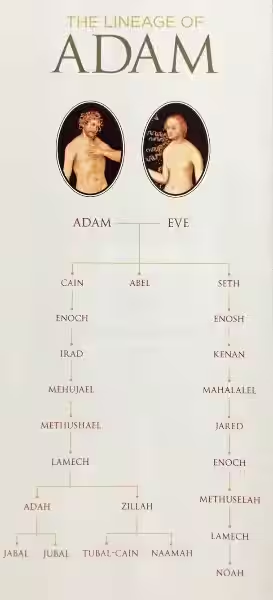
The concept of a genealogy, tracing the lineage of individuals, holds profound significance in many religions. This is particularly true when considering the genealogy of Adam, the first human, as it forms the bedrock of creation narratives. This article will explore the different perspectives on Adam’s lineage across various faiths, examining the historical, cultural, and theologically significant implications. We will look at how these genealogies shape beliefs about humanity’s origins and connection to the divine.
Understanding the genealogy of Adam isn’t merely an academic exercise. It’s a journey into the core beliefs and values of different cultures and faiths. Through examining these genealogies, we can gain valuable insights into the different ways humans have attempted to comprehend their place in the universe, and the story’s impact on their ethical and social structures. This exploration delves into the rich tapestry of human thought and its connection to the narrative of Adam’s lineage.
The Genesis Account and its Variations: A Multifaceted Perspective
The biblical account in Genesis offers a structured genealogy tracing from Adam through to Noah, pivotal figures in the Abrahamic traditions. Key figures often mentioned include Cain, Abel, Seth, Enoch, and Noah, each with their own narrative significance. These accounts often emphasize the importance of lineage and continuity as a way to understand humanity’s history and God’s relationship with creation. For example, the lineage from Adam to Noah establishes a direct connection between the first man and the one who, according to the story, saves humanity from the flood.
Yet, diverse interpretations exist within the Abrahamic traditions themselves. Different religious communities may emphasize different aspects of the genealogy, or even question the literal interpretation of the specific lineages. Cultural and historical contexts strongly influence how these narratives are understood. Some may focus on the symbolic meaning of the lineage, while others may see it as a literal historical record. This illustrates the significant role of interpretation in comprehending religious texts.
Genealogy Across Cultures: Examining Diverse Traditions
Beyond Abrahamic traditions, other cultures and religions have their own creation myths and genealogies. These often feature a similar concept of a primordial ancestor, though the details, names, and contexts vary dramatically. For example, indigenous stories often feature creation figures connected to specific places and natural phenomena, reflecting the deep relationship between humans and the environment. This diversity highlights the universal human need to understand origins and their place in the cosmos. The genealogies of these cultures, like those of the Native American Iroquois or Aboriginal Australians, provide valuable insights into different cultural perspectives on humanity’s origins and relationships with the divine or natural order.
This variety in creation myths also reveals the different ways humans have connected to the divine. Some cultures might emphasize the interconnectedness of all life, others the importance of specific rituals or practices tied to an ancestor’s lineage. For instance, some tribal cultures use the genealogies to dictate social structures, inheritance rights, and even their interactions with the spirit world. These examples demonstrate the richness and complexity of human thought regarding the genealogy of Adam and similar figures.
The Theological Significance of Adam’s Lineage
In many religious traditions, the genealogy of Adam carries profound theological significance. It often serves to establish humanity’s relationship with the divine and explains the origins of sin, suffering, or the human condition. The story of Adam in various traditions often explains why humans experience challenges and how this is linked to the origins of the world. This is evident in the different perspectives on the nature of humanity and free will. Imagine the way a story about a parent figure impacts the understanding of their descendants—the genealogy of Adam is analogous to this.
Moreover, the genealogy of Adam provides a framework for understanding salvation and redemption. In some cases, these narratives outline specific lineages or actions that are important in achieving spiritual fulfillment or connection with the divine. This highlights the complex interplay between individual actions, lineage and ultimate destiny. For instance, in the concept of the chosen people in Jewish tradition, the lineage from Abraham is seen as crucial for salvation. This demonstrates how lineages hold both individual and collective significance.
Conclusion: A Journey into the Heart of Belief
Examining the genealogy of Adam, across various religions and cultures, is a journey into the very heart of human belief. It’s about understanding how we connect to our past, to each other, and to the divine. These narratives aren’t just stories; they are reflections of our deep-seated need to comprehend our origins and our place in the universe. The complexities of these genealogies remind us of the beauty and diversity of human thought concerning origins. They provide a lens through which we can appreciate the vast spectrum of human experience and our shared search for meaning. These genealogies impact our understanding of ethics, spirituality, and our connection to the world around us.
The exploration of Adam’s lineage transcends a simple historical tracing. It’s a deep dive into the human condition, our search for meaning, and the diverse perspectives on our place in the universe. It’s a reminder of the enduring power of stories to connect us to our heritage and to the richness of human experience. Ultimately, the genealogy of Adam, and similar figures in other traditions, encourages us to contemplate our own place in the grand tapestry of existence and the enduring questions that shape our understanding of religious beliefs and human history.
Adam, in many religious traditions, is considered the first human being. The specific details and interpretations of Adam vary across different faiths.
What is the genealogy of Adam?
Genealogies of Adam vary depending on the specific religious or cultural tradition. Some traditions offer detailed accounts, while others provide more symbolic interpretations.
What is the religious significance of the story of Adam and Eve?
The story of Adam and Eve, or similar figures in other traditions, often holds profound religious significance, addressing themes of creation, sin, redemption, and the human condition.
How do different religions view the story of Adam?
Different religions interpret the story of Adam in various ways. Some take it literally, while others view it as a symbolic representation of important theological concepts.
Is there scientific evidence supporting the Adam and Eve narrative?
No, there is no scientific evidence supporting the literal Adam and Eve narrative. The account of Adam and Eve is primarily a religious narrative, not a scientific description of human origins.