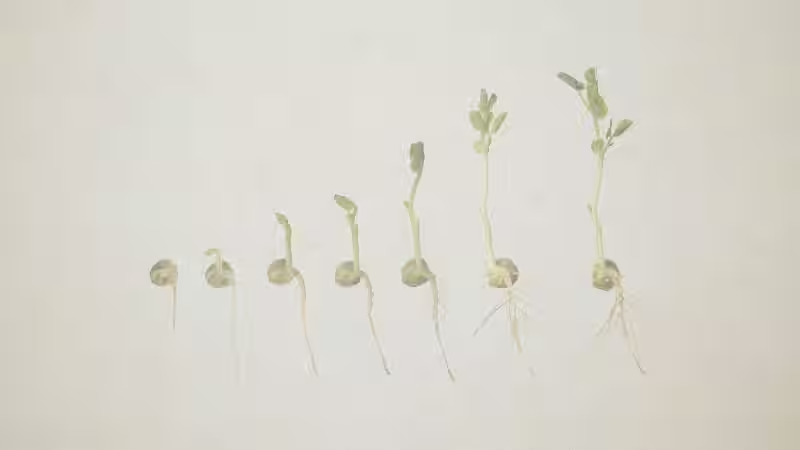
We all carry within us a seed of faith, a yearning for something more. It might manifest as a sense of wonder at the beauty of nature, a profound connection to others, or an inner drive to find meaning in life’s complexities. This growing seed is a fundamental part of the human experience, and nurturing it can lead to a richer, more fulfilling life. However, in an increasingly secular world, it can feel like a challenging task to cultivate this vital aspect of our being.
This article explores the importance of cultivating this growing seed of faith, regardless of its specific form. We’ll delve into different approaches to nourishing this inner potential, from exploring personal experiences to incorporating practices that foster connection and reflection. By understanding the various ways to cultivate this growing seed, we can discover a pathway to a more profound and meaningful existence.
The concept of faith encompasses a broad spectrum of beliefs and experiences, not always tied to traditional religious doctrines. Some people find spiritual nourishment in nature, finding solace and connection in the grandeur of the mountains or the rustling leaves of a forest. Others find meaning in acts of service and compassion, volunteering their time to help those in need. Personal experiences, such as overcoming a challenge or witnessing a moment of profound beauty, can also be powerful sources of faith.
It’s crucial to recognize that faith can take many forms. It’s not just about adhering to a specific set of rules or rituals, but about cultivating a sense of connection to something larger than ourselves. Consider these examples: a scientist finding wonder in the intricacies of the universe, an artist expressing their emotions through their work, or a community member dedicated to social justice. Each represents a unique expression of this growing seed. These diverse perspectives highlight the vast potential for faith to flourish in countless ways.
Cultivating the Growing Seed Through Practices
Just as a plant needs water and sunlight to thrive, our inner growing seed of faith requires consistent nurturing. Meditation and mindfulness practices can help us connect with our inner selves, fostering a deeper understanding of our values and beliefs. Regular reflection on our experiences – both positive and challenging – can help us identify patterns and make meaningful connections. Journaling can be a powerful tool for recording our thoughts and feelings, creating a personal record of our spiritual journey.
Also consider: Connecting with nature, engage in activities that allow you to connect with the natural world. Acts of kindness, intentionally performing acts of service or compassion for others can nourish the growing seed. Community, finding a supportive community where you can share your experiences and learn from others. Remember that consistency is key. Just like tending to a garden, tending to your inner growing seed takes ongoing effort, and the rewards are often far more profound.
Overcoming Obstacles in the Spiritual Journey
Nurturing the growing seed of faith isn’t always easy. Doubt, fear, and uncertainty can arise. Self-doubt and societal pressures can sometimes stifle our inner desires. Negative experiences can also temporarily cast a shadow on our spiritual journey. It’s crucial to remember that these obstacles are part of the human experience. Embrace the challenges as opportunities for growth and resilience. Recognize that setbacks are not failures, but rather stepping stones along the way.
Finding supportive mentors or spiritual guides can be a valuable resource. Seeking guidance from trusted individuals can provide encouragement and support. Seeking knowledge, reading books, listening to podcasts, and attending lectures related to spirituality can also help you grow. Remember that progress is not always linear. The growing seed of faith needs time to flourish, and different approaches may be needed at various stages of the journey. Be patient with yourself; the most meaningful journeys often involve weathering the storms.
The Growing Seed: A Continuous Journey
Cultivating faith is a personal and continuous journey. It’s not about reaching a destination but about the ongoing process of nurturing the growing seed within. Embrace the exploration, the reflection, and the growth that comes with this journey. Ultimately, the growing seed of faith is a testament to our inherent capacity for connection, meaning, and wonder.
It’s a journey of self-discovery and connection. It’s about recognizing the beauty and the mystery of the growing seed within, and nurturing it in your own unique way. Be open to new experiences, and be patient with yourself as you cultivate your own personal path. The growing seed of faith has the potential to blossom into something truly profound and transformative.
Frequently Asked Questions
What is the role of religion in the growing seed?
Religion often provides a framework for understanding the natural world, including the growth of a seed. Different religious traditions may offer symbolic interpretations of the seed’s journey from a dormant state to a flourishing plant, often relating it to concepts of life, death, renewal, and the divine.
How do different religions view the growth of a seed?
Different religions may have varying perspectives. Some may focus on the interconnectedness of all living things, emphasizing the seed’s dependence on the earth and the sun. Others may see the growth as a miracle, a testament to a higher power’s creative force. Still others see the growth process as an allegory for spiritual development.
Does religion dictate how a seed should be grown?
No. Religious beliefs typically do not prescribe specific agricultural practices related to seed growth. While some faiths may encourage sustainable practices or respect for nature, these are usually broader ethical principles rather than detailed instructions for growing particular crops.