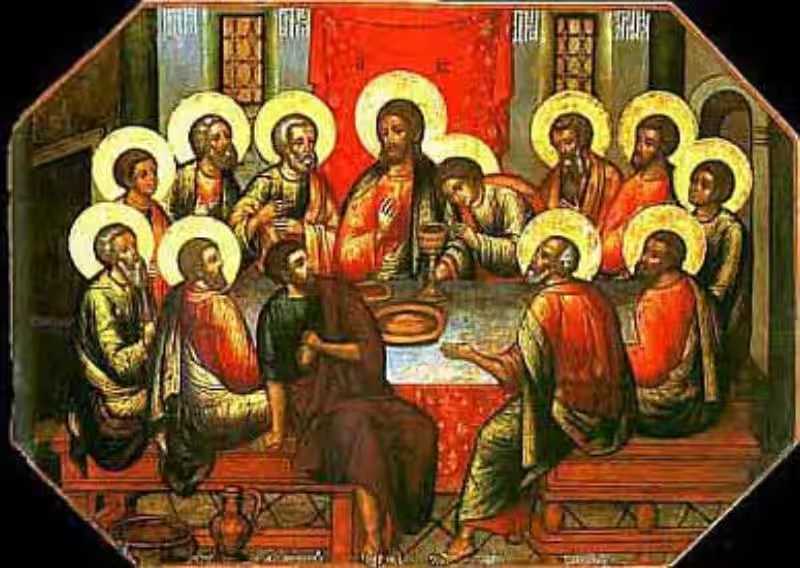
The term “saint” evokes images of holiness and divine favor. But what does it truly mean in the context of the Bible? Understanding the biblical concept of a saint requires stepping away from modern interpretations and delving into the original Hebrew and Greek texts. While the word “saint” itself isn’t explicitly used in the Old Testament, the underlying idea of holiness and righteousness is central to God’s covenant with His people. This holiness isn’t merely about outward appearances, but rather a profound relationship with the divine, characterized by obedience and unwavering faith.
Think of Abraham, for example. His unwavering trust in God, even when faced with seemingly impossible tasks like sacrificing Isaac, exemplifies the qualities that underpin the biblical notion of a saint. Many figures in the Old Testament are considered righteous and holy, including Moses, David, and Samuel, each embodying different facets of God’s character and grace in their respective lives. This concept of holiness in the Old Testament foreshadows the fuller understanding of sanctity that emerges in the New Testament.
The New Testament significantly expands on the concept of holiness. The term “saint” appears frequently, often referring to believers in Jesus Christ. This isn’t about individuals who lived exceptionally pious lives, but rather those who recognized Jesus as the Messiah and lived in accordance with His teachings. Think of the early believers in the book of Acts. Their lives were marked by love, service, and unwavering dedication to the Gospel. These individuals, living by the example of Jesus, were considered saints in the eyes of the early church.
Importantly, the idea of sainthood isn’t about personal achievement or merit. Instead, it’s a gift bestowed by God. Salvation comes as a free gift through faith in Jesus. This illustrates that saints are not perfect; instead, they are individuals who strive to live according to God’s will, acknowledging their imperfections and seeking His grace and guidance. This emphasis on God’s grace is a cornerstone of the New Testament’s understanding of sainthood.
Recognizing Sainthood Beyond the Bible
While the Bible provides the foundational understanding of sainthood, the concept has evolved in different Christian traditions. The concept of canonization in the Catholic Church, for instance, involves a formal process to recognize individuals as saints. This process often includes historical investigation and recognition of their lives of devotion and service. This is an important distinction, as the Bible focuses on intrinsic holiness and faith in Christ rather than external recognition. This doesn’t diminish the significance of those recognized by the Church as saints, but simply clarifies the biblical approach to sainthood.
Understanding the biblical perspective on sainthood isn’t about creating a list of “holy people.” Rather, it directs us to reflect on our own relationship with God and how we can strive to live lives of faith, love, and service to others. Jesus Himself embodies the ultimate saint, offering a model of compassion, humility, and unwavering devotion to God. This leads to a fundamental question for all Christians: How can we follow in the footsteps of Jesus and live a life of holiness? This reflection is crucial, regardless of whether an individual is recognized by an institution as a saint.
The key takeaway is that saints in the Bible are those who have an intimate and active relationship with God. This relationship is marked by faith, obedience, and a desire to follow Jesus’ teachings. It’s not about perfection, but about trusting in God’s grace. Instead of focusing on external recognition, we should look inward and consider how we can live lives of faith and service. How can we emulate the faith and love shown by saints of the past?
Consider the life stories of individuals like Paul. His struggles and ultimate triumph in spreading the Gospel serve as a powerful inspiration for us. By studying the lives of those considered saints in the Bible, we can learn valuable lessons about faith, perseverance, and the importance of serving others. This ultimately leads to a deeper understanding of our own faith and a more meaningful relationship with the divine. We don’t need to live their lives, but we can certainly learn from them and apply those lessons to our own daily lives.
Frequently Asked Questions
Who is a saint in the Bible?
The concept of “saint” as understood in modern Christianity differs from its biblical usage. In the Bible, a saint is simply a holy person, one dedicated to God. This could refer to anyone who lived a life of devotion and obedience to God’s will, regardless of their status or recognition as a “saint” in a later religious tradition.
What is religion?
Religion is a belief system and a set of practices related to the worship of a deity or deities. It encompasses a wide range of beliefs, rituals, and traditions, varying significantly across cultures and historical periods.