Walk by Faith Bible Verse (2 Corinthians 5:7): What It Means to Trust God
2 Corinthians 5:7 · King James Version
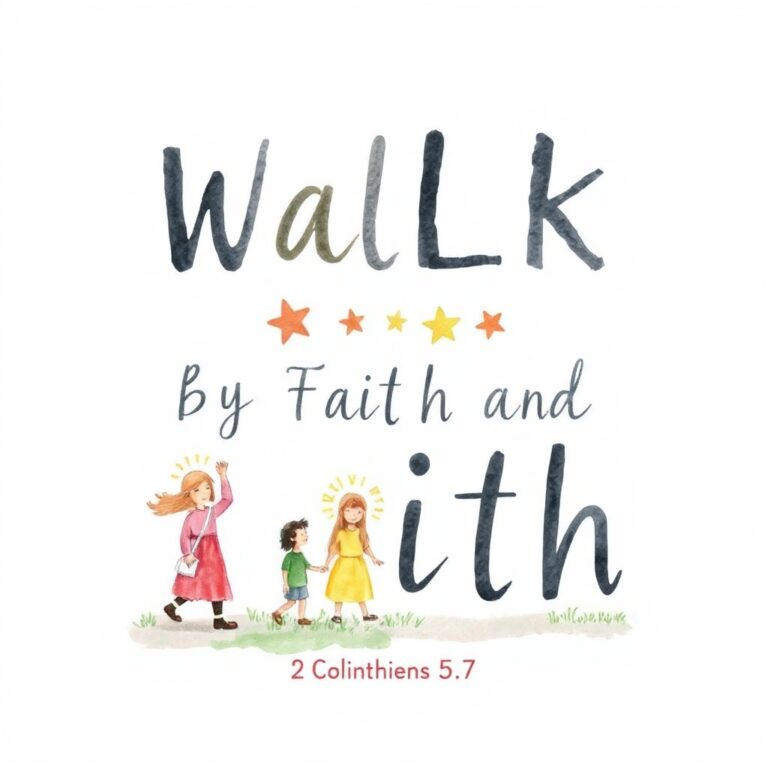
Quick Answer: The walk by faith bible verse is 2 Corinthians 5:7: “For we walk by faith, not by sight.” It teaches believers to live with confidence in God’s promises even when circumstances look uncertain. Faith is choosing God’s truth over immediate impressions, letting the unseen work of Christ shape everyday decisions.
2 Corinthians 5:7 (King James Version)
“For we walk by faith, not by sight.”
Historical context: why Paul contrasts “faith” with “sight”
Paul wrote 2 Corinthians to a church facing pressure from without and confusion within. Some believers were being tempted to judge God’s work by outward signs—appearances, success, charisma, or how strong the arguments sounded. In that environment, Paul insisted that Christian life is not governed by what the eyes can confirm. When he says we walk by faith, he is describing a whole way of life, not a private emotion.
Historically, the early Christians lived under scrutiny and hardship. The Christian message was frequently misunderstood, and believers often endured suffering while waiting for the final fulfillment of God’s promises. That is why Paul’s contrast matters: “sight” represents the immediate, visible realm; “faith” represents trust grounded in God’s character and promises. The walk Paul describes is therefore steady endurance—continuing in obedience when outward evidence is weak.
In the wider flow of 2 Corinthians 4–5, Paul is preparing the believers for a perspective shift. Present troubles are real, but they are not the final reality. In Christ, what is unseen is lasting. Understanding this background helps you read the sentence as a lifeline: your spiritual life is designed to be lived by God’s reliable word, even when your circumstances cannot be controlled or explained.
Original language note: “walk,” “faith,” and “sight”
In Greek, the word translated “walk” (peripateō) can mean more than physical walking; it can describe conduct, lifestyle, and the consistent direction of life. Paul’s phrasing implies an ongoing pattern—how you progress day after day.
“Faith” (pistis) in the New Testament is not mere optimism; it is trustworthy reliance on God. In Paul’s usage, faith rests on God’s work in Christ and His promises. Finally, “sight” refers to what is visible and experienced through the senses. Paul’s point is not that Christians deny reality; it is that they refuse to let visible evidence be the final authority.
While some details of nuance can vary by context, the overall thrust is clear: Christians are called to interpret life through God’s truth rather than through immediate appearances. That is why the walk by faith not by sight principle remains practical—faith is the lens, and obedience is the path.
1) “For we walk…”: faith is daily, not occasional
Paul does not say, “We think about faith” or “We feel faith.” He says, “we walk.” This is language of direction and continuity. The Christian life is meant to be consistent, not sporadic—something that shows up in ordinary choices.
In practice, walking by faith often looks like doing what God has already said to do, even while you wait for the outcome you want. It can mean telling the truth when lying would be easier. It can mean forgiving when resentment would feel justified. It can mean praying when you do not yet see answers. It can mean enduring a season of loss without pretending you are not hurting.
Paul’s wording also carries reassurance: “we” is corporate. Faith is not only a personal strategy; it is a shared trust among God’s people. Churches are strengthened when believers encourage one another to keep going—when testimonies replace rumors, Scripture replaces fear, and prayer replaces panic.
So if you’re asking what the walk by faith bible verse actually calls for, start here: treat faith as your regular pathway. God is building steadiness inside you. Your life should begin to look like the God you trust.
2) “By faith, not by sight”: what counts as ‘evidence’ for the believer?
Paul’s contrast is sharp: faith versus sight. Sight is the realm of visible facts and immediate impressions—what you can see, measure, and verify right now. Faith is the realm of God’s promises—what is true because God is faithful, even if you have not yet seen the outcome.
This does not mean the Christian never considers evidence. Scripture teaches wise discernment. But it means you stop treating circumstances as the final courtroom. When your senses scream “it’s impossible,” faith responds, “God is still God.” When your timeline feels stalled, faith responds, “God’s timing is still true.” When you face discouraging reports, faith responds, “God’s word still stands.”
In 2 Corinthians 4–5, Paul frames suffering and uncertainty through the hope of God’s coming restoration. That context matters: the Christian life is not blind to difficulty; it is anchored beyond difficulty. The “unseen” is not imaginary—it is spiritual reality sustained by Christ.
If you want to live by faith not by sight, ask: Which voice is ruling my decisions today—God’s promise or my immediate observations? Faith is the decision to let God’s truth set your course. Sight will always show you part of the picture; faith insists God holds the whole story.
3) Faith produces endurance and hope (a devotional “lens” for real life)
Faith is not merely belief in the abstract. In Paul’s letter, faith is the power that keeps believers walking when the body is worn and the heart is tired. A person who lives by faith tends to develop an inner resilience: they can grieve without collapsing, wait without giving up, and obey without bargaining.
Hope becomes practical. You may not control events, but you can still respond with faith-shaped obedience. That is why the sentence functions like a spiritual compass. When you feel overwhelmed, walk by faith means return to God’s character. When you feel pressured, it means return to God’s command. When you feel uncertain, it means return to God’s promises.
Try this devotional discipline: before you act, pause and ask three questions. (1) What has God said? (2) What am I seeing that might tempt me to fear? (3) What faithful step can I take today that aligns with God’s truth?
Walking by faith does not guarantee comfort, but it guarantees alignment. God’s purpose is not only to deliver you from trouble; it is also to form Christ in you. Over time, faith changes the way you interpret delay. You start to see waiting as training, not punishment.
Ultimately, the walk by faith bible verse is an invitation into a calmer, steadier life—one where God’s word outweighs your perceptions.
How to walk by faith this week (simple, repeatable steps)
1) Choose one promise to hold today. Look for a Scripture you can pray back to God. Then read it before making major decisions.
2) Identify the “sight” pressure. Is it a fear report, a closed door, a health concern, or a relational strain? Name it honestly. Then refuse to let that report become your final authority.
3) Take a small faithful step. Faith is often proven in the “next right obedience.” Send the message you should send. Apologize. Serve. Give. Pray for that person again. Keep showing up.
4) Replace impulse with prayer. When anxiety rises, pray a short prayer like, “Lord, I trust You over what I see. Lead my next step.”
5) Encourage someone else. “We walk” includes the community. A timely text, a brief encouragement from Scripture, or a shared prayer meeting helps strengthen faith in others.
As you practice, you will notice a shift: God’s word becomes more real than your feelings. The walk by faith not by sight pattern becomes not just a doctrine, but a rhythm.
Related Bible Passages
Romans 1:17
Paul teaches that the righteous live by faith, showing faith is foundational for a whole life.
Hebrews 11:1
Faith is described as assurance of things hoped for and conviction of things not seen.
2 Corinthians 4:18
Paul contrasts what is seen and temporal with what is unseen and eternal.
Proverbs 3:5-6
Trusting the Lord with all your heart challenges you not to lean on limited understanding.
Habakkuk 2:4
The prophet declares that the righteous will live by faith, linking faith to perseverance.
Frequently Asked Questions
What does “walk by faith, not by sight” mean in everyday Christian life?
It means your daily decisions should be guided by God’s promises rather than only by what you can currently see or measure. You don’t ignore reality, but you refuse to let immediate evidence become the final authority. Faith looks like obedience while waiting, trust while uncertain, and courage when feelings argue otherwise.
Is the “walk by faith bible verse” only about salvation, or about how to live?
It is about how to live. While faith is central to salvation, Paul’s wording (“walk”) points to an ongoing lifestyle. The verse encourages believers to keep progressing in obedience, endurance, prayer, and hope even when circumstances feel unstable or unclear.
How can I walk by faith when I’m anxious or disappointed?
Start by bringing your anxiety to God in prayer, not denial. Then anchor your heart in Scripture—God’s character and promises. Take one faithful step consistent with God’s word (even small). Finally, talk with a mature believer or join a prayerful community to reinforce hope.
Does walking by faith mean ignoring medical reports, finances, or facts?
No. Scripture supports wise stewardship and truthful assessment. Walking by faith means facts are not your ultimate judge. You can respond responsibly to visible information while still trusting God’s promises about His purposes, presence, and care.
A Short Prayer
Lord Jesus, teach me to walk by faith and not by sight. When my eyes are filled with worry, let Your word steady my heart. Help me trust Your character more than my circumstances, and lead me into faithful obedience for the next step. Strengthen my endurance, renew my hope, and grow Christlike patience in me. In Your name I pray, Amen.
Key Takeaway: To walk by faith is to live by God’s promises—choosing obedience and hope even when the visible evidence is uncertain.