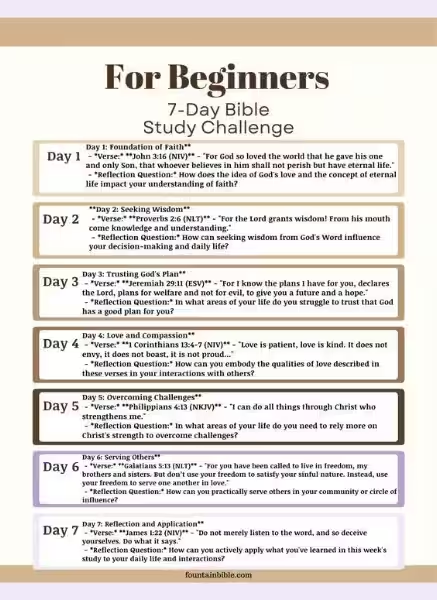
Feeling a little overwhelmed by the Bible? You’re not alone. Many people are drawn to its wisdom and stories but find the sheer volume daunting. This is where a structured approach to Bible study becomes crucial. Beginning with foundational knowledge and building gradually is key. This guide will provide you with essential steps to embark on your own journey of discovery, offering practical tools and insights that make the process engaging and rewarding.
Imagine the Bible as a vast library filled with countless stories, poems, and prophecies. Your first step isn’t to read every book cover-to-cover, but to explore the sections that resonate with you. Start with a section or book that interests you – perhaps the Gospels, the Psalms, or even the historical accounts. Finding a starting point is often the most challenging part, but it is also important to choose wisely. With a variety of resources available online and in libraries, you can discover more about the Bible and gain a sense of its scope and the stories within it.
Before diving into the text, consider why you want to study the Bible. Are you seeking spiritual guidance, historical context, or a deeper understanding of faith? Clearly identifying your motivation will help you stay focused and engaged. For example, if you are interested in understanding moral principles, you might focus on the Ten Commandments or parables of Jesus. Your purpose will shape your perspective. Understanding your purpose will also help you stay motivated throughout the process.
Reflection is key throughout your study. Taking time to reflect on what you’ve read is an important part of your study. What does this passage mean to you personally? How can you apply these lessons to your daily life? There is a big difference between reading and studying in this regard. Journaling is a great tool to capture your thoughts and reflections. By thoughtfully considering the Bible’s message in the context of your own life, you begin to connect with the text on a deeper level, making the learning process more meaningful.
Choosing Your Resources for Bible Study for Beginners
There are numerous resources available to aid you in your Bible study journey. Study Bibles provide helpful commentary and explanations alongside passages. Online resources offer a wealth of articles, videos, and discussions. Local churches often host Bible study groups, providing support and community. Key components of effective resources include clear explanations, practical applications, and personal anecdotes.
A great starting point is a simple study Bible. These Bibles often have introductory notes, cross-references, and maps, making it easier to understand the historical and cultural context of the text. Additionally, online Bible study tools can be invaluable for beginners. These platforms often provide interactive maps, timelines, and dictionaries. Utilize these resources to help you deepen your understanding. They can make the process easier and more enjoyable.
Essential Steps in a Bible Study for Beginners
A structured approach to Bible study is like building a strong foundation. Begin by choosing a passage that resonates with you. Read it several times, allowing the words to sink in. Identify key themes and characters. Pay attention to any recurring ideas or patterns. Look up unfamiliar words or terms to ensure you understand the context. These are all essential steps in a beginner Bible study.
Consider these steps in a typical study. First, read the passage slowly and carefully. Second, ask questions about what you’re reading. Third, consider the historical and cultural context. Fourth, look up any unfamiliar words or phrases. Finally, reflect on what you’ve learned and how it might apply to your life. By following these steps, you’ll gain a deeper understanding of the Bible’s message and its relevance to your daily life.
Don’t perceive Bible study as a chore, but as a journey of discovery. Make it a regular part of your routine, perhaps dedicating 15-30 minutes daily. Find a quiet space where you can focus and reflect. Consistency is key in any spiritual journey. Don’t get discouraged if you don’t understand everything right away; the journey is about continuous learning and growth. Embrace the process and allow yourself to grow through it.
Making Bible study a lifestyle means embedding it into your weekly routine. Consider it as a time for personal connection with God, for reflection, and for finding answers to your questions. Find a study group or mentor to support you. These can enhance your understanding and provide accountability. Prayerful reading and reflection are important for personal growth.
Frequently Asked Questions
What is Bible study for beginners?
Bible study for beginners is a journey of exploration and discovery. It involves reading and reflecting on passages of the Bible, often with the guidance of a study guide or fellow learners. The aim is to understand the text, its historical context, and its relevance to life today.
What is religion?
Religion is a system of beliefs and practices relating to the supernatural and the meaning of life. It often involves a community of followers, rituals, and moral codes. Different religions have diverse perspectives on the nature of existence, the divine, and the human experience.
How do I start a Bible study?
Choose a manageable starting point – perhaps a single book or a short passage. Use a study Bible or commentary to help with understanding. Consider joining a study group for support and discussion. Focus on one verse or paragraph at a time.
Several resources help beginners, including study Bibles (with annotations and explanations), commentaries, online resources, and local church groups. Look for resources that use clear language and address common questions.
What if I don’t understand something?
It’s perfectly normal to struggle with understanding certain passages. Ask questions, consult with others, and use resources like commentaries or study guides. Don’t be afraid to admit you don’t know something.
How can I make Bible study a habit?
Set aside regular time for study, even if it’s just 15-30 minutes. Create a comfortable and quiet space. Find a study method that works for you – reading, journaling, or discussion. Join a Bible study group or find an online community.
What are some common misconceptions about religion?
Religion can be misunderstood as rigid and inflexible. However, many religions emphasize compassion, understanding, and growth. Religions can also be complex, and it takes time to learn about them fully.
How do I choose a Bible study approach?
Consider your learning style. Some people prefer in-depth study, while others prefer a more thematic approach. Try different methods to see what resonates with you. Consider joining a group to learn from others’ perspectives.
Where can I find a Bible study group?
Check with your local church or religious community. Online forums and social media groups can also be excellent resources for connecting with others interested in studying the Bible.
What if I have questions about my faith?
It’s normal to have questions about faith. Talk to a trusted spiritual leader, mentor, or friend. Explore resources like books or websites on religious topics. Engage in thoughtful reflection on your questions.