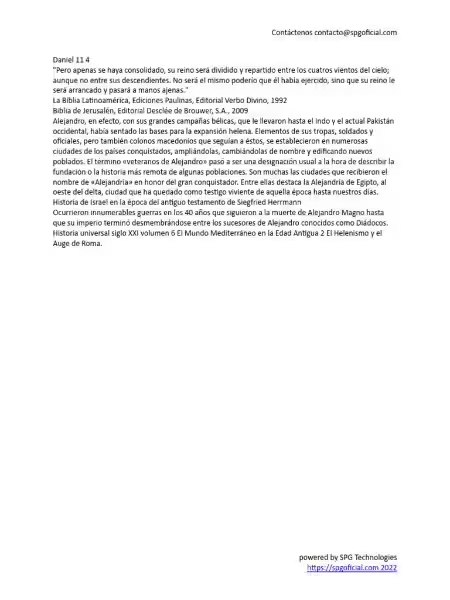
Daniel chapter 11 is a captivating and often perplexing section of the Bible. It’s a prophecy detailing a sequence of events, largely focused on the geopolitical landscape of the ancient world, but with implications for our own time. Understanding this chapter requires a careful approach, combining historical context with spiritual interpretation. This journey into the prophetic will illuminate the struggles between opposing kingdoms and the ultimate triumph of God’s plan. Key themes include the rise and fall of empires, the conflict between good and evil, and the ultimate destiny of God’s people.
Studying this chapter can feel daunting initially. The intricate details and chronological sequence can appear overwhelming. However, with a focused approach and a willingness to engage with the text, we can unravel the complexities and uncover valuable insights. This chapter isn’t just about ancient history; it’s about understanding enduring patterns of power struggles, the resilience of faith, and the unwavering hand of God in shaping history. We’ll look at how these prophecies connect to the emergence of powerful empires, the persecution of God’s people, and the ultimate triumph of God’s kingdom.
Daniel 11 details a series of kings and kingdoms, each with a unique role in the unfolding drama. Understanding these figures requires careful study of their historical context. For instance, identifying the specific empires mentioned within the text will require knowledge of the ancient world. Focusing on the geopolitical situation during that era can deepen our insights. These kingdoms represent more than simply earthly rulers. They symbolize broader forces, often representing spiritual conflicts on a larger scale. For example, the rise of a powerful kingdom could parallel the strengthening of a particular demonic influence or a shift in the human tendency to prioritize earthly power over spiritual values.
A key element is understanding the relationship between the kings and the people of God. The prophecies often describe periods of persecution and oppression, but also periods of relative peace and prosperity. Consider the analogy of a family facing economic hardship. Circumstances may test their faith, but their family values remain strong. Similarly, the people of God endure trials, yet their faith remains a constant. Pay close attention to the language used in the text. Is it describing a period of peace or upheaval? This language often provides clues about the spirit behind the events. Examples of this are the phrases that describe specific kings and their actions.
Interpreting the Conflicts and Prophecies
Daniel 11 is rich in descriptions of conflict. These conflicts aren’t limited to military battles; they represent spiritual struggles between forces of good and evil. Think of the struggle between a parent guiding a child versus a child rebelling against authority. Understanding the symbolism of these conflicts is crucial. For example, the rise of a particular king could represent the empowerment of a certain type of influence, and his later decline could mirror the weakening of that same influence. The message often speaks to the enduring battle between the forces of light and darkness.
The prophecies in Daniel 11 aren’t meant to be a precise timeline of future events. Rather, they are meant to provide a general understanding of the larger patterns in human history. Consider reading these prophecies as a philosophical commentary on power. What are the patterns in human behavior that lead to conflict? What are the consequences of ignoring the spiritual dimension of political power? This perspective helps us to recognize the cyclical nature of human actions and the enduring nature of spiritual forces. Recognizing the prophetic nature of this section is vital to avoid overly literal interpretations. The chapter is about recognizing broad, lasting themes.
While Daniel 11 is rooted in ancient history, its principles remain remarkably relevant. The cyclical nature of power struggles is evident throughout human history. The rise and fall of empires, the tension between nations, and the persistence of conflict are all themes that resonate with our modern world. Think about the current geopolitical climate. How do the patterns described in Daniel 11 relate to the conflicts and challenges we face today? Considering this connection can offer profound insights into the forces shaping events.
Applying these insights to our individual lives also holds immense value. The conflicts between nations often mirror the conflicts within ourselves. We can use this understanding to cultivate wisdom and resilience as we navigate the complexities of our time. Understanding these prophetic patterns helps us to better comprehend and engage with the world around us. By understanding the principles within the prophecies, we can cultivate a more insightful and faith-filled perspective on current events. This approach helps us to remain grounded in a spiritual understanding of the world.
Frequently Asked Questions – Daniel Chapter 11 Commentary (Religion)
What is the significance of Daniel Chapter 11?
Daniel 11 details prophecies about the kingdoms and empires that would arise and fall in the latter days. It’s seen by many as a key passage to understanding God’s plan for the nations and the eventual establishment of His kingdom.
What are the different interpretations of the kings and kingdoms mentioned?
Interpretations vary widely. Some see specific historical figures and kingdoms, while others view it as a symbolic portrayal of spiritual forces and conflicts.
How does this chapter relate to religious history?
Many believe Daniel 11 connects to the historical rise and fall of empires, religious movements, and political conflicts throughout history. The interpretation of these events often shapes religious understanding of prophecy.
Is there a consensus on the precise meaning of the prophecies?
No, there is no single, universally accepted interpretation. Different theological perspectives and historical contexts lead to varied understandings.
What are some common themes in the chapter?
Common themes include the struggle between good and evil, God’s sovereignty over nations, and the ultimate triumph of God’s kingdom.
How can I approach studying this chapter?
Use multiple resources, comparing various interpretations. Consider historical context, biblical themes, and your own theological framework.
How does Daniel chapter 11 relate to current events?
Many attempt to connect the prophecies to contemporary geopolitical situations, but this is often a matter of interpretation and can lead to differing views.