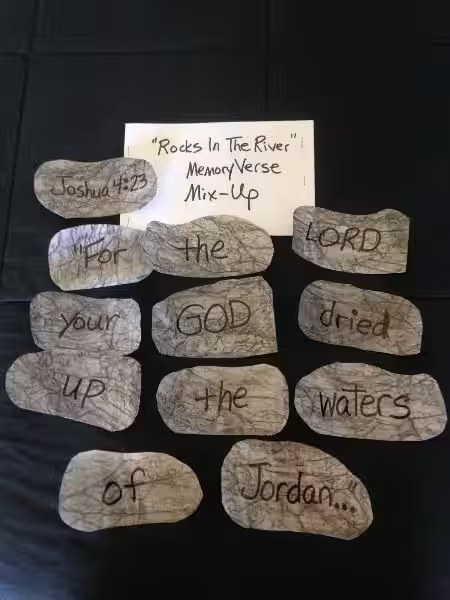
Across cultures and time, stones have played a profound role in religious expression. From ancient civilizations to modern-day practices, objects like scripture stones hold deep spiritual meaning. They represent connection to the divine, historical events, or symbolic representations of beliefs. These stones often carry stories embedded within their very substance, whispering tales of faith and devotion. Understanding their significance requires delving into the specific religious contexts in which they are used.
Imagine a weathered stone, etched with ancient symbols, held reverently in a hand. That simple image encapsulates the profound respect and reverence often associated with scripture stones. These stones are more than just physical objects; they’re powerful reminders of faith’s enduring power. They can serve as focal points for prayer, markers of sacred sites, or even conveyors of spiritual guidance. Their significance is deeply rooted in the cultural and historical context, adding layers of meaning beyond just their physical form.
Scripture stones take on a multitude of roles depending on the specific religion or tradition. In some cases, they serve as physical representations of religious texts. These stones might be inscribed with key verses or passages, making them portable repositories of sacred words. Other examples include markers for pilgrimage routes or sites of historical significance. For instance, a stone marking the spot where a prophet delivered a message might become a site of pilgrimage for followers, imbued with spiritual power.
Consider a Jewish tradition where stones might be inscribed with religious laws. These stones, acting as movable scripture stones, are then used in synagogues and homes. Similarly, in Hinduism, certain stones are believed to hold spiritual energy, used in rituals and ceremonies. These examples illustrate the variety of ways scripture stones are used across different faiths. This demonstrates the incredible diversity in the spiritual meanings attached to these objects.
Scriptural Stones: A Bridge Between Past and Present
Scripture stones are tangible links to the past, connecting us to the beliefs and practices of earlier generations. They serve as physical reminders of historical events, or important religious figures. Think of a stone erected near a historical holy site, reminding visitors of the significance of the place. This links the present generation to those who came before. These objects are often carefully preserved and venerated, carrying a cultural heritage with them. They are not simply stones; they are keepers of memory. They are significant because they are physical remnants of faith. It’s often through these objects that we understand and reflect on the journeys of faith taken by those who came before us.
For instance, a stone might bear the imprint of a religious leader’s hand. These objects offer tangible evidence of the leader’s presence and their spiritual impact. These stones also provide a means for present-day believers to connect with their religious heritage, to share in the experiences and teachings of those who came before them. These deeply rooted connections are particularly important in maintaining and nurturing religious traditions.
Interpreting the Symbolism of Scripture Stones
The symbolism embedded in scripture stones is often multilayered and nuanced. For example, the shape of a stone, its texture, or even its location can hold specific meanings within a particular belief system. A smooth, polished stone might symbolize serenity or spiritual purity, while a rough, jagged stone might represent challenges or obstacles in the path of faith. Colors and patterns present on the stone itself can often hold specific symbolic significance. The specific context, often defined by the religious community, is key to understanding the multifaceted meaning of scripture stones.
These stones can be powerful symbols of hope, offering solace and strength to those who seek guidance and connection to a higher power, especially in times of adversity. This is a powerful reminder that the most sacred objects often carry symbolic meaning depending on their use and context. They serve as tangible representations of abstract concepts like faith, hope, and resilience. Consider the cultural and historical context surrounding the stones when interpreting their meaning. By understanding their context, you can gain insight into their deeper significance. Examining the cultural and religious practices of the communities who use these objects is crucial in getting a comprehensive understanding.
Frequently Asked Questions about Scripture Stones and Religion
What are scripture stones?
Scripture stones are stones, often inscribed with religious texts or symbols, that are considered sacred or historically significant within some religions.
What religions use scripture stones?
Different religions and cultures have used stones for religious purposes, including some forms of Hinduism, Buddhism, Judaism, and various indigenous traditions. The specific use and significance vary greatly.
Why are scripture stones important?
Scripture stones can be important for a variety of reasons, including marking sacred sites, preserving historical records of religious practices, providing tangible links to faith, or holding symbolic meaning for believers.
How are scripture stones created?
Methods for creating scripture stones vary. They might be carved, inscribed, or decorated with symbols and text. Materials used could range from natural stone to metal or other substances.
What is the significance of inscriptions on scripture stones?
Inscriptions on scripture stones often carry specific religious messages, prayers, or teachings, depending on the particular faith and context. They can also serve as memorials or historical records.
While many scripture stones are religious, some stones with inscriptions might have non-religious significance, such as historical markers or cultural commemorations.
How can I learn more about scripture stones?
Further research into specific religious traditions, and the history of the region where the stones are found, can provide more detailed insights.