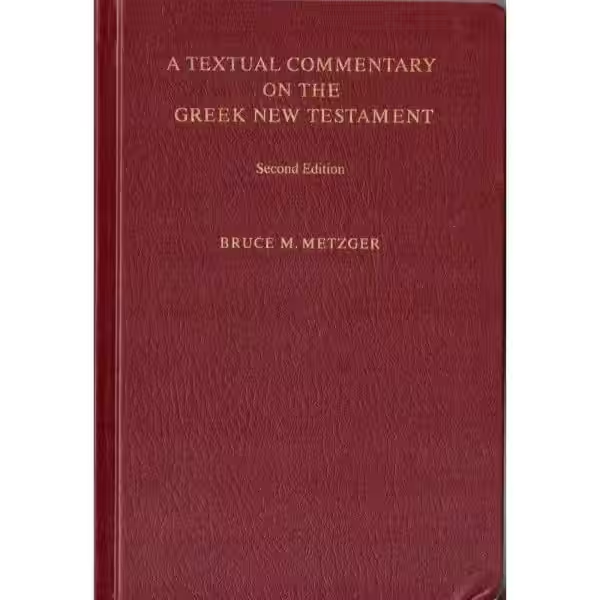
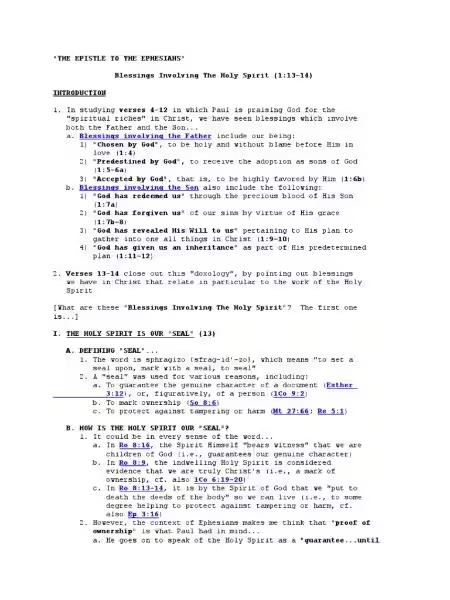
Navigating the New Testament can feel overwhelming, filled with complex theological concepts and diverse interpretations. But at its core, grace – God’s unmerited favor and love – is a unifying theme that weaves through the entire narrative. Understanding grace in the New Testament becomes crucial for applying its teachings to our lives today. A grace-focused New Testament commentary offers a lens through which to appreciate the profound impact God’s grace has on our relationship with Him and others. This deeper understanding is essential for a richer, more fulfilling Christian journey.
Grace, as portrayed in the New Testament, isn’t about earning God’s favor; it’s about receiving it freely. Imagine a parent showering their child with love and gifts, regardless of the child’s performance. This is analogous to God’s grace. He loves us unconditionally, offering forgiveness and redemption through Jesus. Such a perspective shifts our focus from striving for perfection to embracing the gift of God’s grace. This perspective is central to the interpretation provided by quality grace-focused New Testament commentaries.
Unpacking the Significance of Grace in Various Books of the New Testament
The concept of grace isn’t static; it manifests differently in various books of the New Testament. In the Gospels, grace is presented as the foundation of Jesus’ ministry. Jesus’ miracles, teachings, and parables all demonstrate God’s grace in action. For example, the parable of the Prodigal Son powerfully illustrates God’s forgiveness and abundant grace. Grace-focused commentaries help us understand how Jesus’ example, which is filled with grace, shapes our own lives. This also highlights the importance of grace in our interactions with others.
Paul’s epistles delve deeper into the theological implications of grace. Grace is central to his teachings on salvation, highlighting that we are saved by God’s grace through faith in Jesus Christ, not through our own merits. Paul emphasizes the transformative power of grace, showing how it empowers believers to live lives of righteousness and love. Grace commentaries provide insight into the different ways in which Paul articulates the power of grace, including its implications for justification, sanctification, and the Christian life. He stresses that grace is a gift, not a right. This understanding is key to a healthy perspective on faith and Christian living.
Grace and Relationships: A Practical Application
Grace-focused New Testament commentaries aren’t just about abstract theological concepts; they help us apply the principles of grace to our daily lives. Grace in our relationships means extending forgiveness, understanding, and compassion to others, just as God extends it to us. When we encounter conflict, grace encourages us to view others through the eyes of God’s love and forgiveness. This is a critical lesson that grace commentaries illustrate. Imagine a situation where a friend hurts you. Grace encourages you to choose forgiveness over resentment. This is a powerful example of the practical application of grace in our relationships.
Understanding grace and self-compassion is also crucial. We often judge ourselves harshly, focusing on our failings rather than God’s grace. Grace commentaries remind us that we are all flawed human beings, but grace provides the opportunity for growth and change. We can approach our imperfections with humility and compassion, just as we approach those of others. We should embrace our imperfections with grace and God’s unconditional love in mind. This is a critical lesson for personal growth and spiritual well-being. Forgiveness of our own shortcomings is essential in applying the principles of grace to our daily lives.
Grace-focused New Testament commentaries provide a roadmap for understanding the profound implications of God’s grace in the New Testament. Through these resources, we can delve deeper into the teachings of Jesus and the apostles, applying the lessons of grace to our personal journeys. They offer a fresh perspective on the Bible, reminding us that God’s grace is a gift, not a reward, and that it is readily available to all who seek it. Embracing this truth liberates us from striving for perfection and allows us to live with greater freedom and purpose.
By engaging with grace-focused New Testament commentaries, we can develop a deeper relationship with God and with others. This journey of discovery, deeply rooted in the principles of grace, invites us to experience the transformative power of God’s love in our daily lives. Therefore, exploring these resources is a vital step for growth, compassion, and a more fulfilling life, rooted in the profound truth of God’s grace.
Frequently Asked Questions
What is Grace New Testament Commentary?
Grace New Testament Commentary is a series of commentaries on the New Testament books, offering in-depth analysis and insights from a specific theological perspective focused on grace.
What is the theological perspective of Grace New Testament Commentary?
The commentary emphasizes the concept of God’s grace as central to understanding the New Testament, highlighting its implications for Christian life and theology.
Who is the target audience for Grace New Testament Commentary?
The commentary is intended for serious students of the Bible, pastors, and anyone seeking a deeper understanding of the New Testament from a grace-centered perspective.
What makes Grace New Testament Commentary different from other commentaries?
It uniquely focuses on the theme of grace throughout the New Testament, providing a framework for understanding the various biblical texts within this theological lens.
What are the specific books covered in the Grace New Testament Commentary?
(Provide a list of books covered)
How can I purchase Grace New Testament Commentary?
(Provide details on purchasing options)
Are there any supplementary resources available?
(Mention any study guides, podcasts, or other helpful materials)
Where can I find more information about the authors and their backgrounds?
(Provide links to author biographies or relevant pages)