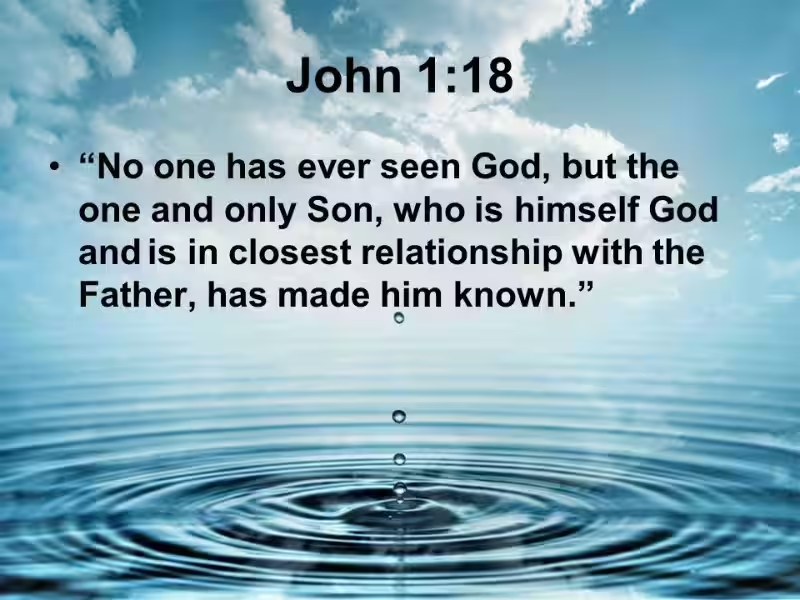
The concept of God’s all-knowing nature is a cornerstone of many faiths. This attribute, often referred to as omniscience, suggests that God possesses complete knowledge of everything—past, present, and future. This profound concept can be challenging to grasp, yet it’s profoundly comforting and inspiring to many. It speaks to a power that transcends our limited human understanding.
Many people find solace and security in the idea that a loving, all-knowing God has a plan, even when life’s circumstances seem chaotic. Understanding this concept, however, extends beyond simply accepting a doctrine. Exploring the scriptures helps us to see how this knowledge shapes our relationship with the divine. Understanding this attribute can encourage a deeper, more meaningful connection to faith.
Exploring Scripture’s Perspective on God’s Knowledge
The belief in God’s all-knowing nature permeates the scriptures. For instance, the Bible, through various verses, paints a vivid picture of an omniscient God who sees the innermost thoughts and desires. This includes not only the grand, sweeping movements of history but also the quiet, intimate details of our daily lives. Consider Psalm 139:1-6, which highlights God’s knowledge of our assembly, our going out and our lying down. This insight into a divine perspective can offer a powerful sense of being understood and cared for.
Verses such as Isaiah 46:10 declares, “I know the plans I have for you, declares the Lord, plans to prosper you and not to harm you, plans to give you hope and a future.” This emphasizes the foreknowledge of God’s decisions and ensures that individuals are not alone in their struggles, but are guided by a plan. The idea is that God’s understanding transcends human limitations and encompasses all potential outcomes. This concept can provide comfort and reassurance in the face of uncertainty.
Understanding God’s all-knowing nature can influence our lives in profound ways. It fosters a greater sense of accountability, knowing that our actions are scrutinized with divine awareness. We are constantly aware of God’s omniscience, even without necessarily explicitly understanding how or why. It encourages us toward a life of integrity and honesty, as we know that dishonesty is not hidden from God. It also encourages forgiveness and grace for others.
Consider the following: If God knows everything, then our choices matter. Every decision, big or small, is part of a larger plan. This isn’t about feeling judged or condemned, but rather about understanding the magnitude of our choices. This encourages a careful consideration of our actions and motivations. It also helps to cultivate a greater sense of purpose and meaning in our lives, knowing we are part of a larger, divine plan.
Understanding the Implications of Knowing the Unknown
The concept of God’s omniscience can be a source of comfort, but also a source of mystery. How can we reconcile this all-knowing God with free will? This is a question that has captivated theologians and philosophers for centuries. Ultimately, a profound understanding of God’s omniscience isn’t about unraveling all the mysteries, but about appreciating the depth of faith and the richness of the relationship. The relationship is one of trust and faith, not of control or limitation.
Consider the example of a parent. A parent knows their child, their strengths and weaknesses, their joys and fears. This knowledge, while complete, doesn’t necessarily restrict the child’s ability to make their own choices. Similarly, God’s all-knowingness doesn’t remove our free will. It allows us to embrace the journey, knowing that God’s love and guidance are present. It allows us to choose our own path knowing that God is always there.
Ultimately, appreciating God’s all-knowing nature involves a journey of faith and reflection. It’s about embracing the mysteries, understanding the scriptures, and ultimately, developing a more profound connection with the divine. It fosters trust, accountability, and ultimately, a more meaningful life. This is not about restricting human agency but about recognizing the immensity of love and care that surrounds us.
God’s omniscience reminds us of the profound importance of our actions, even in seemingly insignificant moments. It provides a framework for understanding the vastness of creation and our role within it. Ultimately, it inspires a life of faith, love, and purpose.
Frequently Asked Questions
What Bible verses talk about God’s omniscience?
Many verses throughout the Bible describe God’s all-knowing nature. Examples include Psalm 139:1-6, which details God’s awareness of every aspect of a person’s life, and Proverbs 15:3 which states that the eyes of the Lord are in every place, observing the good and the evil.
What does it mean for God to be all-knowing?
God’s omniscience means that He possesses complete knowledge of everything, past, present, and future. This includes all events, thoughts, feelings, and intentions of every person and creature. It also encompasses knowledge of all possibilities and potential outcomes.
Why is God’s all-knowing nature important to religious belief?
The concept of God’s omniscience is vital to many religions as it speaks to His ultimate power, sovereignty, and perfect understanding of creation. It fosters trust in His plan and governance, even in the face of seemingly unpredictable events.
How does believing in God’s omniscience relate to free will?
This is a complex question that has been debated for centuries. Different religious perspectives offer varying answers. Some argue that God’s knowledge doesn’t negate human free will, while others suggest a more nuanced understanding where God’s foreknowledge is compatible with our choices.
Does God’s all-knowing nature affect my faith in prayer?
The belief in God’s omniscience can influence how one approaches prayer. Some might see it as a way to communicate with a God who already knows their needs, while others might focus on the personal connection and the opportunity to express their hearts to a loving and attentive God.
Can I reconcile my understanding of God’s omniscience with my own struggles with sin and imperfection?
The concept of God’s omniscience, combined with His described attributes of love, mercy, and grace, can offer comfort and hope in times of hardship or struggle. This understanding implies that God, while fully aware of our imperfections, still sees the potential for growth and redemption within us.