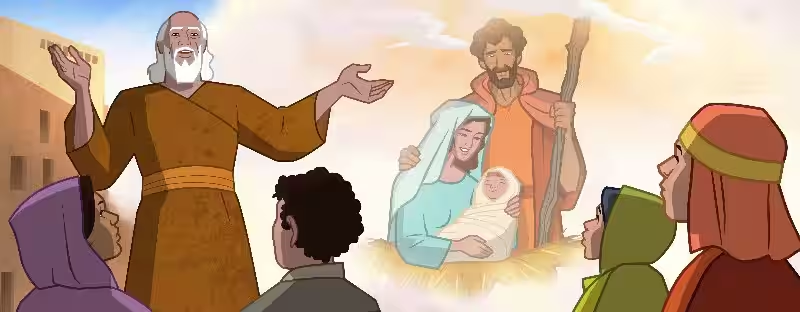
Exploring the Old Testament, particularly the book of Isaiah, unveils a fascinating tapestry of prophecies that, for Christians, point directly to Jesus Christ. These prophecies, often veiled in symbolic language and ancient imagery, foreshadow the coming Messiah, describing his life, ministry, and ultimate sacrifice. Understanding these prophecies provides a deeper appreciation for the Old Testament’s role in the story of salvation and the profound connection between the Hebrew scriptures and the Christian faith. Isaiah’s prophecies, though written centuries before Jesus’ birth, offer a compelling glimpse into God’s plan for redemption.
One of the key themes woven throughout Isaiah is the concept of suffering service. This concept isn’t just about hardship, but about a divinely appointed role in which the Messiah would act as a mediator between God and humanity. This idea resonates deeply in the prophecy of Isaiah 53, which describes the Messiah as “despised and rejected by men,” a “man of sorrows, acquainted with grief,” and one who carries the sins of the world. This powerful imagery anticipates Jesus’s humble beginnings, his public rejection, and ultimately, his sacrificial death on the cross. Think of a bridge—connecting two distant shores. The Messiah is that bridge, sacrificing himself to reconcile humanity with God.
Isaiah 53 offers a powerful and poignant portrait of the Messiah. The suffering servant is a key image, painting a picture of a profoundly humble individual who would experience profound pain for humanity’s sake. This prophecy details the Messiah’s humility and sacrifice, highlighting the profound love and mercy of God. This passage also speaks to the unjust treatment and misunderstanding Jesus would encounter, foreshadowing aspects of his earthly life. Key themes explored within this passage include the Messiah’s innocence, his role as a substitute for the sins of humanity, and the ultimate redemption he offers.
The concept of a “suffering servant” is not unique to Isaiah. Other passages in Isaiah hint at this figure, suggesting a divine plan for redemption that unfolds over time. Imagine a carefully crafted puzzle. Each piece, each prophecy, contributes to the larger picture of the coming Messiah. The prophecies are not isolated events; they build upon each other, highlighting different facets of the Messiah’s character and role. The complete picture, only revealed in hindsight, is far richer and more meaningful than any individual piece.
Messianic Prophecies Beyond Isaiah 53
Isaiah’s prophecies extend beyond the suffering servant. Other prophecies describe the Messiah’s royal lineage, his miraculous birth, and his ultimate triumph over evil. For example, Isaiah 9:6 speaks of “a child will be born to us, a son will be given to us; and the government shall be upon his shoulder.” This prophecy anticipates the Messiah’s kingship and leadership, a role that Jesus ultimately fulfilled. Think of the concept of leadership: often, powerful figures can be tyrannical. This prophecy suggests a very different kind of leadership, one based on divine authority and service to others.
The prophecy in Isaiah 7:14 speaks of “the virgin shall conceive and bear a son, and shall call his name Immanuel,” meaning “God with us.” This prophecy directly anticipates Jesus’s miraculous conception and his divine nature. These prophecies, when pieced together, provide a comprehensive portrait of a figure who is both human and divine, a savior who would come to redeem humanity. This is a central tenet of Christian belief and a powerful testament to the unity of the Old and New Testaments.
The prophecies of Isaiah, while ancient, offer valuable insights for contemporary life. The themes of sacrifice, service, and redemption are timeless and relevant to personal struggles and societal challenges. The Messiah’s journey, as foretold by Isaiah, stands as a powerful testament to the importance of compassion, understanding, and forgiveness. Understanding these prophecies helps us to see the profound impact of religious texts on individuals and societies, demonstrating how these texts provide comfort, guidance, and a framework for understanding the human experience.
Applying these concepts to everyday life can encourage a deeper sense of purpose and a commitment to serving others. When we understand the suffering servant, we can better empathize with those who are suffering or marginalized. By understanding these prophecies, we connect with a timeless narrative of hope and redemption, a narrative that continues to inspire and challenge us today. This connection, this understanding, can deepen our faith and enrich our lives.
Frequently Asked Questions
What prophecies in Isaiah refer to Jesus?
Several passages in Isaiah are interpreted as prophecies about Jesus. These include prophecies about a suffering servant (Isaiah 53), a virgin birth (Isaiah 7:14), and a king who will rule justly (Isaiah 9:6-7). Different interpretations exist regarding the specific fulfillment of these passages.
What is the relationship between Isaiah and Christianity?
Isaiah is considered a major prophet in the Hebrew Bible and is highly significant to Christianity. Christian interpretations often see Isaiah’s prophecies as pointing toward the coming of Jesus Christ and the fulfillment of God’s plan for salvation.
How do different religions view the prophecies in Isaiah?
Jewish tradition interprets Isaiah primarily within the context of Jewish history and scripture, focusing on the prophet’s role in Israel’s development. Other religions, such as Islam, may also acknowledge Isaiah as a prophet but understand his message through their own theological frameworks. Christian interpretations differ based on specific denominations and traditions.