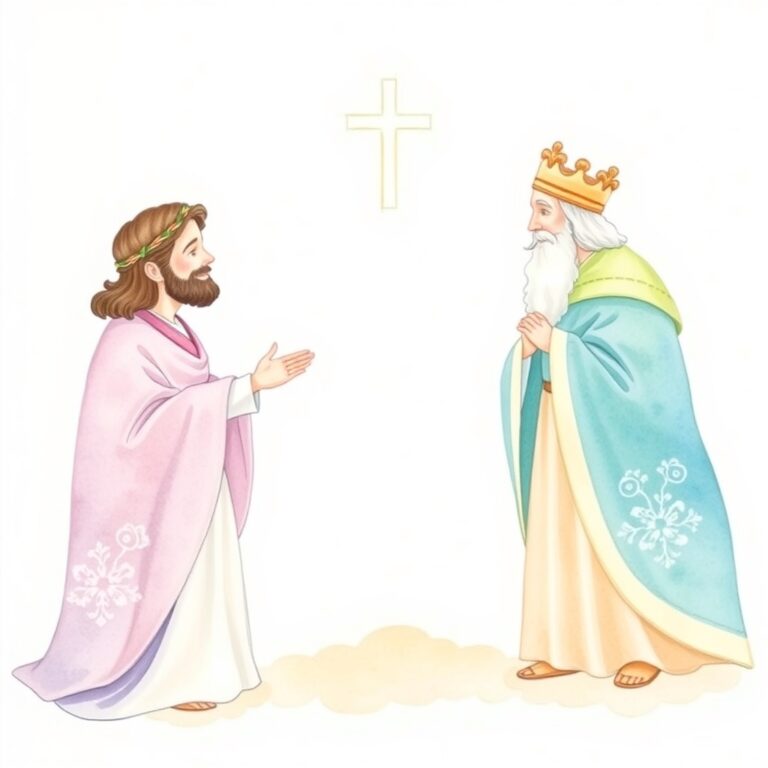
Commentary on Matthew 17:1-13: The Transfiguration, Moses and Elijah
Quick Answer: This commentary on mathew 17:1-13 explains how Jesus reveals His glory on the mountain while confirming His authority through the law and the prophets. In the midst of confusion about Elijah, the passage teaches that John the Baptist fulfilled that role—preparing the way for the Messiah. The Father’s voice then commands believers to listen to Jesus alone.
Historical context: why the mountain mattered
Matthew 17:1-13 comes right after Jesus has begun teaching His disciples about suffering, rejection, and resurrection (Matthew 16:21). The timing is important: the disciples may have wondered how a Messiah who is headed toward suffering could also be glorious. In answer, Jesus brings Peter, James, and John—still “with Him” but set apart from the rest—to a mountain where His appearance is transformed.
This scene echoes Old Testament expectation. God often revealed His presence with visible glory—think of Sinai—yet here the glory is not merely a sign of God’s nearness; it points to Jesus as the beloved Son. Moses and Elijah also appear, representing the law (Moses) and the prophets (Elijah). The disciples are not being shown that Christianity is built from fragments of the past; they are seeing that the entire biblical story converges on Christ.
Their response—Peter’s impulse to build dwellings—reveals a misunderstanding common to all of us: we want to preserve spiritual experiences without walking through the obedience that follows. Jesus’ transfiguration is not an escape from the cross; it is a confirmation that the path to the cross leads to divine glory.
Original-language notes: key ideas behind the passage
Two words capture the heart of the scene. First, the “transfigured” idea in Matthew comes from a Greek verb that relates to being changed in outward form or “transformed.” It does not merely mean “something looked different” for a moment; it indicates a real unveiling of glory that the disciples were permitted to perceive.
Second, the phrase “listen to him” is significant. In Greek, the command emphasizes attentive hearing that results in obedient response, not passive information. Hearing God’s voice in the Old Testament often carried covenant expectations. Here, the Father’s declaration makes Jesus the authoritative focus: Moses and Elijah may be present, but the believer’s duty is to heed Jesus.
Finally, the discussion about Elijah ties to the Greek wording behind “restore” and “come” themes in prophecy. The point is not that Elijah must physically return as an isolated event; rather, Scripture’s promise is fulfilled in the ministry that prepares the way—ultimately identifying John the Baptist as the Elijah-like messenger.
1) The transfiguration: glory that strengthens faith (Matthew 17:1-4)
Jesus takes Peter, James, and John to a high place. The passage highlights both intimacy and purpose: Jesus chooses witnesses who will later testify about what they saw (compare 2 Peter 1:16-18). The “in His presence” atmosphere matters—spiritual clarity often comes through proximity to Christ.
On the mountain, Jesus’ face shines “as the sun,” and His clothes become “white as the light.” This is not simply aesthetic. Matthew uses vivid imagery to show that Jesus’ identity is more than what ordinary eyes can conclude. It answers the disciples’ likely internal question: if Jesus is truly the Messiah, why does His teaching sound like defeat? The transfiguration functions as a divine preview—an unveiled truth that the Father intends to anchor the disciples’ hearts.
Peter’s response is understandable and yet revealing. He wants to build three shelters, effectively trying to preserve the moment. But the gospel message is not designed to keep believers on mountaintops. God gives encouragement to prepare us for obedience in harder terrain. Peter’s offer also suggests he may be treating heavenly revelation as an end in itself rather than a bridge to listen to Christ and follow Him.
So Jesus interrupts the distraction. The glory is meant to drive them away from self-directed plans and toward God’s spoken command. That is why the next section is so crucial.
2) The Father’s voice and the call to obey Jesus (Matthew 17:5-8)
While Peter is speaking, “a bright cloud” overshadows them, and a voice from the cloud declares, “This is my beloved Son, in whom I am well pleased.” The language echoes the Father’s covenant love and approval. In the Old Testament, the cloud is associated with God’s presence. Here, it confirms that Jesus is not merely a teacher but the Son the Father has set apart.
What is striking is the immediate instruction that follows: “hear ye him.” This is the interpretive key for the whole episode. Moses and Elijah are present—yes—but the Father’s priority is not curiosity about heavenly figures. It is submission to Christ.
When the disciples hear the voice, they fall on their faces. Fear is natural in the presence of divine holiness. Yet the command “be not afraid” also shows that God’s glory is not meant to terrify His people into silence. It is meant to restore courage for mission.
When they look up, they see Jesus only. That detail settles a common tendency: believers may be tempted to gather around experiences, angels, interpretations, or spiritual heroes. But biblical faith centers on Christ Himself. The Father’s statement reduces the whole religious landscape into a single command: listen to Jesus.
After this, the transfiguration becomes a pathway—going down the mountain with renewed confidence to face what Jesus has been teaching about suffering and resurrection.
3) Elijah, John the Baptist, and why the Messiah must suffer (Matthew 17:9-13)
Jesus commands the disciples to keep the vision quiet “till the Son of man be risen again.” That instruction guards the meaning of the event. The glory shown on the mountain is not a spectacle that cancels the necessity of the cross; it is revelation that supports the disciples as they endure the days ahead.
As they come down, they ask about Elijah. Their question reflects the Jewish expectation that Elijah would come before the great day. Jesus answers with both affirmation and reinterpretation: Elijah has come already, and “they knew him not,” and “have done unto him whatsoever they listed.” This echoes how Scripture often treats prophets—people dismiss them, reject them, and harm them.
In the gospel fulfillment, Jesus explains that John the Baptist was that Elijah-like messenger. John’s role was to prepare hearts, call for repentance, and announce the coming Messiah. Yet the rulers treated the messenger with violence and contempt.
Jesus then connects the disciples’ question to a deeper theme: the Son of man must suffer. The arrival of the preparer does not mean the rejection of the Messiah will be avoided; it means the stage is set. People can despise both the warning and the Savior.
This is why the “commentary on mathew 17:1-13” theme holds together: God’s glory is real, but it does not bypass suffering. Instead, the Father’s voice and the fulfilled prophecy strengthen believers to follow Jesus through the cross, trusting that resurrection will come.
How to apply this transfiguration today
First, take God’s command seriously: “hear ye him.” When your faith feels shaky—when circumstances suggest defeat—do not stop at spiritual emotions or inspirational memories. Return to Jesus’ words, especially His promises about suffering, redemption, and resurrection.
Second, accept that encouragement is meant to equip, not to escape. The mountain experience prepared the disciples for the road down. If God gives you clarity or comfort during prayer, let it strengthen obedience in ordinary life: forgive, serve, resist temptation, and keep trusting His timing.
Third, remember that Scripture interprets Scripture. The disciples misunderstood Elijah, but Jesus explained that the prophetic pattern was already fulfilled in John the Baptist. If you are confused about prophecy, character, or God’s work, seek Christ-centered understanding rather than speculation.
Finally, when fear rises, take comfort in God’s response: “be not afraid.” The Father’s pleasure rests in the Son, and that pleasure extends to all who listen, trust, and follow. Jesus’ glory is not only for a mountaintop; it is the foundation for your hope.
Related Bible Passages
Matthew 16:21
Jesus foretells His suffering and resurrection, setting the stage for why the transfiguration was given as encouragement.
2 Peter 1:16-18
Peter later affirms that he and others were eyewitnesses of Christ’s majesty when God spoke from heaven.
Malachi 4:5
Prophecy anticipates Elijah’s coming before the “great and dreadful day of the LORD.”
Mark 9:7
The same Father’s voice declares Jesus as beloved and commands the disciples to listen to Him.
Luke 9:31
Moses and Elijah spoke with Jesus about His “decease” (departure) which points again to the necessity of the cross.
Frequently Asked Questions
What is the main message of Matthew 17:1-13?
The main message is that Jesus truly is the beloved Son whose glory is real and whose path includes suffering. The Father’s command—“hear ye him”—shows that Christ is the center of all biblical revelation, including the law and prophets, and that prophecy is fulfilled in His way.
Why did Jesus show His glory to only Peter, James, and John?
Jesus chose a small group to witness His majesty and be strengthened for what lay ahead. These disciples would later bear testimony. The selective revealing highlights God’s purposeful timing: spiritual insight is given to prepare believers for obedience, not for public entertainment.
Did Elijah literally return in Matthew 17?
Jesus indicates that Elijah’s role was fulfilled already. John the Baptist came “in the spirit and power of Elias” (compare Luke 1:17), functioning as the Elijah-like messenger who prepared the way, even though he was rejected.
What does it mean to “hear ye him” practically?
It means more than hearing words; it means responding in faith and obedience. Read and rely on Jesus’ teaching, trust His promises about the resurrection, and align your choices with His will—especially when trials make the path seem unclear.
A Short Prayer
Heavenly Father, thank You for confirming Your love in Jesus and for commanding us to hear Him. When fear or confusion rises, remind us that Your Son’s glory is real and that His suffering is purposeful. Strengthen our faith to follow Jesus down the mountain into obedience. Teach us to interpret Scripture through Christ and to trust Your timing. In Jesus’ name, amen.
Key Takeaway: Jesus’ transfiguration reveals the Father’s approval of the beloved Son and teaches believers to listen to Him—trusting that His glory comes through the way of suffering and resurrection.