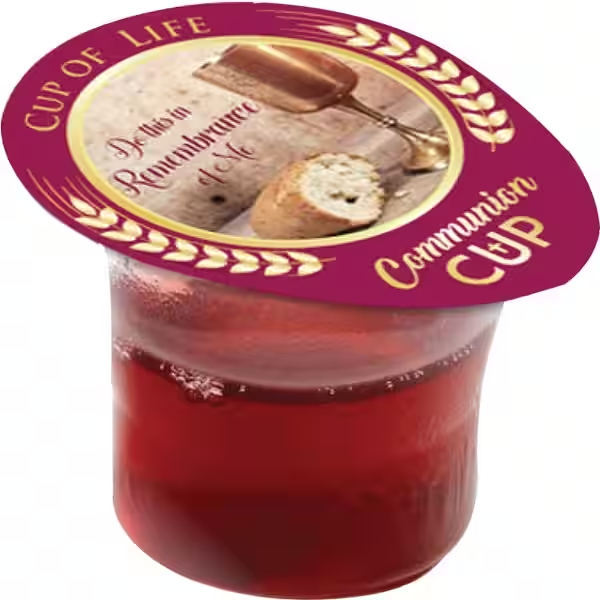
The Significance of the Glass Communion Cup in Religious Practice
The Significance of the Glass Communion Cup in Religious Practice
The glass communion cup, a seemingly simple vessel, holds profound spiritual meaning for millions around the world. For Christians, particularly, it symbolizes the shared experience of faith, embodying the sacrifice of Christ and the unity of the community. Its material, glass, often transparent, further emphasizes these concepts, visually representing clarity and the spiritual connection with the divine.
Beyond the symbolic, the glass communion cup also plays a practical role in religious services. Its durability and ease of cleaning make it suitable for repetitive use, reflecting the cyclical nature of faith and the community's commitment to its practices. Furthermore, the translucency allows participants to observe the consecrated elements, fostering a more intimate and engaging experience of the ritual.
The use of glass communion cups, while prevalent today, has a rich history. Early church practices often utilized a variety of materials, including metal and pottery. The transition to glass, likely driven by aesthetic and practical considerations, occurred over time. Technological advancements in glassblowing and manufacturing contributed to the production of more readily available and aesthetically pleasing cups, making them more suitable for widespread use in religious services. This evolution reflects the evolving understanding and practice of faith within communities.
The adoption of the glass communion cup wasn't uniform across all denominations. Different churches and traditions maintained their preferred materials, reflecting the diverse interpretations of ritual and faith. Cultural factors and local resources often played a role in these choices. For instance, in regions where glass was easily accessible and affordable, its use in communion services grew more prevalent. This demonstrates how material choices can reflect the historical and cultural context of a religious community.
Different Types of Glass Communion Cups and Their Meanings
The variety of glass communion cups reflects the diverse expressions of faith. Some are simple and unadorned, emphasizing the purity of the ritual. Others are ornamental, decorated with intricate designs, perhaps representing the richness and complexity of faith. The style of the cup can be an important part of the liturgy, playing a role in the overall atmosphere and symbolism. Consider the impact of a delicate, finely etched glass cup compared to a sturdy, plain one.
Different denominations within Christianity may favor specific styles of glass communion cups. For example, a simple, stemmed goblet might be associated with a more traditional approach, while a more elaborate chalice might reflect a more artistic and expressive tradition. The choice often reflects the specific theological emphasis or historical context of a particular church or community. These differences highlight the diversity within Christianity and how expressions of faith can vary greatly.
The Role of Glass Communion Cups in Community Building
The glass communion cup, as part of a shared ritual, plays a key role in fostering a sense of community. This shared experience of partaking of the consecrated elements, often using the same glass cup, creates an unbreakable bond. Imagine a large church community, the same glass communion cup used by generations. The act of holding the cup, and sharing with others, builds a sense of belonging and connectedness. It is a potent symbol of mutual support and shared faith. Sharing a drink from a single cup often signifies shared identity and purpose.
The act of passing the glass communion cup also underscores the reciprocal nature of this ritual. The community's unity is visually reinforced as the cup passes from person to person. This aspect is important in strengthening the sense of shared experience and common purpose. It's also notable that the glass’s transparency—allowing the community to see itself in the act—emphasizes the importance of shared unity and spiritual connection, making a lasting impact on the participants.
In modern times, the glass communion cup continues to be relevant, though interpretations may vary. Some communities use contemporary glass designs to align with their modern aesthetics. Others explore the symbolism of glass further, seeing it as representing the fragility of life and its need for support and connection. In many settings, the glass communion cup remains an important symbol of faith and community. Its durability and simplicity also resonate with those seeking a practical and accessible way to connect with their faith. This adaptability and its continued presence highlight the enduring nature of communion.
The significance of the glass communion cup is not limited to specific religious contexts. Its universal appeal lies in its ability to represent shared experiences, unity, and spiritual connection. Its continued use in various traditions underscores its enduring power to connect people across diverse backgrounds. The glass, in its transparency, allows for a clear and consistent expression of these values, highlighting the importance of community and shared beliefs. Ultimately, the glass communion cup remains a powerful symbol of faith in many parts of the world.
Frequently Asked Questions: Glass Communion Cups
What are glass communion cups used for?
Glass communion cups are used in religious ceremonies, primarily Christian services, to hold and distribute consecrated wine (or grape juice) during the Eucharist or Holy Communion.
Why are glass communion cups used?
Glass is often preferred for its transparency, symbolizing purity and clarity. It's also relatively easy to clean and sterilize, ensuring hygiene during the ceremony.
Are glass communion cups more hygienic than other materials?
Glass is generally considered more hygienic than porous materials like wood or metal, as it is non-porous and easier to sanitize.
Are there any religious reasons for choosing glass communion cups?
The choice of material can be influenced by theological interpretations; the transparency of glass may symbolize the openness and purity of the sacrament. However, there isn't a single universally accepted religious reason to mandate glass.
How do I clean glass communion cups?
Glass communion cups should be thoroughly washed and sterilized with hot, soapy water after each use. They can be further sanitized with a recommended sterilizing solution.
Where can I purchase glass communion cups?
Glass communion cups can be purchased from religious supply stores, online retailers, and some church goods suppliers.
What sizes are glass communion cups available in?
Glass communion cups are available in a variety of sizes, ranging from small individual cups to larger vessels for communal use.
Are disposable glass communion cups available?
While not typically referred to as "disposable," some individual, smaller glass cups may be more readily replaced than larger, more expensive ones. Truly disposable, single-use glass is not common due to environmental and cost considerations.